
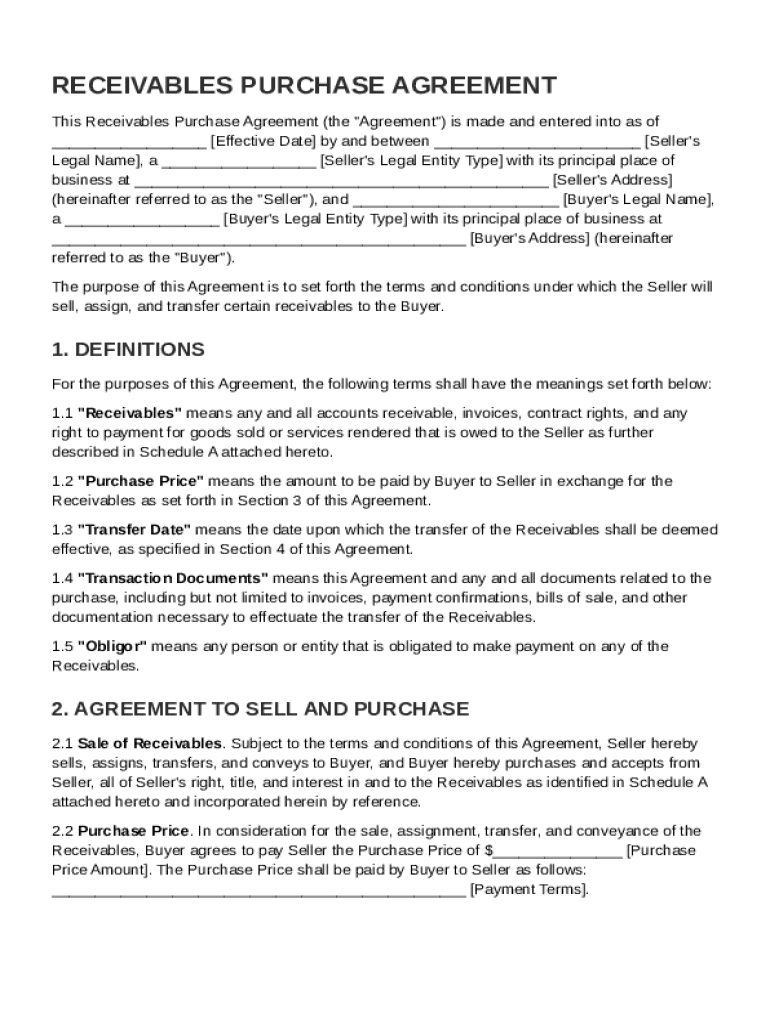







Definition & Meaning
The Receivables Purchase Agreement Template is a legal document that sets the framework for transferring receivables from a seller to a buyer. This agreement details the specifics of the transaction, ensuring clarity and mutual understanding between the parties involved. The receivables being sold could represent outstanding invoices that the seller has issued to its customers but not yet collected. This agreement typically includes terms that cover the rights and obligations of each party, definitions of pivotal terms, and the consequences of non-compliance. By laying out comprehensive details, this document acts as a safeguard for both the seller and the buyer in the transaction.
Key Elements of the Receivables Purchase Agreement Template
When creating or reviewing a Receivables Purchase Agreement Template, several essential components should be present to ensure comprehensive coverage and clarity in the agreement:
- Definitions: Provides clear explanations of specific terms used throughout the agreement to avoid ambiguities.
- Purchase Price: Details the amount the buyer will pay for the receivables, often determined as a percentage of the total receivable value.
- Representations and Warranties: Outlines each party's declarations regarding their rights and ability to perform under the contract, ensuring there are no legal hindrances.
- Closing Procedures: Specifies the steps and requirements for completing the transaction, including necessary documentation and timelines.
- Indemnification Clauses: Protects parties from potential losses arising from certain acts, errors, or omissions by the other party.
- Confidentiality Provisions: Ensures sensitive information shared during the transaction remains private and protected.
- Governing Law: Identifies which jurisdiction's laws will govern the agreement, crucial for dispute resolution.
Steps to Complete the Receivables Purchase Agreement Template
- Identify Parties Involved: Clearly state the names and addresses of the seller and buyer.
- Define Receivables: Specify the receivables being transferred, including any identification numbers or distinguishing features.
- Set Purchase Price: Agree upon and document the purchase price or the formula for its calculation.
- Outline Terms and Conditions: Detail the representations, warranties, and indemnifications pertinent to the transaction.
- Determine Closing Date and Procedures: Establish when and how the transaction will be finalized.
- Add Confidentiality Clauses: Include terms to protect sensitive information exchanged during the process.
- Choose Governing Law: Select and note the jurisdictional law that will guide the agreement.
How to Use the Receivables Purchase Agreement Template
To effectively utilize the Receivables Purchase Agreement Template, follow these steps:
- Review the Template: Carefully read through the template to understand its provisions and terms.
- Customize the Document: Modify the template to reflect the specific details of your transaction, including parties involved, receivables details, and pricing.
- Consult Legal Advice: Ensure compliance with applicable laws by seeking advice from a legal professional, especially for complex transactions or jurisdiction-specific requirements.
- Collaborate with Parties: Share the draft with all relevant parties for feedback and make amendments as necessary.
- Execute the Agreement: Once all parties agree on the terms, execute the agreement through signatures, ensuring all parties receive a copy.
Legal Use of the Receivables Purchase Agreement Template
The Receivables Purchase Agreement Template serves as a legal document and should comply with all applicable laws. It is vital to ensure that:
- The Sale is Permissible: Verify that the sale of receivables is permissible under local laws and regulations.
- Correct Authorization: Both parties have the authority to enter into the agreement, legally binding them to the terms therein.
- Adherence to Statutory Requirements: The template adheres to any specific legal requirements or statutory provisions relevant to the agreement’s jurisdiction.
- Documentation Compliance: Ensure proper documentation is included to support the agreement terms and legal compliance.
Important Terms Related to the Receivables Purchase Agreement Template
Understanding vital terms within the Receivables Purchase Agreement can streamline the process of drafting and negotiation:
- Assignor and Assignee: The seller (assignor) transfers rights to the buyer (assignee).
- Recourse and Non-Recourse: Refers to whether the buyer can seek recompense from the seller if the receivables become uncollectible.
- Factor Rate: The discount rate applied to the receivable values to determine the purchase price.
- Diligence Period: Timeframe allowed to review the receivables before the purchase is finalized.
Business Types That Benefit Most from Receivables Purchase Agreement Template
Receivables Purchase Agreement Templates are particularly advantageous for certain business entities:
- Small to Medium Enterprises (SMEs): These businesses often use the agreement to improve liquidity by selling outstanding invoices for immediate cash flow.
- Manufacturing Firms: Often reliant on receivables for working capital, these businesses can benefit significantly.
- Service Providers: Firms like consulting or law firms that bill upon service completion can use this agreement to manage their revenue cycles.
- Tech Startups: Startups may use this method to access cash without diluting their equity through more traditional financing means.
Digital vs. Paper Version
Deciding between a digital or paper version of a Receivables Purchase Agreement Template depends on several factors:
- Convenience: Digital versions offer ease of sharing and editing, as well as electronic signatures for quick execution.
- Storage and Retrieval: Digital documents can be stored efficiently and located quickly within digital systems.
- Security: While both forms can be secure, digital versions allow for advanced security features like encryption and controlled access.
- Environmental Impact: Digital documents reduce paper usage, aligning with sustainability goals and reducing physical storage requirements.




