
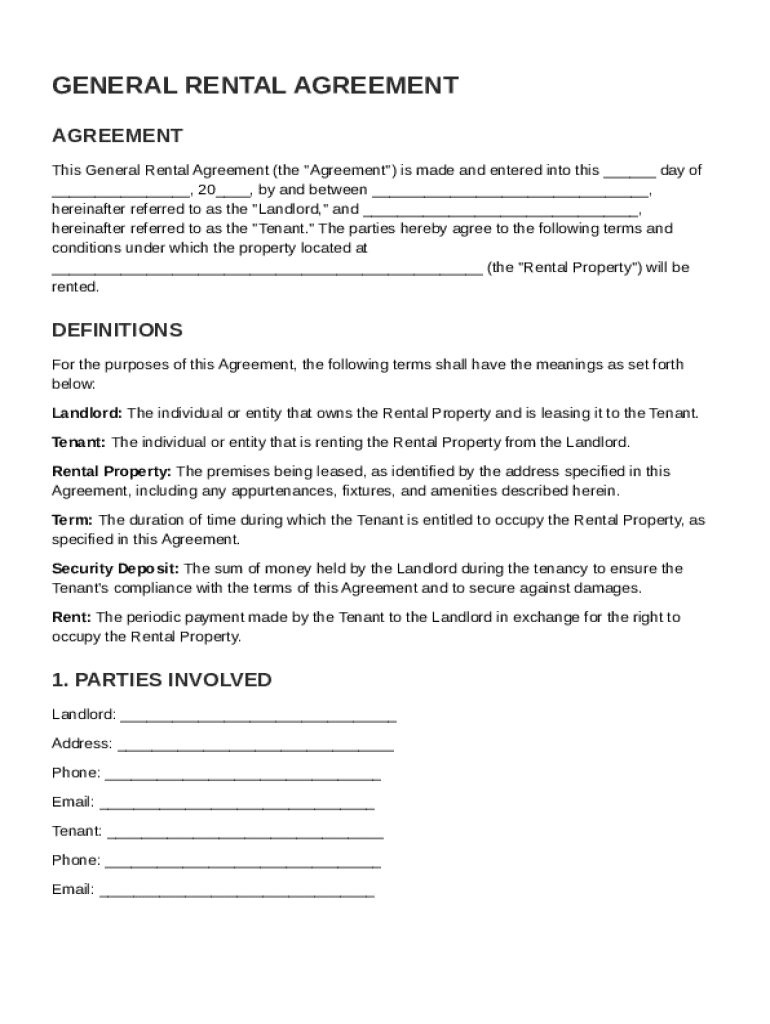







Understanding the General Rental Agreement Template
The General Rental Agreement provides the foundational framework for a landlord-tenant relationship by defining the terms of renting a property. It clarifies obligations, expectations, and regulations for both parties involved. The agreement typically outlines the duties of the landlord and the tenant, rental amounts, duration of the lease, and conditions of termination. This ensures mutual understanding and minimizes potential conflicts.
Key Elements of a General Rental Agreement
-
Rental Property Details: Specifies the property address, type of property (apartment, house, etc.), and any included amenities or furnishings.
-
Lease Duration: Details the start and end dates of the lease, including any provisions for renewal or extension.
-
Rent and Payment Terms: Outlines the monthly rent amount, due dates, and acceptable payment methods. It may also include late payment penalties.
-
Security Deposit: Specifies the amount required, conditions for return, and conditions under which deductions may be made.
-
Maintenance and Repairs: Details responsibilities for property upkeep, including who is responsible for specific types of repairs.
Legal Use of the General Rental Agreement Template
Using a General Rental Agreement ensures compliance with state and federal regulations governing rental properties. These agreements are legally binding documents that formalize the relationship and are enforceable in court. They must adhere to the state-specific landlord-tenant laws that dictate allowable terms for security deposits, notice periods, eviction procedures, and more.
How to Use the General Rental Agreement Template
To effectively use the General Rental Agreement Template, landlords and tenants should follow these steps:
-
Download the Template: Obtain the template from a reliable source, such as DocHub, known for its comprehensive document editing features.
-
Customize the Template: Enter specific details relevant to the lease, such as names, dates, and financial terms.
-
Review Legal Requirements: Ensure the agreement complies with applicable state laws to avoid legal issues.
-
Sign the Agreement: Both parties should thoroughly review all terms, then sign the agreement either electronically or on paper.
-
Distribute the Copies: Each party should retain a signed copy for their records.
Steps to Complete the Template
Completing the General Rental Agreement Template involves multiple precise steps to ensure no details are overlooked:
-
Property Identification: Start by filling in the location and type of property being rented.
-
Parties Involved: Include full names and contact information for both landlord and tenant.
-
Lease Term and Conditions: Specify the duration of the lease, any renewal options, and notice requirements for termination.
-
Financial Terms: Accurately state the rent amount, payment schedule, and method.
-
Rights and Responsibilities: Clearly outline maintenance responsibilities and restrictions on property use.
Important Terms in the General Rental Agreement
Understanding key terms within a General Rental Agreement Template is essential for both parties:
-
Lessee: Another term for the tenant, the person who rents the property.
-
Lessor: The landlord or property owner who leases out the property.
-
Premises: Refers to the rental property and any related spaces such as garages or yards.
-
Default: Circumstances under which one party fails to comply with lease terms.
State-Specific Rules
Different states have varying requirements and rules concerning rental agreements. For instance, states may differ in their limits on security deposit amounts, the condition for lease termination, or eviction guidelines. Therefore, landlords should familiarize themselves with the specific laws relevant to their state to ensure compliance.
Why Use a General Rental Agreement Template
The General Rental Agreement Template is indispensable for several reasons:
-
Clarity and Structure: Provides a clear framework and prevents misunderstandings about the terms of the rental.
-
Legal Protection: Shields both parties from potential disputes and is enforceable in legal settings.
-
Flexibility: Can be tailored to fit specific circumstances, such as month-to-month agreements or specific property rules.
Examples of Utilizing the Template
Real-world applications of the General Rental Agreement Template are diverse and include:
-
Residential Leasing: Most commonly used for leasing single-family homes, apartments, and condos.
-
Commercial Rentals: Adapted versions of the template can be used for office space leasing.
-
Lease Extensions: The template can easily be modified to extend or renew an existing lease, maintaining consistency in terms.
By comprehensively addressing the significant elements of a General Rental Agreement Template, landlords and tenants can ensure a smooth, transparent leasing process, reinforcing the security and clarity essential to maintaining a productive and harmonious rental relationship.




