






Definition & Meaning
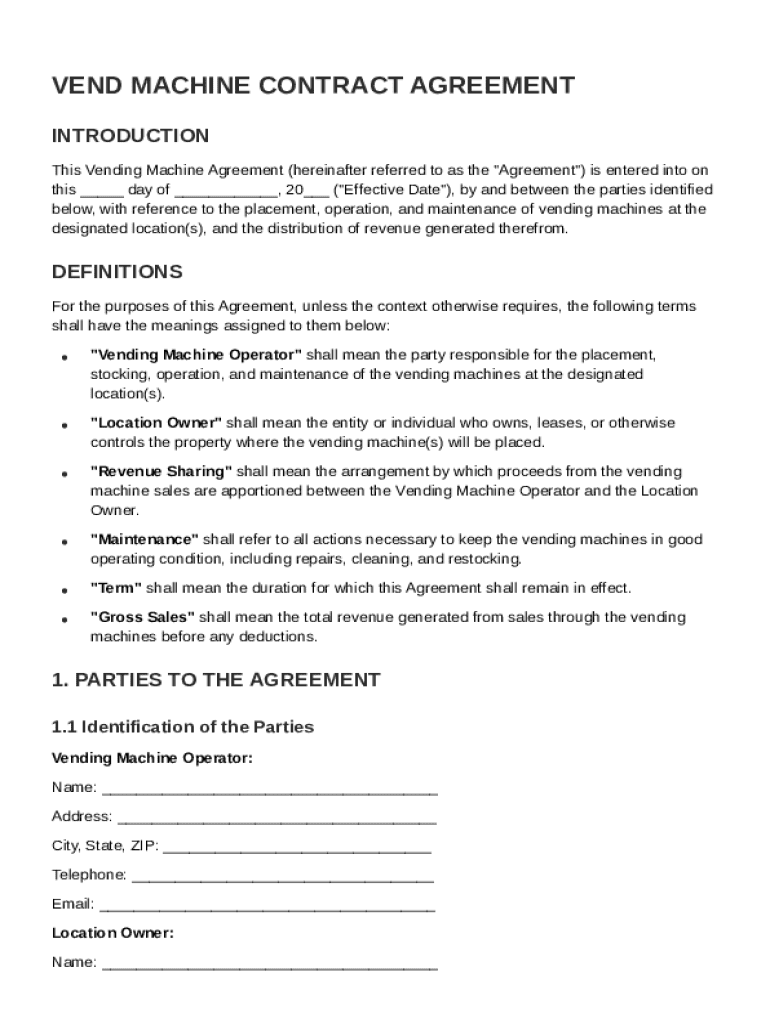
The "Vend Machine Contract Template" serves as a formal agreement that outlines the responsibilities and expectations between the parties involved in a vending machine operation. This document typically involves two primary entities: the vending machine operator, who installs and manages the machine, and the location owner, who provides the space for installation. The template helps clarify the operational terms, revenue sharing agreements, maintenance duties, and other critical aspects of the business relationship. By setting forth these guidelines, the template ensures that all parties have a clear understanding of their roles and obligations, reducing the potential for disputes.
Key Elements of the Vend Machine Contract Template
The template for a vending machine contract usually includes several crucial components:
-
Roles and Responsibilities: Specifies the duties of both the vending machine operator and the location owner, including who is responsible for machine maintenance and stocking of products.
-
Revenue Sharing: Details the profit-sharing arrangement, such as the percentage of sales that will be allocated to each party.
-
Maintenance Schedule: Outlines how often the machines will be serviced and stocked, and who will perform these tasks.
-
Liability and Insurance: Clarifies the liability for any damages or theft associated with the vending machine, and whether insurance is required.
-
Termination Clause: Provides the conditions under which the contract can be terminated by either party, including required notice periods.
-
Governing Law and Dispute Resolution: Specifies which state’s laws will govern the contract and the process for resolving any disputes.
These elements not only define the business relationship but also protect the interests of all parties involved.
Legal Use of the Vend Machine Contract Template
Utilizing a vending machine contract template ensures that the agreement meets legal standards. Such templates align with the laws governing commercial contracts in the United States, which typically require that agreements be clear, mutual, and involve lawful considerations. By setting these legal frameworks, the template assists in preserving the legitimacy of the vending operation, ensuring that terms are enforceable in court if disputes arise. Additionally, including clauses on liability, indemnification, and governing law further ensures compliance with legal norms and provides a basis for dispute resolution.
Steps to Complete the Vend Machine Contract Template
-
Gather Information: Collect details about both parties, including names, addresses, and contact information.
-
Define Terms: Set specific terms around revenue shares, maintenance responsibilities, and operational duties.
-
Include Legal Clauses: Add sections covering liability, indemnification, and dispute resolution procedures.
-
Review Compliance: Ensure all legal requirements and local regulations are addressed in the contract.
-
Draft the Agreement: Fill in the template with the gathered details, careful to use precise and clear language.
-
Sign and Execute: Both parties should carefully review the contract and sign it—either physically or electronically—ensuring each has a copy for their records.
Completing these steps ensures that the contract is comprehensive and legally binding, reducing the likelihood of misunderstandings.
Who Typically Uses the Vend Machine Contract Template
This template is most frequently used by vending machine operators, location owners, and property management companies. Operators use the contract to formalize their agreements with businesses or facilities that host their machines, whereas location owners rely on it to ensure they understand the benefits and responsibilities of hosting a vending machine. Typically, the template is adapted for use in various settings such as office buildings, schools, hospitals, and retail centers, wherever vending services are employed.


Important Terms Related to the Vend Machine Contract Template
Understanding important terminology is essential when dealing with vending contracts:
-
Gross Revenue: Total sales generated by the vending machine before any deductions.
-
Net Revenue: Gross revenue minus agreed deductions, such as machine restocking or maintenance costs.
-
Lease Agreement: A distinct but sometimes associated agreement covering the rental of space for the vending machine.
-
Indemnification: A clause that protects one party from legal liability due to the actions of the other party.
-
Service Provision: Refers to the terms under which the machine is stocked, maintained, and repaired.
Familiarity with these terms ensures that parties clearly understand and mutually agree upon the contract's provisions.
Examples of Using the Vend Machine Contract Template
Consider a scenario in which a vending machine operator contacts a local office complex looking to place snacking machines. They propose a split of 30 percent of profits to the complex owners. With interests aligned, both parties use a vending machine contract template to formally outline revenue sharing and maintenance duties, affording them a clear framework for operation. Another example might involve a school wishing to install healthy vending options for students. The school and vendor enter into an agreement detailing how routine maintenance will be managed. These examples demonstrate the template’s versatility across various settings, benefiting different business relationships.
State-by-State Differences
Certain states may have additional regulations that impact vending machine contracts. For instance, states like California may have strict consumer protection laws affecting sale disclosures, while New York might have specific health codes governing the sale of food items. Understanding these differences is vital to ensure compliance with all pertinent laws. Businesses should verify local statutes or consult legal experts to address any state-specific requirements before finalizing their contracts.
Business Types that Benefit Most from Vend Machine Contract Template
The template is particularly advantageous for businesses involved in:
-
Food and Beverage: Operators offering snacks, beverages, or specialty items like organic products.
-
Retail and Shopping Centers: Malls and retail outlets looking to supplement consumer offerings.
-
Corporate and Office Buildings: Companies providing convenient access to refreshments for employees.
-
Educational Institutions: Schools and universities supporting students with on-site vending options.
Each of these environments sees substantial benefits from clearly established vending agreements, leading to smoother operations and clearer profit-sharing.