







Definition & Meaning
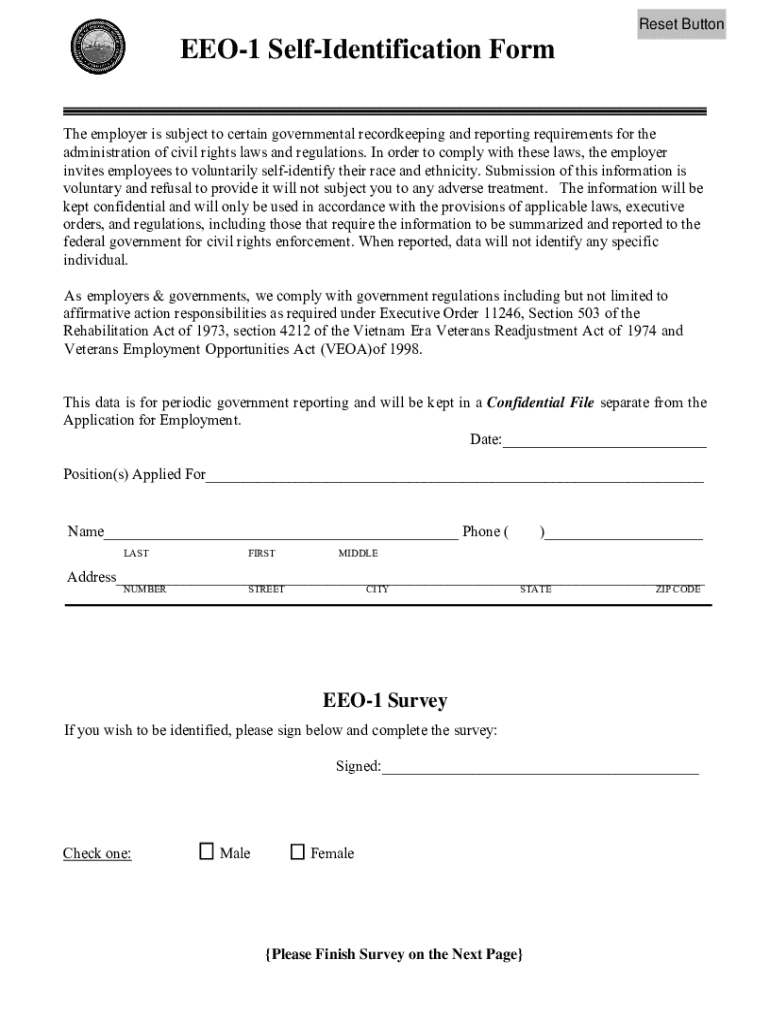
The EEO-1 Self-Identification Form is an essential tool used by employers to gather demographic information about their workforce, primarily focusing on race, ethnicity, gender, and veteran status. This data collection process is vital for compliance with civil rights and equal employment opportunity (EEO) regulations in the United States. By voluntarily disclosing their information, employees assist their organization in compiling reports that satisfy governmental requirements, helping ensure workplace diversity and inclusion.
Steps to Complete the EEO-1 Self-Identification Form
- Access the Form: The form can usually be obtained from your employer's HR department or accessed through a secure employee portal.
- Provide Personal Information: Begin by filling out basic details such as your name, employee ID, and department.
- Select Gender: Choose the option that best describes your gender identity.
- Indicate Ethnicity: Check the appropriate box for Hispanic or Latino ethnicity if applicable.
- Choose Race: Select one or more races that you identify with from the provided list.
- Veteran Status: Indicate whether you have served in the U.S. military, selecting the relevant category if applicable.
- Review and Submit: Ensure all information is accurate before submitting the form according to your company's specified protocol, whether through a digital system or on paper.
How to Obtain the EEO-1 Self-Identification Form
Employers typically distribute the EEO-1 Self-Identification Form to new hires as part of the onboarding process, or during specific collection periods aligned with reporting obligations. Employees can request a copy from their company's human resources department if they need it outside these times.
Legal Use of the EEO-1 Self-Identification Form
The collection and reporting of data using the EEO-1 Self-Identification Form are governed by various U.S. laws, including the Civil Rights Act and regulations from the Equal Employment Opportunity Commission (EEOC). Employers must use this form solely for compiling the mandated EEO-1 report, ensuring confidentiality and using the data appropriately to promote workplace equality.
Important Terms Related to the EEO-1 Self-Identification Form
- EEO Compliance: Refers to adherence to Equal Employment Opportunity laws that prohibit discrimination in the workplace.
- Confidentiality: Employers must handle the data with discretion, limiting access to those directly involved in reporting processes.
- Demographic Data: Information regarding race, ethnicity, gender, and veteran status collected for statistical purposes.
- Voluntary Disclosure: Participation in self-identification is optional for employees, emphasizing that there are no repercussions for choosing not to disclose information.
Who Typically Uses the EEO-1 Self-Identification Form
The form is primarily used by businesses with 100 or more employees and federal contractors with at least 50 employees, who are required by the EEOC to file EEO-1 reports. Human resource professionals are generally responsible for overseeing the collection and submission of this data.


Key Elements of the EEO-1 Self-Identification Form
- Employee Information Section: Includes fields for name and unique identifiers like employee ID.
- Gender Selection: Options for male, female, and often non-binary or another designation as provided by the employer.
- Ethnicity and Race Sections: Divided into Hispanic/Latino ethnicity and a separate category for race, allowing for multiple selections.
- Veteran Status: Optional section to report military service for further compliance with veteran employment initiatives.
Disclosure Requirements
The completion of the EEO-1 Self-Identification Form is voluntary for employees, but employers are required to invite employees to fill it out. Employers must clearly communicate that participation is optional and ensure that any collected data is used for compliant reporting purposes only.
Digital vs. Paper Version
While traditional paper versions of the EEO-1 Self-Identification Form are still in use, many employers have shifted to digital forms through secure employee portals. Digital forms often streamline the data collection process, reduce errors, and enhance compliance with automated reminders and direct submission capabilities.
Examples of Using the EEO-1 Self-Identification Form
Consider a corporation with over 1,000 employees that uses the EEO-1 Self-Identification Form to ensure accurate representation in their annual EEO-1 report. By gathering diverse demographic data, they assess the effectiveness of their diversity initiatives and identify areas for improvement, fostering a more inclusive workplace culture.




