Definition and Meaning
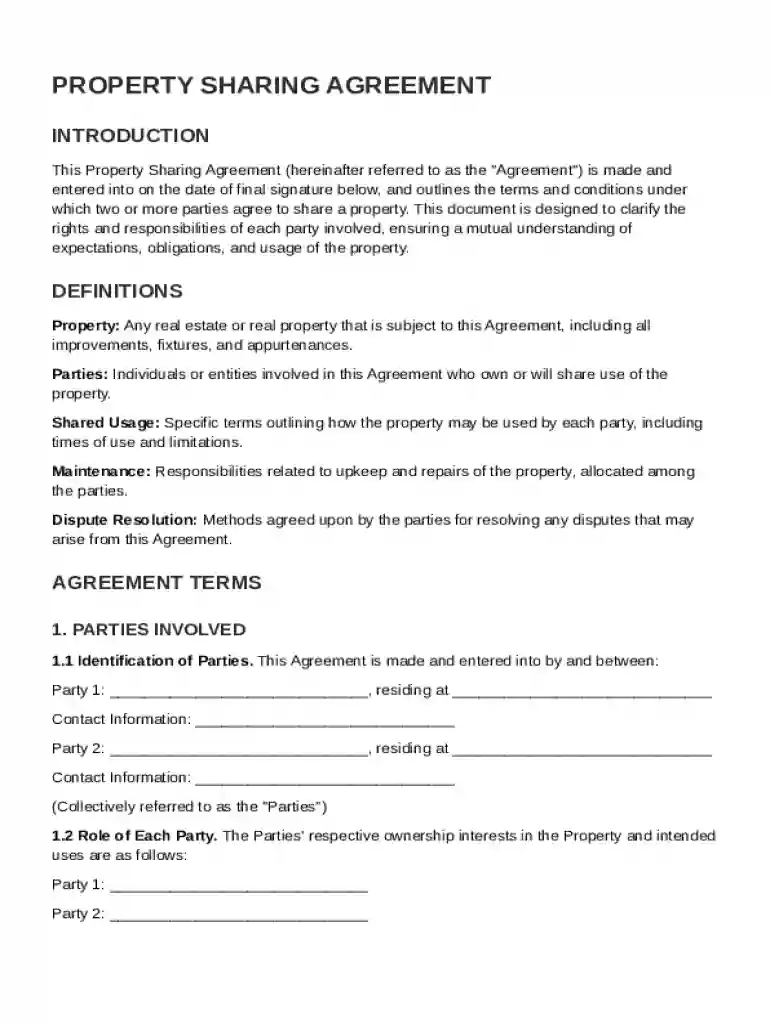
The Property Sharing Agreement Template is a structured document used to outline and formalize the terms and conditions under which two or more parties share ownership, usage, or responsibilities regarding a property. It plays a crucial role in providing a detailed description of each party’s rights, responsibilities, usage terms, financial obligations, and maintenance duties. With such agreements, the aim is to prevent misunderstandings by clearly defining expectations and the method for dispute resolution should disagreements arise. The agreement also covers how and when the property sharing can be terminated, ensuring all parties are aware of exit strategies and conditions.
Key Elements of the Property Sharing Agreement Template
A Property Sharing Agreement typically contains several critical elements to ensure thorough documentation of the arrangement:
- Parties Involved: Clearly list the names and contact information of all parties involved in the sharing agreement.
- Property Description: Provide a comprehensive description of the property, including address and unique distinguishing features.
- Usage Terms: Define how the property is to be used, including any restrictions or limitations on usage.
- Financial Obligations: Detail the financial responsibilities of each party, including how costs such as mortgage payments, taxes, utilities, and maintenance will be shared.
- Maintenance Duties: Specify who is responsible for routine and emergency maintenance, repairs, and upkeep of the property.
- Dispute Resolution: Outline the process for resolving disagreements, which could include mediation or arbitration options.
- Termination Conditions: Detail the conditions under which the sharing agreement may be terminated, including notice requirements and any financial reconciliation.
Steps to Complete the Property Sharing Agreement Template
- Gather Information: Collect all necessary information, including property details and the personal information of all parties involved.
- Define Financial Contributions: Discuss and document the financial obligations of each party concerning expenses, repair costs, and ongoing maintenance.
- Outline Usage Terms: Clearly specify the intended use of the property and agree upon any restrictions or terms.
- Assign Responsibilities: Allocate responsibilities for maintenance and repairs, ensuring clarity on who handles various property issues.
- Approve Dispute Resolution Methods: Agree on methods for dispute resolution to handle potential disagreements smoothly.
- Sign the Agreement: Once all elements are agreed upon and documented, ensure all parties sign the agreement to solidify the terms.
How to Use the Property Sharing Agreement Template
- Collaboration: Use the template as a collaborative tool among all parties to outline and agree collectively on each role and responsibility.
- Customization: Customize sections of the agreement to better fit specific needs or property-specific requirements, making sure to reflect any unique elements.
- Review Cycles: Regularly review and update the template as needed to capture any changes in property conditions or agreements between parties.
- Legal Consultation: Consider consulting a legal professional to review the agreement to ensure compliance with local laws and practices.
Important Terms Related to Property Sharing Agreement Template
Understanding the terminology within a Property Sharing Agreement is important for clarity:
- Joint Ownership: Refers to shared ownership of the property by two or more parties that hold equal or defined shares.
- Tenancy in Common: A form of ownership where each co-owner holds a separate ownership interest in the property.
- Maintenance Clause: Section of the agreement assigning responsibility for repairs and property upkeep.
- Usage Restrictions: Terms that limit how the property can be used to prevent activities that might cause damage or disputes.
- Indemnification: A clause that often protects parties from financial loss due to third-party claims or damages relating to property use.
Legal Use of the Property Sharing Agreement Template
The agreement must adhere to relevant state and federal laws to be enforceable. Legal compliance involves:
- Registration: In some cases, agreements might need registration with local property records for validity.
- Enforcement: Ensuring that the agreement includes dispute resolution procedures that comply with legal standards, such as local mediation requirements.
- Amendments: Clearly state procedures for making and agreeing to amendments, ensuring all changes are documented with approval from all parties.
- Execution: The agreement must be executed properly, often requiring notarization or witness to signatures for added legal binding status.
State-Specific Rules for the Property Sharing Agreement Template
State laws may affect the structuring of a Property Sharing Agreement. For example:
- Property Laws: Some states have unique property sharing or co-ownership laws that must be reflected in the agreement.
- Property Taxes: Tax obligations under property sharing agreements can vary, necessitating legal guidance.
- Zoning and Usage Laws: Local zoning laws might impose specific usage restrictions, affecting how property can be utilized under the agreement.
Understanding and adhering to these state-specific rules ensures legal compliance and minimizes potential conflicts.
Examples of Using the Property Sharing Agreement Template
Real-world scenarios illustrate the utility of the template:
- Family Co-Ownership: Siblings inherit a family home and decide to share it, using the agreement to manage usage and maintenance.
- Business Partners: Entrepreneurs sharing office space draft an agreement detailing use and costs distribution.
- Vacation Property Sharing: Friends purchase a vacation home together with defined terms for its use and upkeep in an agreement.
These examples underline the essential nature of clear terms to prevent disputes and promote harmonious co-ownership of properties.