
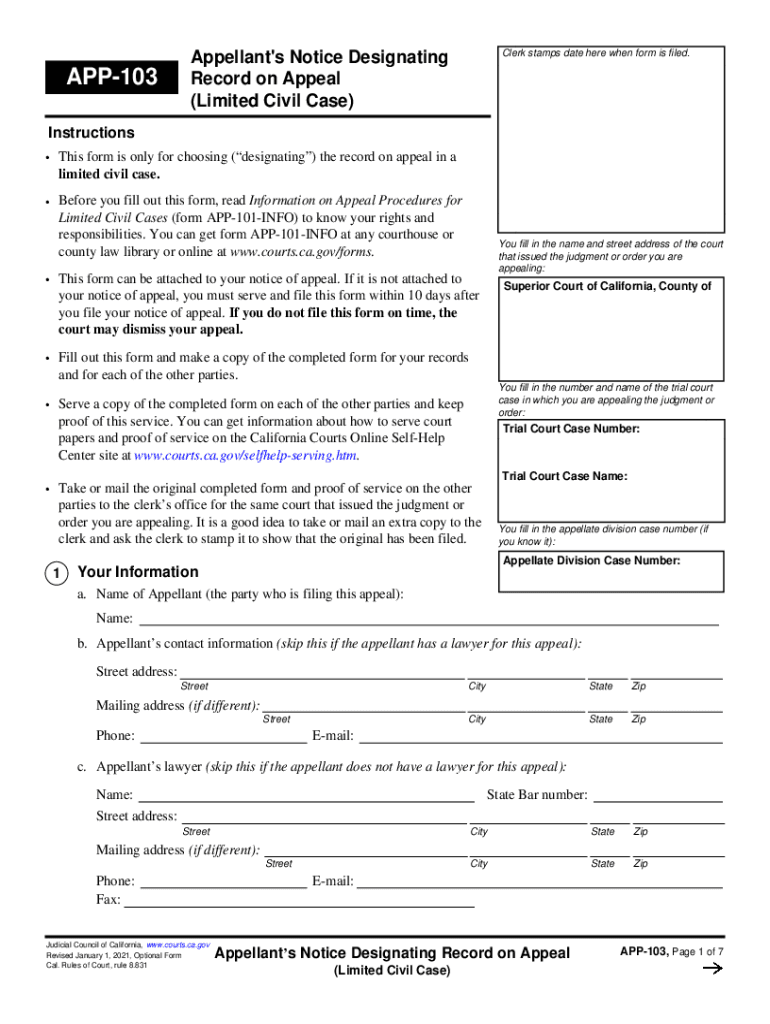







Definition and Meaning of CA APP-103
The CA APP-103 form, officially known as "Designation of the Record on Appeal (Limited Civil Case)," is utilized in California's limited civil cases. It allows appellants to designate the record on appeal, which indicates which parts of the trial court proceedings should be included in the appeal. This process ensures that the appellate court reviews only the specified elements of the case record, as selected by the appellant. Through this form, appellants must outline their preferences for oral proceedings and documentation included in the appeal, aligning with the procedural requirements set forth by California courts.
How to Use the CA APP-103
Using the CA APP-103 form requires careful attention to detail and strict adherence to legal guidelines. The form involves selecting specific trial court documents for the appeal and indicating if oral proceedings should be part of the record. Appellants typically need to follow these steps:
- Identify relevant trial court case information, such as the case number and parties involved.
- Decide whether to include a record of oral proceedings and specify the necessity for a clerk's transcript.
- Choose the documents for inclusion in the clerk's transcript, which could range from pleadings to motions.
- Outline the method of payment for preparing transcripts, ensuring all fees are accounted for as required.
How to Obtain the CA APP-103
The CA APP-103 form can be obtained through the California Courts' official website or directly from the clerk’s office of the trial court where the original case was filed. Accessibility to the form ensures that appellants are equipped with the necessary resources to initiate their appeal process. Digital versions of the form may often be filled and printed directly from online sources, enhancing user convenience and efficiency.
Steps to Complete the CA APP-103
Filling out the CA APP-103 form involves a systematic approach to ensure accuracy and compliance. Key steps include:
- Accessing the Form: Obtain the form from the California Courts' website or the trial court's clerk's office.
- Filling Personal and Case Information: Record case details, including docket number, and essential party names.
- Designating the Record: Specify the selection of oral records and written transcripts from trial proceedings necessary for the appeal.
- Payment Arrangements: Decide upon and arrange the appropriate payment method for procuring required transcripts.
- Review and Submission: Thoroughly review the filled-out form for any errors or omissions before submission to the designated court office.
Why Use the CA APP-103
CA APP-103 is essential for appellants seeking a structured avenue to present their appeals in limited civil cases. The form streamlines the appeal process by clearly defining the scope of records that higher courts will consider. By specifying portions of the trial record, appellants can focus on critical aspects that may impact the outcome, ensuring a targeted review by appellate justices. Furthermore, its standardized format helps mitigate procedural delays and enhances the prospects for a coherent appellate process.
Who Typically Uses the CA APP-103
The CA APP-103 form is predominantly used by appellants in limited civil court cases in California. These appellants could be individuals, businesses, or entities dissatisfied with a trial court's decision and seeking an appellate review. Lawyers representing appellants also frequently interact with this form, submitting it on behalf of their clients to facilitate the appeal process. The clear structure of the form supports both legal professionals and pro se litigants in having their cases adequately heard by the appellate system.


Key Elements of the CA APP-103
The CA APP-103 form encompasses several critical components necessary for an effective appeal filing:
- Case Identification Information: Includes the case number and names of involved parties.
- Designation Choices: Clear options for including particular trial documents and oral proceedings.
- Payment Options: Details the proposed payment method for necessary transcripts, a crucial part of ensuring records are prepared elaborately.
- Signatures: Requires signatures from appellants or their legal representatives, attesting to the accuracy and completeness of the submitted information.
Filing Deadlines and Important Dates for CA APP-103
Timely filing of the CA APP-103 is crucial to preserve the right to appeal. Key deadlines depend on specific court guidelines, including:
- Initial Filing Timeline: Typically, the form must be filed within a strict time frame post-judgment, often around 30 days.
- Transcript Requests: Align with payment arrangements in ensuring transcripts are ordered and delivered promptly.
- Appellate Brief Deadlines: These might follow the initial form submission, depending on the appellate court's scheduling.
Legal Use of the CA APP-103
The CA APP-103 form is legally used within the confines of California's judicial process for limited civil cases. It serves as an official document to communicate the appellant's preferences for the appellate review. The legal framework dictates its mandatory use when an appellant decides which trial documents become part of the appellate record, thereby impacting the scope of review. Precise use of the form upholds the procedural integrity of the legal system and enhances the efficiency of appellate proceedings.
State-Specific Rules for the CA APP-103
California's specific legal frameworks govern the use of the CA APP-103 form. Key state-specific rules include:
- Jurisdiction Limitations: Applicable only in California's limited civil cases, with certain value constraints and procedural stipulations.
- Formality and Compliance: Abiding by California appellate rules and ensuring documents conform to state-imposed standards regarding format and content.
- Regional Court Variations: Minor procedural differences may exist across California's judicial districts, impacting form submission and processing.
Form Submission Methods
Different methods are available for submitting the CA APP-103 form, catering to appellant preferences and logistical considerations:
- Online Submission: Some courts may allow electronic submission through designated judicial portals, offering convenience.
- Mail Submission: Traditional mailing methods remain prevalent, requiring proper handling to ensure timely delivery.
- In-Person Submission: Direct submission at the court's clerk office can expedite processing, giving appellants immediate confirmation of receipt.




