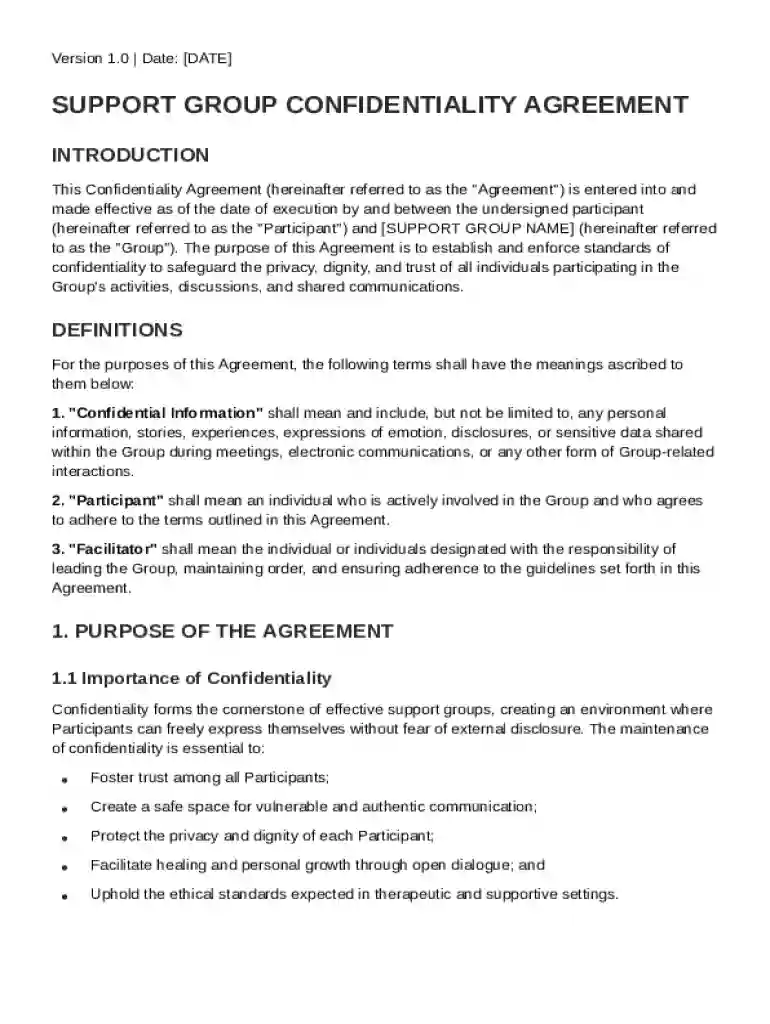
Definition and Purpose of the Support Group Confidentiality Agreement Template
The Support Group Confidentiality Agreement Template serves as a structured document that formalizes the privacy protocols within a support group setting. Its primary aim is to foster an atmosphere of trust and safety by ensuring participants that their personal information will remain confidential. By clearly defining what constitutes confidential information and outlining the responsibilities of both participants and facilitators, the template plays a vital role in maintaining the integrity and effectiveness of support groups. The agreement encourages honest and open interactions, which are crucial for the therapeutic benefits of group participation.
Key Elements of the Template
The Support Group Confidentiality Agreement Template includes several critical components that ensure comprehensive coverage of confidentiality measures. These elements include:
- Confidential Information Definition: Clearly specifies what information is considered confidential, such as personal stories or identifying details shared within the group.
- Participant Obligations: Details the responsibilities of each participant in maintaining confidentiality, including not discussing information outside of the group.
- Facilitator Role: Outlines the facilitator's duty in safeguarding confidentiality and managing the group's environment.
- Exceptions to Confidentiality: Lists scenarios where information disclosure may be necessary, such as legal obligations or threats to safety.
- Breach Procedures: Provides steps to address any alleged breaches of confidentiality within the group.
Steps to Complete the Support Group Confidentiality Agreement Template
Completing the Support Group Confidentiality Agreement Template involves several straightforward steps that participants and facilitators must follow:
- Read the Agreement: All participants should carefully read through the entire agreement to understand the terms and expectations.
- Clarify Doubts: If there are any unclear sections, participants should seek clarification from the facilitator before proceeding.
- Acknowledge Responsibilities: Each participant must acknowledge their understanding of the confidentiality protocols and their commitment to uphold them.
- Provide Signatures: All parties need to sign the document, signaling their agreement and willingness to conform to the stipulated guidelines.
- Document Storage: The facilitator is responsible for securely storing the signed agreements in a confidential manner.
Legal Use of the Support Group Confidentiality Agreement Template
The legal application of the Support Group Confidentiality Agreement Template involves ensuring the document complies with relevant privacy laws and regulations, particularly those applicable in the United States:
- Compliance with U.S. Privacy Laws: The template should align with state and federal privacy laws, like the Health Insurance Portability and Accountability Act (HIPAA), if applicable.
- Legal Consultation: Organizations might consider consulting legal experts to tailor certain provisions to meet specific legal requirements for their state or context.
- Binding Agreement: Upon signing, the document becomes a legally binding agreement that all parties are obliged to honor.
Important Terms Related to the Support Group Confidentiality Agreement Template
Understanding key terms within the Support Group Confidentiality Agreement is essential for clarity and compliance. Some of these terms include:
- Confidential Information: Details shared within the group meant to remain private.
- Breach of Confidentiality: Any unauthorized disclosure of confidential information, whether intentional or accidental.
- Consent: Permission given by participants to share information under specified conditions.
- Obligations of Parties: The duties of both facilitators and participants in maintaining confidentiality.
Examples of Using the Support Group Confidentiality Agreement Template
Real-world applications of the Support Group Confidentiality Agreement Template illustrate its importance and function:
- Mental Health Support Groups: Participants discuss their mental health struggles with assurance that their experiences will not be shared outside the group, fostering openness and support.
- Alcoholics Anonymous: Members use the agreement to maintain the anonymity and confidentiality central to the group’s success.
- Grief Support Sessions: Participants are encouraged to share their bereavement experiences confidentially, facilitating healing and mutual support.
State-Specific Rules for the Support Group Confidentiality Agreement Template
When implementing the Support Group Confidentiality Agreement Template across different states, it's essential to recognize potential variability in legal requirements:
- State Privacy Laws: Each state may have distinct privacy laws impacting the drafting of confidentiality agreements, requiring adjustments to the template.
- Mandatory Reporting Laws: Variant state laws about mandatory reporting of certain disclosures, like abuse, may influence the template's exception clauses.
- Local Legal Counsel: Consulting with a local attorney ensures the agreement meets all regional legal stipulations, avoiding compliance issues.
Why Should You Use the Support Group Confidentiality Agreement Template
Employing the Support Group Confidentiality Agreement Template brings several advantages to the group facilitation process:
- Promotes Trust: Establishes a safe environment where participants feel secure sharing personal information.
- Enhances Group Cohesion: By ensuring confidentiality, participants are more likely to engage openly, fostering stronger group bonds.
- Legal Protection: Safeguards both the organization and participants by clearly defining confidentiality expectations and processing breaches systematically.