Definition & Meaning
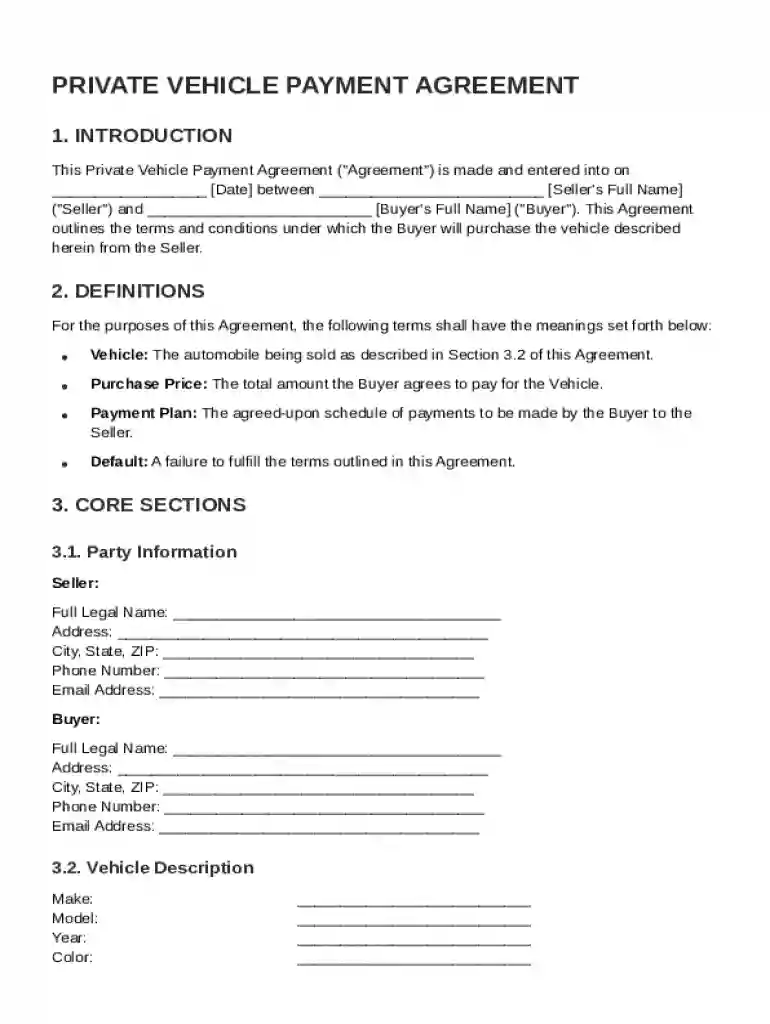
A Private Vehicle Payment Agreement Template is a legally binding document that outlines the terms and conditions for the sale of a vehicle between two parties, typically a Seller and a Buyer. This agreement serves to clearly define the obligations and responsibilities of each party to prevent misunderstandings and disputes. It includes sections that specify party information, detailed vehicle descriptions, payment terms, and conditions, offering a structured approach to transferring vehicle ownership.
Components of the Definition
- Seller and Buyer Identification: The agreement starts by identifying the involved parties, including their full names and contact details. This information is crucial to establish legal responsibility and contact points.
- Vehicle Details: This section includes vital information about the vehicle, such as make, model, year, VIN (Vehicle Identification Number), and current odometer reading. It ensures that both parties agree on the specific vehicle being transacted.
- Terms and Conditions: It outlines the negotiated sale price, payment method, payment schedule, and any specific conditions that apply to the transaction.
Key Elements of the Private Vehicle Payment Agreement Template
When crafting or utilizing a Private Vehicle Payment Agreement Template, several critical elements must be addressed to ensure that the agreement is comprehensive and enforceable.
Essential Clauses
- Payment Terms: Clear articulation of the purchase price, down payment, and repayment schedule. It may also specify late fees or other financial penalties associated with non-payment.
- Warranties and Representations: Any guarantees regarding the vehicle's condition, legality of sale, or any existing liens should be detailed to protect both parties.
- Default Remedies: This section outlines the consequences if either party fails to comply with the agreement terms, including repossession, late fees, or legal action.
Protective Provisions
- Governing Law: Identification of the jurisdiction's laws that govern the agreement, which is typically the state where the transaction takes place, is crucial for legal enforcement.
- Miscellaneous Provisions: These might include clauses on dispute resolution, modification processes, and any additional agreements between the parties.
Steps to Complete the Private Vehicle Payment Agreement Template
Completing a Private Vehicle Payment Agreement Template involves several precise steps to ensure the document is correctly prepared and enforceable.
Step-by-Step Process
- Gather Necessary Information: Both parties must provide personal information and vehicle details, ensuring that all sections are filled accurately.
- Negotiate Key Terms: Discuss and agree on the payment amount, schedule, and method of payment. Clarify any warranties or additional terms.
- Draft the Agreement: Use a pre-existing template to fill out the details agreed upon, ensuring all mandatory fields are covered.
- Review and Sign: Both parties should thoroughly read the completed document for accuracy and understanding before signing. It's advisable to do this in presence of a witness or notary for added legitimacy.
Situations Requiring Special Attention
- Used Vehicles: More comprehensive descriptions and condition reports, including history of repairs or accidents, should be included.
- Multi-state Transactions: Verify if there are any additional legal requirements if the buyer and seller are located in different states.
Legal Use of the Private Vehicle Payment Agreement Template
The template serves as a formal contract, making it legally binding and valid in court if disputes arise. Understanding the legal implications is crucial for all parties involved.
Legal Considerations
- Authentication: Signing the document in the presence of a notary may be required in some jurisdictions to ensure its validity.
- Enforcement: The document can be used in legal proceedings to enforce the terms agreed upon, should any party default on their obligations.
Examples of Legal Applications
- Repossession: If the buyer defaults, the seller may use the agreement to repossess the vehicle legally.
- Litigation: The document can show evidence of agreed terms and conditions if either party takes legal action to enforce the agreement.
Important Terms Related to the Private Vehicle Payment Agreement Template
Grasping the terminology used in the Private Vehicle Payment Agreement Template is essential for the clear understanding and execution of its sections.
Key Legal and Financial Terms
- Lien: A claim or legal right against a vehicle by a lender as security for a loan until the debt is paid off.
- Invoice Price: The amount the dealership paid the manufacturer for the vehicle, often listed in the agreement for pricing transparency.
- As-Is: A term indicating that the seller offers no warranty on the vehicle's condition except as stated in the agreement.
How Understanding these Terms Helps
- Negotiation Clarity: Knowledge of these terms helps both parties in drafting clear and mutually beneficial agreement terms.
- Dispute Avoidance: Proper use and understanding of these terms can significantly reduce potential disputes and litigation.
State-Specific Rules for the Private Vehicle Payment Agreement Template
Vehicle sales are subject to varying state laws within the United States, which can impact the contents and enforceability of the agreement.
Understanding State Variations
- Title Transfer Requirements: Some states mandate that vehicle titles be transferred within a specific period post-sale to make the agreement binding.
- Sales Tax: States have differing rules on sales tax applicability, which can affect the total settlement amount between buyer and seller.
- Emissions Tests: Certain states require passing an emissions test prior to the sale, impacting the terms of the sale in the agreement.
Implications for the Buyer and Seller
- Legal Compliance: Ensuring adherence to specific state regulations can prevent legal issues and ensure a smooth transaction completion.
- Documentation: Both parties should gather all supporting documents as required by the state laws to accompany the agreement.
Digital vs. Paper Version of the Agreement
Choosing between a digital or paper version of the agreement can affect its accessibility, security, and convenience.
Advantages of Digital Agreements
- Ease of Access: Digital agreements can be accessed and edited from anywhere, facilitating quicker transactions, especially through platforms like DocHub.
- Security Features: Enhanced measures like encryption and password protection on digital documents can safeguard personal information.
- Environmentally Friendly: Reduces paper use and associated costs with printing and storage.
Considerations for Paper Agreements
- Tangible Records: Hard copies can be easier for some parties when filing or organizing physical documents.
- No Technical Barriers: Eliminates the need for technology access, ensuring all parties, regardless of digital proficiency, can execute the agreement.