






Definition and Meaning of a Power of Attorney Agreement
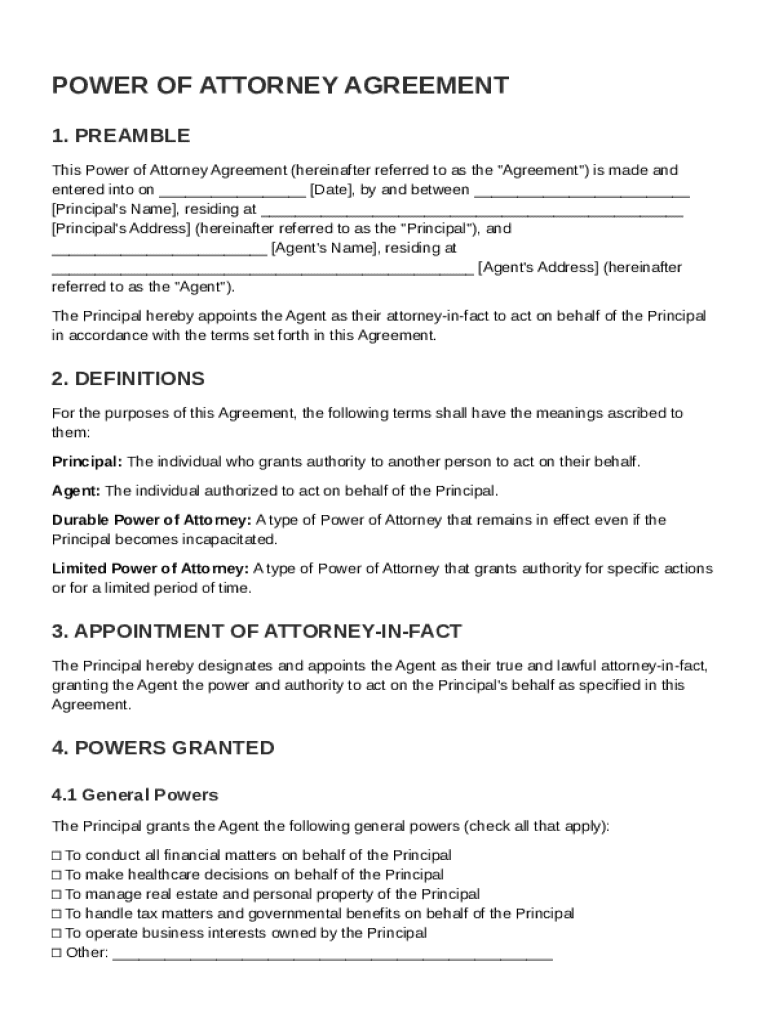
A Power of Attorney Agreement is a legal document that appoints an individual, known as the Agent, to act on behalf of another person, referred to as the Principal. This document grants the Agent the authority to make decisions and perform acts on behalf of the Principal in specified matters. The scope of the powers can range from handling financial transactions to making healthcare decisions. The agreement ensures that the Agent's actions are legally recognized and binding, providing peace of mind for Principals who may be unavailable or unable to manage their affairs.
Key Elements of the Powers of Attorney Agreement Template
The Powers of Attorney Agreement Template includes several critical components to ensure it fulfills legal requirements:
- Principal and Agent Details: Clearly states the full names and contact information of both parties involved.
- Scope of Powers: Outlines the specific powers granted to the Agent, such as financial management or healthcare decisions.
- Duration: Specifies when the power begins and ends, which can be a fixed term or upon the occurrence of a specific event.
- Revocation Rights: Details the Principal's right to revoke the agreement at any time.
- Indemnity Clauses: Protects the Agent from liability for actions taken in good faith within the authority granted by the agreement.
- Compensation: Describes any payment or compensation the Agent will receive for their services.
- Governing Law: Indicates the state laws that govern the agreement's interpretation and execution.
- Signature Section: Provides spaces for signatures of the Principal, Agent, and witnesses, with an option for notarization.
How to Use the Powers of Attorney Agreement Template
Utilizing the Powers of Attorney Agreement Template can streamline the process of legally appointing an Agent. The template guides users through each section that needs to be completed and reviewed:
- Download the Template: Access the Powers of Attorney Agreement Template on your preferred device.
- Fill in Personal Details: Enter the Principal's and Agent's information accurately.
- Define the Powers: Specify the exact actions the Agent is authorized to take.
- Determine the Duration: Clearly state the start and end dates, or conditions for termination.
- Include Additional Clauses: Add any necessary indemnity or compensation clauses.
- Finalize with Signatures: Ensure all parties sign the document, and consider notarization for added legal strength.
Steps to Complete the Powers of Attorney Agreement Template
Completing the Powers of Attorney Agreement Template involves several critical steps to ensure completeness and legality:
- Understand the Template: Familiarize yourself with the sections and required information.
- Gather Required Information: Compile personal and legal details of the Principal and Agent.
- Draft the Agreement: Insert information into the designated fields of the template, ensuring accuracy in spelling and details.
- Review and Revise: Thoroughly check for errors or ambiguities in the document.
- Consult a Legal Advisor: Consider having a legal professional review the document to ensure compliance with state laws.
- Execute the Agreement: Upon finalizing, both parties should sign the document in the presence of witnesses, and optionally have it notarized.
Legal Use of the Powers of Attorney Agreement Template
A Powers of Attorney Agreement can be foundational for legal decision-making in various scenarios:
- Financial Decisions: Allows the Agent to manage banking, investments, and real estate transactions.
- Healthcare Decisions: Authorizes the Agent to make medical decisions, including consent to treatment or choosing healthcare providers.
- Property Management: Grants the Agent authority over leasing and maintenance of real estate properties.
It is essential to ensure that all parties are aware of the legal implications and limitations associated with these powers.
Important Terms Related to the Powers of Attorney Agreement Template
Understanding specific terminology in the Agreement is vital for clarity:
- Principal: The individual who grants authority to another.
- Agent (or Attorney-in-Fact): The person authorized to act on behalf of the Principal.
- Durable Power of Attorney: Remains effective even if the Principal becomes incapacitated.
- Springing Power of Attorney: Only takes effect upon a specified event or condition.
- Limited Power of Attorney: Grants specific, narrow powers for certain tasks or timeframes.
State-Specific Rules for Powers of Attorney
Each U.S. state may have unique requirements and limitations regarding Powers of Attorney:
- Formal Requirements: States may mandate specific forms or language to be used in the agreement.
- Execution Standards: Some states require witness signatures or notarization as part of the validation process.
- Revocation and Amendments: Laws dictate how a Power of Attorney can be revoked or changed.
Who Typically Uses the Powers of Attorney Agreement Template
Various individuals and entities can benefit significantly from using this template:
- Elderly Individuals or those planning for future incapacity: They can designate trusted individuals to manage affairs.
- Military Personnel: Service members may appoint an Agent to manage legal and financial matters during deployment.
- Frequent Travelers or expatriates: Individuals who are often abroad can ensure their domestic affairs are in order through a designated Agent.
Using a Powers of Attorney Agreement can provide reassurance and legal clarity in situations where personal management of affairs is not feasible.