






Definition & Meaning
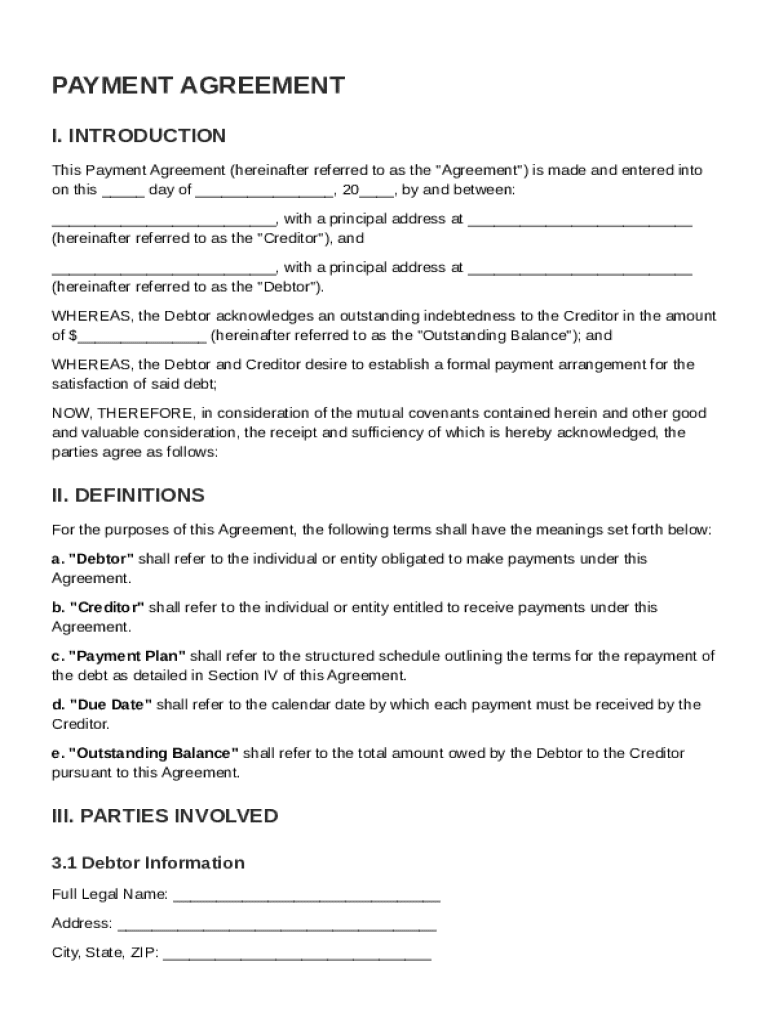
A Payment Plan Agreement Template, also known as a Payment Agreement, is a legal document outlining the terms under which a borrower, referred to as the debtor, agrees to repay a loan to a lender, or creditor. This document serves as a legally binding contract that establishes the specifics of the repayment plan. It typically includes details about the payment schedule, interest rates, penalties for late payments, and the consequences of default. The agreement may also highlight any provisions for modifying the document, ensuring severability, and binding effects on both parties involved.
Key Components
- Creditor and Debtor Details: Identifies the parties involved in the agreement.
- Outstanding Debt: Specifies the total amount owed by the debtor.
- Interest Rates: Details any interest applicable on the outstanding debt.
- Payment Schedule: Outlines the timeline for repayments, including frequency and amounts.
- Late Payment Penalties: Describes any fees incurred for late payments.
- Consequences of Default: Clarifies legal actions or penalties for failing to adhere to the agreement.
How to Use the Payment Plan Agreement Template
Using a Payment Plan Agreement Template effectively involves a few structured steps. This template is designed to streamline the process of setting up a repayment agreement between two parties.
Steps to Utilize
- Review Template Content: Familiarize yourself with the standard provisions included in the template.
- Customize Details: Enter specific information related to your scenario, such as personal details of both parties, debt amount, and any legal jurisdiction relevant to the agreement.
- Determine Payment Terms: Decide on the repayment timeline, interest rates, and any conditions for deferred payments in collaboration with the creditor or debtor.
- Legal Review: To ensure compliance with state laws and personal protection, consider having the document reviewed by a legal professional.
- Obtain Signatures: Both parties should sign the document to validate it legally, ensuring that each party understands and agrees to the terms.
Key Elements of the Payment Plan Agreement Template
The Payment Plan Agreement Template includes several fundamental components that are crucial for its functionality.
Essential Elements
- Identification: Names and contact information for the creditor and debtor.
- Description of Debt: A clear explanation of the debt, including the principal amount and any interest.
- Repayment Terms: Details the repayment period and schedule, ensuring clarity on timing and amounts.
- Modification Clause: Offers provisions for potential changes to agreement terms, subject to mutual consent.
- Security Interest: May include collateral if applicable, offering creditor security for loan recovery.
- Governing Law: Indicates the legal jurisdiction governing the agreement, ensuring clarity in case of disputes.
Legal Use of the Payment Plan Agreement Template
Before using a Payment Plan Agreement Template, it's critical to understand its legal implications and applications. This template is designed to offer a structure that aligns with U.S. legal standards.
Legal Considerations
- Binding Nature: When signed, the document acts as a legally binding contract, enforceable in a court of law.
- Compliance: Ensure compliance with federal and state laws governing loans and debts, including relevant interest caps and lending regulations.
- Confidentiality: Protects sensitive information through confidentiality clauses to prevent unauthorized disclosure.
- Dispute Resolution: Includes methods for resolving potential disputes, such as mediation or arbitration, which can prevent costly legal battles.
Steps to Complete the Payment Plan Agreement Template
Completing the Payment Plan Agreement Template requires diligence in providing accurate and comprehensive information.
Detailed Steps
- Input Basic Information: Start by filling out the personal details of both parties.
- Outline Debt Terms: Specify the sum to be repaid, the interest rate, and any previous payment history relevant to the debt.
- Specify Payment Schedule: Clearly define how often payments will be made (e.g., monthly) and the amount of each installment.
- Address Potential Changes: Note any conditions under which the agreement can be modified or updated.
- Sign and Date: Both parties should read, sign, and date the document, providing legal acknowledgment of their consent to the terms.
State-Specific Rules for the Payment Plan Agreement Template
Different states may have specific rules governing the enforceability and structure of payment agreements. Understanding these differences can help tailor the document more accurately.
State Considerations
- Interest Rate Limits: Some states impose a cap on interest rates that can be charged, which must be adhered to when forming the agreement.
- Disclosure Requirements: States might require disclosures regarding fees and total repayment amounts to be included in the agreement.
- Usury Laws: Ensure compliance with state usury laws, which regulate the amount of interest that can legally be charged.
- Document Filing: Certain jurisdictions may require filing the agreement with local governmental bodies or maintaining multiple copies for records.
Important Terms Related to the Payment Plan Agreement Template
Familiarity with key terms can help all parties involved better understand and execute the agreement.
Glossary
- Debtor: The individual or entity who owes the debt.
- Creditor: The individual or entity to whom the debt is owed.
- Principal: The initial sum of money borrowed excluding any interest or fees.
- Interest Rate: The percentage charged on the borrowed sum as the cost of borrowing.
- Default: Failure to meet the payment obligations outlined in the agreement.
Examples of Using the Payment Plan Agreement Template
The Payment Plan Agreement Template can be applicable in various real-world scenarios where structured repayment is necessary.
Practical Scenarios
- Personal Loans: When lending money to a friend or family member, this template ensures a clear understanding of repayment obligations.
- Business Transactions: Useful when settling accounts payable over a defined period between two companies.
- Educational Funding: Assists in setting up payment plans for tuition or other educational expenses in installments.
- Medical Bills: Facilitates structured repayments of significant healthcare costs over time.
Using these examples and detailed explanations, you can optimize the utility and effectiveness of the Payment Plan Agreement Template for various needs and situations.