






Definition and Meaning
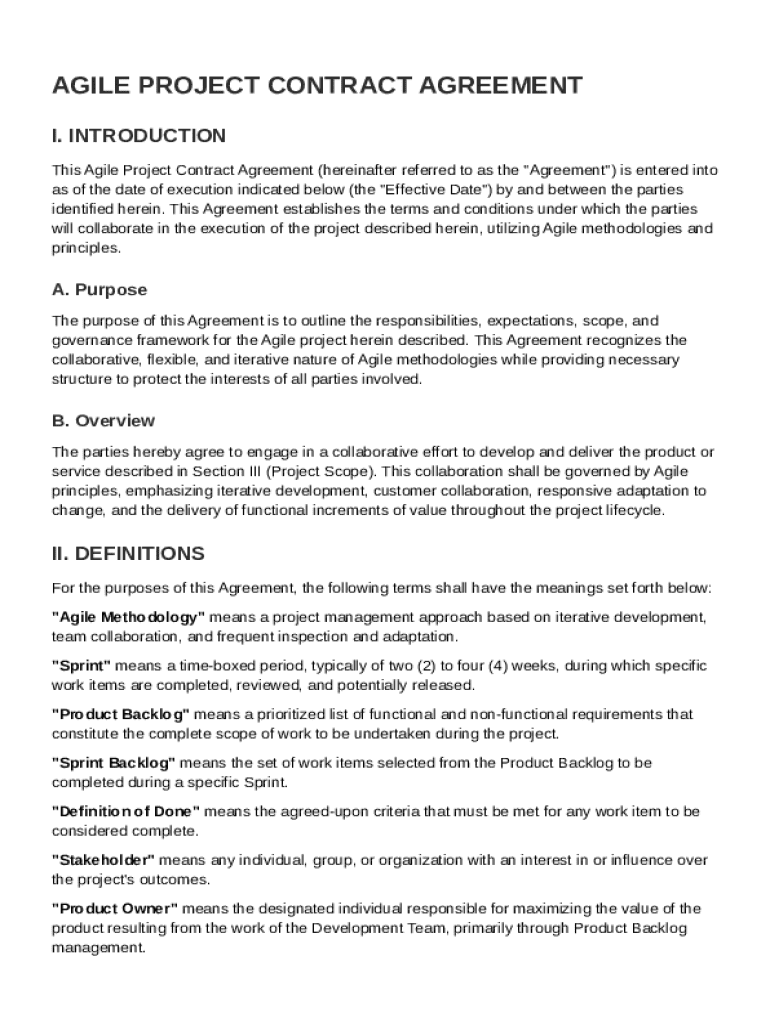
The Agile Project Contract Template is a formal agreement detailing the terms and conditions under which a client and a service provider will collaborate on an Agile project. Agile projects focus on iterative development, flexibility, and rapid response to change, while maintaining a structured framework to safeguard the interests of all participants. This template establishes the project scope, financial arrangements, roles and responsibilities, and ensures alignment with the Agile methodologies, thus enhancing effectiveness and accountability.
Key Elements of the Agile Project Contract Template
The contract template encompasses several critical components that ensure the project progresses smoothly and effectively:
- Project Scope: Clearly outlines the deliverables, objectives, and boundaries of the project.
- Roles and Responsibilities: Defines the responsibilities of each party, including project management, development, and quality assurance roles.
- Financial Arrangements: Details the financial terms, such as payment schedules, budgets, and resources allocation.
- Communication Plans: Sets forth protocols for regular updates and meetings, ensuring continuous information flow and collaboration.
- Change Management Procedures: Includes guidelines for handling project changes without disrupting the workflow.
- Quality Assurance Measures: Specifies the methods for testing and ensuring the quality of deliverables.
- Risk Management Strategies: Identifies potential risks and outlines mitigation strategies.
- Confidentiality Obligations: Protects sensitive information shared between the parties.
- Termination Conditions: Provides conditions under which the contract can be terminated by either party.
- Dispute Resolution Procedures: Establishes mechanisms for resolving misunderstandings or disagreements.
How to Use the Agile Project Contract Template
Utilizing the Agile Project Contract Template involves a series of clear steps:
- Download the Template: Access and download the template from a trusted source like DocHub.
- Fill Out the Heading: Start by entering introductory information, such as names and contact information of the client and service provider.
- Define the Scope: Specify the project's goals and deliverables.
- Specify Roles: Assign roles and responsibilities to team members.
- Arrange Financial Terms: Outline the budget, payment schedule, and financial responsibilities.
- Develop Communication Strategies: Agree on communication methods and frequency.
- Include Additional Sections: Tailor sections like risk management according to the project's needs.
Ensuring each section is completed accurately fosters a common understanding and lays the groundwork for a successful collaboration.
Steps to Complete the Agile Project Contract Template
Completing the Agile Project Contract Template efficiently involves detailed and structured steps:
- Initial Meeting: Organize a meeting between client and service provider to discuss and outline the key aspects of the project.
- Drafting: Draft the contract by filling out the basic project information, such as names, dates, and project descriptions.
- Stakeholder Review: Share the draft with all stakeholders for review and feedback.
- Revisions: Incorporate feedback and make necessary revisions to the draft.
- Final Review: Conduct a comprehensive review with all parties to confirm agreement on the terms.
- Signatures: Obtain signatures from authorized representatives of both parties to formalize the contract.
- Distribution: Distribute final copies to all stakeholders and store securely.
Following these steps ensures that the contract is thorough and mutually agreed upon.
Who Typically Uses the Agile Project Contract Template
Various entities and professionals employ the Agile Project Contract Template for a structured approach to project management:
- Software Development Companies: Use the template to outline terms and expectations in developing software projects for clients.
- Consultants: Apply the template when providing advisory services on Agile methodologies.
- Marketing Agencies: Adopt Agile practices when working on dynamic campaigns with iterative revisions.
- Freelancers: Use it to define project scopes and terms clearly when engaging with clients.
These users value the template's ability to offer a blend of flexibility and structure, fostering successful project outcomes.


Legal Use of the Agile Project Contract Template
The legal use of the Agile Project Contract Template ensures compliance and minimizes risks:
- ESIGN Compliance: The template supports electronic signatures compliant with the ESIGN Act, ensuring signature legality.
- Binding Agreement: As a legally binding document, it safeguards both parties' interests.
- Governing Law: Usually specifies the state's laws applicable to the contract, important for resolving disputes.
- Confidentiality: Contains terms preventing unauthorized disclosure of sensitive information.
Clients and providers should seek legal advice to tailor the document to their specific legal frameworks and requirements.
Examples of Using the Agile Project Contract Template
Practical instances of employing the Agile Project Contract Template highlight its flexibility and utility:
- Tech Startups: Implement the template to engage external developers in early-stage product development.
- Healthcare App Development: Use the template to set terms for iterating healthcare solutions, accommodating regulatory changes swiftly.
- Retail Campaigns: Agencies create campaigns using Agile principles for their clients, iterating based on real-time feedback.
These examples demonstrate how varied industries leverage the Agile Project Contract Template to enhance project efficiency and responsiveness.
Software Compatibility
The Agile Project Contract Template is compatible with various document management and productivity tools, enhancing its utility:
- DocHub Integration: Users can edit, sign, and share documents directly within DocHub, ensuring seamless workflow.
- Google Workspace Compatibility: Integrates smoothly with Google Drive for storage and Google Docs for editing.
- Cloud Solutions: Supports Dropbox and OneDrive, catering to diverse storage preferences.
- File Formats: Compatible with multiple formats like PDF, DOC, and TXT, ensuring flexibility and accessibility.
This array of compatibility ensures that the template fits seamlessly into existing workflows, enabling smoother collaboration and management.
Required Documents
Setting up a comprehensive Agile project may necessitate a supporting set of documents to accompany the contract:
- Project Plan: Details tasks, schedules, and resource allocation.
- Scope Statement: Clearly outlines project deliverables and objectives.
- Budget Document: Provides a detailed breakdown of expected expenses.
- Risk Assessment: Identifies potential risks and their mitigation strategies.
- Client Specification Document: Details custom requirements from the client.
Having these documents ready supports successful project execution and aligns all parties with the project's vision and execution strategy.