






Key Elements of the Participation Agreement Template
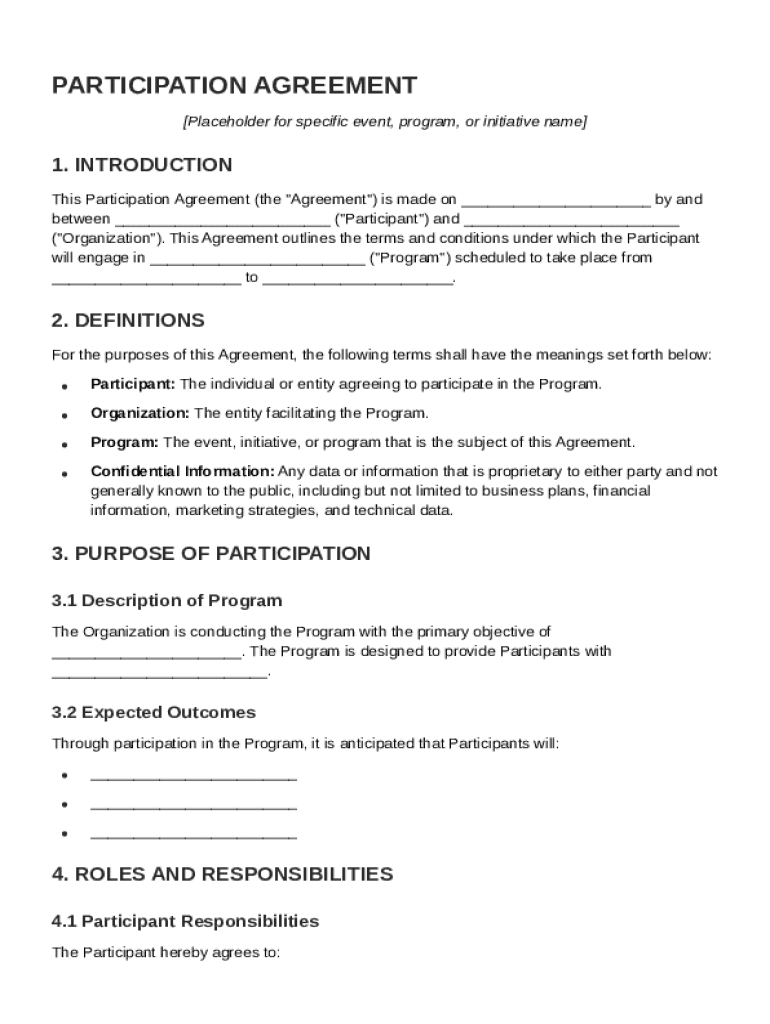
The Participation Agreement Template encompasses a comprehensive framework detailing the contractual relationship between participating individuals or entities, and the organizing entity. This template typically includes several crucial components:
- Definitions: Clearly defines key terms used throughout the document to eliminate ambiguities and ensure mutual understanding.
- Roles and Responsibilities: Outlines the specific duties and obligations of each party involved. This section is crucial for ensuring accountability and smooth collaboration.
- Confidentiality Obligations: Specifies any requirements for keeping information private, protecting both trade secrets and sensitive personal data.
- Liability Waivers: Details the limitations on liability for each party, reducing the potential for future legal conflicts.
- Payment Terms: Describes the financial arrangements, including payment schedules and conditions.
- Termination Conditions: Provides guidelines for the termination of the agreement under specific circumstances, ensuring an orderly dissolution of the partnership if necessary.
- Dispute Resolution Processes: Establishes the mechanisms for resolving any conflicts, such as mediation or arbitration, to avoid litigation.
- Miscellaneous Provisions: Includes other relevant legal stipulations, such as governing law and amendment procedures.
Steps to Complete the Participation Agreement Template
Completing the Participation Agreement Template requires following a series of methodical steps to ensure the document is thorough and precise.
- Review Definitions: Begin by understanding all defined terms to avoid confusion.
- Identify Responsibilities: Clearly outline the roles and responsibilities of each party, ensuring all requirements are addressed.
- Establish Confidentiality Terms: Define the scope and expectations for confidentiality to protect sensitive information.
- Detail Payment Arrangements: Specify amounts, deadlines, and conditions for payments to avoid future disputes.
- Outline Termination Conditions: Ensure that both parties agree on the conditions under which the agreement can be terminated.
- Define Dispute Resolution Processes: Agree on processes for handling potential disputes to prevent escalation to the courts.
- Finalize Miscellaneous Details: Attend to any additional provisions that may pertain to the specific nature of the agreement.
Legal Use of the Participation Agreement Template
The Participation Agreement Template is a legally binding document that provides essential protections and clarity for all parties involved.
- Compliance with the ESIGN Act: By using DocHub's signing features, the document adheres to electronic signature standards, ensuring legality.
- Data Protection: Incorporating confidentiality clauses ensures compliance with data privacy laws.
- Legal Adaptability: While the template provides a robust framework, it should be customized to comply with specific state or federal regulations applicable to the agreement.
- Enforceability: A signed Participation Agreement can be enforced in court, providing legal recourse if a party fails to meet its obligations.
Who Typically Uses the Participation Agreement Template
The Participation Agreement Template is widely used across various sectors where formal relationships are established.
- Nonprofit Organizations: Utilize the template for volunteer or partnership agreements.
- Corporate Programs: Companies engaged in joint ventures or collaborations leverage the template to define terms with external partners.
- Educational Institutions: Universities and schools may apply this template for internship or affiliation agreements.
- Event Planners: Use the template to outline responsibilities and liabilities in organizing events or conferences.


Software Compatibility
The Participation Agreement Template is compatible with various digital platforms, enhancing accessibility and convenience.
- DocHub: Allows seamless editing, signing, and sharing within the platform.
- Google Workspace Integration: Directly import and export documents with Google Drive and Gmail, streamlining the workflow.
- PDF Readers: The template can be downloaded as a PDF for use with any standard PDF reader.
- Microsoft Office: Compatible with Word for offline editing, expanding usability across different user preferences.
State-Specific Rules for the Participation Agreement Template
In the United States, variations in state laws can affect the content and enforcement of participation agreements.
- Governing Laws: Identify the specific laws of the state where the agreement is executed to ensure legal compliance.
- Local Business Regulations: Be aware of any state-specific regulations that may influence roles, responsibilities, or liability issues.
- Legal Advice: Consulting with a local attorney can ensure the agreement aligns with state laws, particularly concerning confidentiality and dispute resolution.
Importance of the Participation Agreement Template
Participation agreements are vital for formalizing relationships and setting clear expectations.
- Clarity and Transparency: Ensures all parties have a shared understanding of their roles and obligations.
- Risk Management: Properly structured agreements minimize potential legal conflicts and liability risks.
- Framework for Collaboration: Provides a structured foundation for successful partnerships, fostering trust and cooperation among parties.
Examples of Using the Participation Agreement Template
Various scenarios illustrate the versatility and necessity of the Participation Agreement Template.
- Technology Partnerships: Tech companies collaborating on product development can use the template to define intellectual property rights and development milestones.
- Healthcare Collaborations: Health organizations may implement this template to govern cooperative research projects, outlining trial responsibilities and data sharing protocols.
- Cultural Exchange Programs: Institutions running cultural or educational exchange programs can leverage the template to detail participant roles, ensuring a smooth operation.
- Event Organizing: Agencies planning joint events utilize participation agreements to allocate tasks, manage risk, and clarify revenue-sharing models.