Definition and Meaning
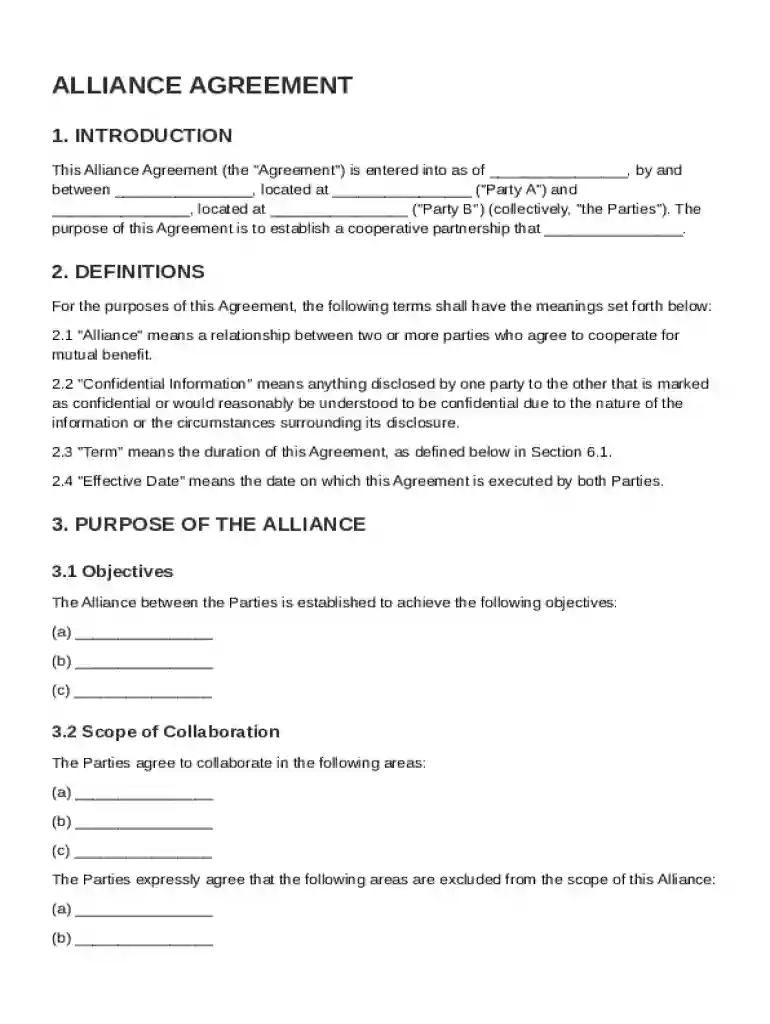
An Alliance Agreement Template is a standardized document designed to formalize a cooperative partnership between two or more entities. This template outlines various critical components of the partnership, such as the objectives, roles, and responsibilities of each party involved. It's especially useful in establishing mutual benefits while protecting confidential information and setting clear engagement terms.
- Objectives: The template helps define the shared goals of the alliance, ensuring all parties are aligned in their purpose.
- Responsibilities: Clearly delineates who is responsible for what tasks, which allows for efficient collaboration and accountability.
- Confidentiality Obligations: Sets strict guidelines on how confidential information is to be handled and shared.
These documents are particularly valuable for businesses seeking collaborative opportunities that require clear, legally sound frameworks.
Key Elements of the Alliance Agreement Template
Alliance Agreements typically contain several essential components that ensure clarity and mutual understanding between parties.
- Scope of Collaboration: Defines what the alliance aims to achieve and the extent of collaboration.
- Resource Contributions: Specifies each party's contributions, such as funding, technology, or expertise.
- Governance Structure: Outlines decision-making processes and leadership roles within the partnership.
- Procedure for Dispute Resolution: Establishes mechanisms to address and resolve conflicts, minimizing disruptions to the alliance.
- Termination Clauses: Details the conditions under which the agreement can be terminated.
These elements work together to provide a comprehensive framework that facilitates effective partnerships.
How to Use the Alliance Agreement Template
Using the Alliance Agreement Template involves a structured approach to customize the document to fit the specific needs of the parties involved.
- Review the Template: Assess the template's sections to ensure they align with the partnership's goals.
- Customize Content: Modify sections that require specific information, such as objectives and roles.
- Consult Legal Experts: Engage with legal advisors to ensure all elements comply with local and federal laws.
- Negotiate Terms: Discuss with all parties to reach consensus on responsibilities, governance, and procedures.
This ensures the agreement accurately reflects the partnership's intentions and legal requirements.
Steps to Complete the Alliance Agreement Template
Completing an Alliance Agreement Template requires precision and attention to detail. Here’s a step-by-step guide:
- Insert Participant Details: Enter the legal names and contact details of all participating entities.
- Define Objectives: Clearly state the goals and expected outcomes of the alliance.
- List Contributions: Specify what each party is providing, whether it's resources, funding, or expertise.
- Establish Governance and Management: Determine who will manage the alliance and make decisions.
- Draft Confidentiality and IP Clauses: Protect sensitive information and intellectual property.
- Set Up Termination Procedures: Outline how and when the agreement can be dissolved.
Each step ensures that the completed document is comprehensive and legally sound.
Legal Use of the Alliance Agreement Template
The legal aspect of an Alliance Agreement is fundamental to ensuring its enforceability. When crafting this document, consider:
- Compliance with Laws: The agreement should comply with relevant local, state, and federal laws.
- Enforceability: Ensure that the terms are clear and reasonable to be legally binding.
- Intellectual Property Rights: Clearly state how IP is shared and protected within the alliance.
By addressing these legal elements, parties can protect themselves from potential legal disputes.
Important Terms Related to the Alliance Agreement Template
Understanding specific legal terms within the Alliance Agreement Template facilitates better comprehension and reduces misunderstandings.
- "Partnership": Often indicates a collaborative effort but doesn't imply a legal partnership under the law unless specified.
- "Confidential Information": Any data shared in confidence, protected under confidentiality clauses.
- "Force Majeure": A clause that frees both parties from liability or obligation when extraordinary events prevent fulfilling the contract.
These terms help define the specific legal contours and stipulations within the document.
Examples of Using the Alliance Agreement Template
Alliance Agreements are utilized in various industries to foster collaboration:
- Tech Partnerships: Two tech companies might enter an alliance to co-develop a new product.
- Non-Profit Collaborations: Charities may form alliances to maximize resource use and achieve shared social goals.
- Academic and Research Partnerships: Universities can collaborate on joint research projects.
Such examples illustrate the versatility and utility of these agreements across different sectors.
Business Types That Benefit Most from the Alliance Agreement Template
Certain business types may find the Alliance Agreement Template particularly beneficial:
- Startups: For forging partnerships that offer strategic advantages like technology sharing or market access.
- Established Corporations: To enter international markets via local alliances.
- Non-profits: To collaborate on common causes and pool resources effectively.
These agreements are instrumental in ensuring that collaborations are strategically planned and legally protected.