
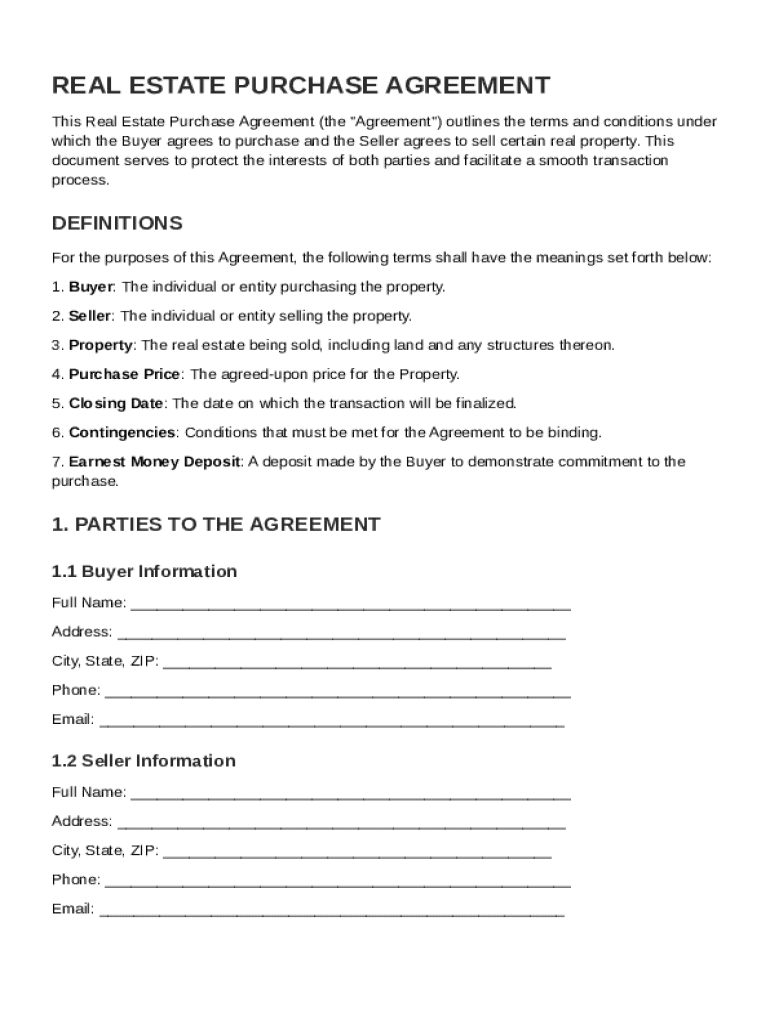







Definition & Meaning
A Purchase Real Estate Agreement Template is a standardized document used to outline the terms and conditions of a property transaction between a buyer and a seller. This legal instrument specifies key aspects such as the sale price, property details, payment arrangements, and any contingencies that may affect the sale. Its purpose is to safeguard the interests of both parties by laying out mutual obligations and expectations. Examples include clauses detailing the timeframe for inspections and appraisals and requirements for closing the transaction. This document is crucial in ensuring transparency and legal compliance throughout the real estate transaction process.
Key Elements of the Purchase Real Estate Agreement Template
The Purchase Real Estate Agreement Template contains several critical elements that define the transaction. These typically include:
- Parties Involved: Clearly identifies the buyer and seller participating in the transaction.
- Property Description: A precise description of the property, including address, legal description, and any included fixtures or fittings.
- Purchase Price: Specifies the agreed-upon sale price of the property and any deposit or earnest money requirements.
- Payment Terms: Outlines the payment schedule, financing arrangements, and any contingencies related to securing financing.
- Inspection and Contingencies: Details any conditions that must be met for the sale to proceed, such as property inspections or appraisal results.
- Closing Details: Sets the date and location of the closing and defines what happens if either party defaults.
- Dispute Resolution: Includes methods for resolving disputes, such as mediation or arbitration, and specifies the jurisdiction governing the agreement.
These elements are designed to create a legally binding framework that facilitates a smooth property transaction.
How to Use the Purchase Real Estate Agreement Template
Using the Purchase Real Estate Agreement Template effectively involves several steps:
- Review the Template: Before filling out the template, thoroughly read and understand each section to ensure it meets your specific needs.
- Complete the Details: Accurately input the information of the buyer, seller, property description, and negotiations around price and terms.
- Include Contingencies: Specify any conditions that must be satisfied before the sale is final, such as financing approval or a satisfactory home inspection.
- Set a Closing Date: Determine a mutually agreeable date for the transaction to be completed.
- Review and Sign: After all details are filled in, both parties should review the agreement, possibly seeking legal counsel, and then sign the document.
Following these steps will ensure the template serves its purpose effectively and helps in avoiding legal complications.
Legal Use of the Purchase Real Estate Agreement Template
The template must be used in compliance with federal, state, and local laws governing real estate transactions. This involves ensuring:
- Disclosure Requirements: All required disclosures about the property condition and any defects must be provided to the buyer.
- Legally Binding Terms: The terms must adhere to legal standards, making the agreement enforceable in a court of law.
- Signature Authentication: Each party's signature should be authentic and verifiable, with the possibility of involving a notary if required by local regulations.
- Clarity and Comprehension: The language used should be clear and unambiguous, preventing misunderstandings or misinterpretations.
Legal compliance ensures that the transaction proceeds without legal hurdles or disputes.
State-Specific Rules for the Purchase Real Estate Agreement Template
While the template serves as a general guide, there may be variations based on state laws. Highlights include:
- State-Specific Disclosures: Certain states may require additional information, such as environmental hazards or past renovations.
- Diverse Closing Practices: Closing procedures, including the use of escrow services, can vary widely.
- Differences in Contract Terms: Some states may have specific requirements or prohibited clauses in real estate agreements.
Understanding these state-specific rules ensures the agreement is enforceable and compliant in the intended jurisdiction.
Steps to Complete the Purchase Real Estate Agreement Template
Here’s a step-by-step guide to completing the template:
- Identify Parties: Clearly list the full legal names of the buyer and seller.
- Define the Property: Include legal descriptions, parcel number, and physical address.
- Set Financial Terms: Detail the agreed price, payment method, and deposit requirements.
- Outline Contingencies: Note any conditions that, when unmet, might nullify the agreement.
- Finalize Dates: Agree on the permanence of the closing date, payment schedules, and relevant deadlines.
Following these steps can help you customize the template to fit your particular transaction needs.
Important Terms Related to Purchase Real Estate Agreement Template
Understanding the terminology associated with this template is crucial:
- Earnest Money: A deposit made to demonstrate the buyer’s commitment, later applied to the purchase price unless certain conditions are not met.
- Contingency: A clause that allows the buyer or seller to back out of the contract under certain conditions, like unsatisfactory inspection results.
- Closing Costs: Additional fees associated with completing the transaction, borne by either party as agreed.
A thorough comprehension of these terms ensures both parties are on the same page throughout the transaction.
Examples of Using the Purchase Real Estate Agreement Template
Consider real-world scenarios where the template enhances clarity:
- Private Sale Transactions: Two parties agree on a property transaction without real estate agents, using this template to formalize their agreement.
- Investment Purchases: An investor buys a property with conditions around tenant occupancy or zoning approvals.
- Conditional Offers: A buyer provides an offer contingent upon the sale of another property or securing specific financing.
These examples highlight the template’s flexibility and applicability in various scenarios.




