Definition and Meaning
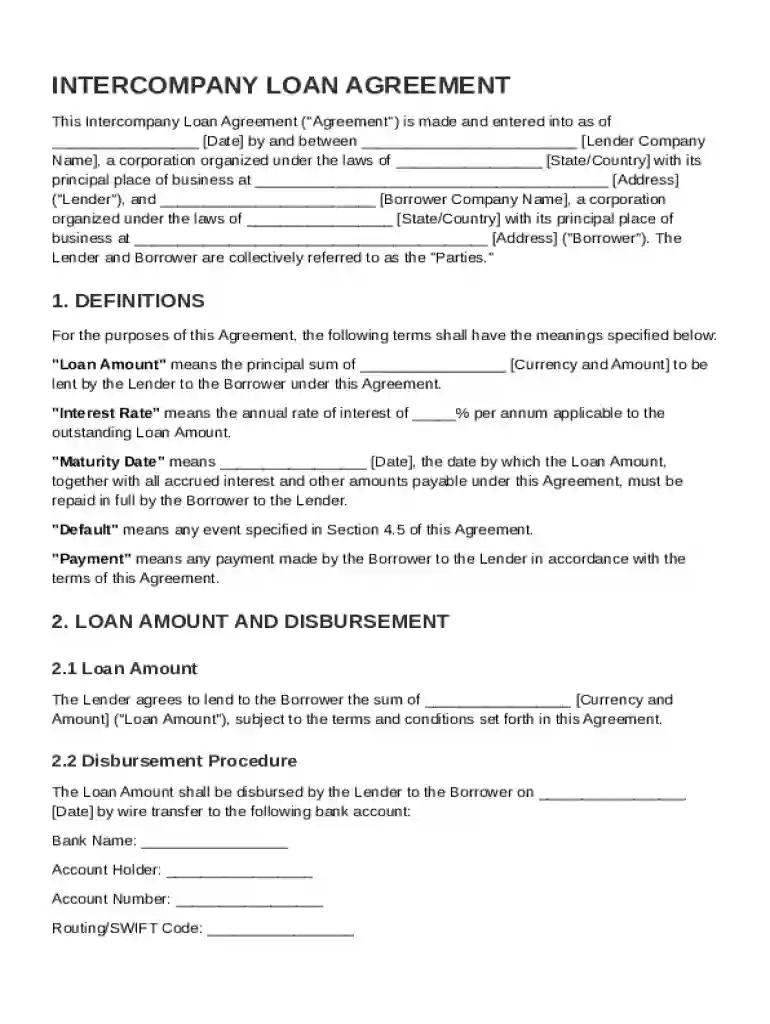
An Intercompany Loan Agreement Template is a formal document used by companies to outline the terms of a loan between related entities within the same corporate group. This template provides a detailed structure to specify the roles of the lender and borrower, agreed loan amount, applicable interest rate, and repayment schedule. It includes critical definitions and interpretations that ensure mutual understanding between parties, facilitating clear communication about each term's meaning. This document is legally binding and protects the interests of both the lending and borrowing parties, setting a clear precedent for financial dealings within a corporate structure.
Important Terms Related to the Intercompany Loan Agreement Template
Understanding key terms is crucial for the appropriate use of the Intercompany Loan Agreement Template. Some important terms include:
- Loan Amount: The principal sum of money that the borrower agrees to repay.
- Interest Rate: The percentage charged on the loan amount, influencing the cost of borrowing.
- Payment Schedule: Timetable detailing when repayments are due, whether monthly, quarterly, or annually.
- Events of Default: Conditions under which the borrower is considered to have violated terms of the agreement.
- Remedies for Default: Actions the lender may take if the borrower defaults, such as requiring immediate full payment.
- Representations and Warranties: Assurances from both parties regarding their ability to engage in the transaction.
- Governing Law: The set of legal codes applicable to the agreement.
Understanding these terms facilitates efficient negotiation and drafting of loan agreements, ensuring compliance and protecting company interests.
Key Elements of the Intercompany Loan Agreement Template
The template comprises several key elements that define the contractual relationship:
- Identity of Parties: Clearly identifies both lender and borrower entities, including their legal names and business addresses.
- Loan Structure: Details the mechanics of the loan, including amount, currency, and drawdown conditions.
- Interest and Repayment: Specifies how interest is calculated and the repayment terms.
- Collateral and Security: Outlines any assets used as security for the loan, if applicable.
- Covenants: Agreed-upon actions or conditions to be met by either party; these may include financial covenants that ensure borrowers maintain certain financial thresholds.
- Termination Clauses: Conditions under which the agreement may be prematurely terminated.
These elements ensure robust and comprehensive documentation of the loan agreement.
Steps to Complete the Intercompany Loan Agreement Template
Completing this template involves a series of structured steps:
- Identify Stakeholders: Determine the legal entities serving as lender and borrower.
- Negotiate Terms: Agree on key terms including the loan amount, interest rate, and repayment schedule.
- Draft Agreement: Use the template to input negotiated terms.
- Review Legal Compliance: Ensure alignment with relevant laws and corporate policies.
- Approve and Sign: Obtain necessary corporate approvals, then execute signatures from authorized representatives.
- Store Securely: File completed agreements in secure digital or physical storage to ensure easy retrieval and confidentiality.
Each step ensures the creation of a legally compliant agreement that upholds corporate governance standards.
How to Use the Intercompany Loan Agreement Template
To effectively use the template:
- Customize Sections: Tailor the template to reflect specific transaction terms without altering mandatory legal language.
- Input Accurate Data: Ensure correctness of details such as company names, amounts, and dates.
- Consult Legal Counsel: Involve attorneys familiar with relevant jurisdictions to review for potential legal pitfalls.
- Align with Financial Policies: Ensure that negotiated terms do not conflict with existing internal financial protocols.
Accurate customization and adherence to legal standards ensure the successful application of the template.
Legal Use of the Intercompany Loan Agreement Template
Legally, this template serves as a binding document that can be presented in court if disputes arise. It is crucial that:
- Both Parties Consent: Ensure that the agreement is voluntarily entered by knowledgeable representatives.
- Complies with Transfer Pricing Rules: Interest rates and terms should align with tax laws to ensure financial compliance.
- Incorporates Governing Laws: The agreement specifies which jurisdiction's laws will govern in case of disputes.
- Offers Recourse for Breach: Clearly outlines penalties or actions for breaches of contract.
Utilizing this template legally protects both the lender and borrower in their financial dealings.
State-Specific Rules for the Intercompany Loan Agreement Template
Loan agreements may need to reflect state-specific regulations and requirements, such as:
- Interest Rate Caps: Some states impose limits on the maximum interest rates permissible in loan agreements.
- Usury Laws: Regulations that prevent unethical loan practices by instituting interest rate ceilings.
- Disclosure Requirements: Legal requirements regarding what must be disclosed in loan terms.
- Filing or Reporting: Certain states may require loan agreements to be filed or reported to state agencies.
Adhering to state-specific rules shields the agreement from legal challenges and ensures enforceability.
Examples of Using the Intercompany Loan Agreement Template
Practical applications of this template can illustrate its versatility:
- Corporate Expansion: Subsidiaries receiving capital injections from parent companies to fund new business ventures.
- Working Capital Management: Intercompany loans to manage liquidity efficiently across different entities in a conglomerate.
- Tax Optimization: Structuring loans to minimize tax burdens in intercompany financial transactions.
- Risk Mitigation: Using loan agreements to structure financial contingencies and buffer against cash flow disruptions.
These examples highlight how companies leverage the template to support various strategic financial objectives within their corporate structures.