







Definition and Importance of the Learning Record Template
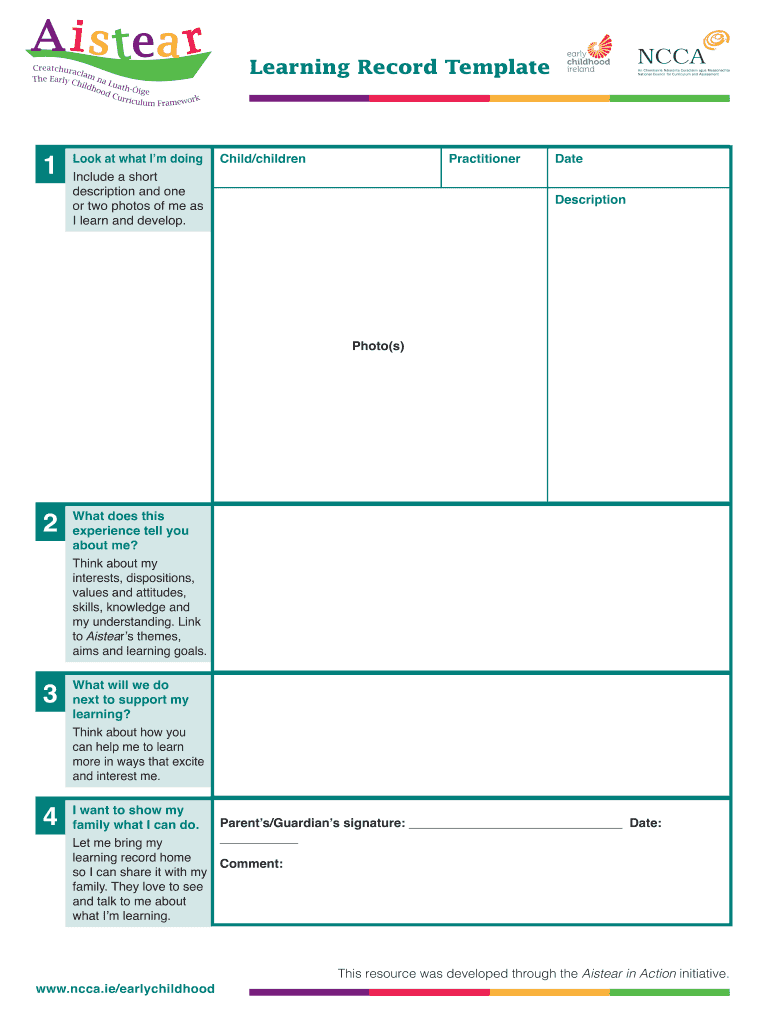
The Learning Record Template serves as a structured framework designed to document and reflect upon a child’s educational journey. It encourages practitioners and educators in early childhood education to capture not only the activities and milestones but also individual learning experiences and achievements. This template aligns with Aistear, the Irish curriculum framework that emphasizes the importance of holistic learning.
- Documentation of Learning: It facilitates a comprehensive record of a child's interactions, skills, and interests which can be vital for tailoring educational approaches and strategies.
- Parental Engagement: Including sections for parental contributions fosters a collaborative environment where families can partake in their child's educational development, ensuring continuity between home and school.
- Reflective Practice: By prompting educators to think critically about observed behaviors and learning contexts, the template supports reflective teaching practices that can enhance educational outcomes.
How to Use the Learning Record Template Effectively
To maximize the utility of the Learning Record Template, it’s essential to understand its components and their functions. The template typically consists of several key sections, each serving a specific purpose.
- Child Information: Basic details like name, age, and the date of record help contextualize the documentation process.
- Learning Experiences: Record specific activities where learning occurs, detailing the context and the child's engagement level.
- Observations and Reflections: Educators should note significant observations, allowing for reflection on the child’s progress and future learning opportunities.
- Next Steps: Outline potential activities or strategies to support further growth based on insights gained from observations.
- Parental Input: Space for parents to contribute their observations or reflections, thereby enhancing the community aspect of the child's learning journey.
How to Obtain the Learning Record Template
Acquiring a Learning Record Template can be done through several accessible means, ensuring educators have the resources they need to begin documenting effectively.
- Online Resources: Many educational organizations, including those focusing on early childhood education, offer free downloadable versions of the Learning Record Template in formats like PDF or Word.
- Educational Institutions: Schools and educational bodies may provide customized versions to align with their specific curriculum and assessment requirements.
- Workshops and Training: Participating in professional development workshops focused on early childhood education often includes acquiring templates and learning how to utilize them effectively.
Steps to Complete the Learning Record Template
To ensure thorough and effective use of the Learning Record Template, follow these structured steps:
- Preparation: Gather the necessary materials, including the template, any previous records, and relevant child development frameworks such as Aistear.
- Observation: Spend time observing the child in various settings. Take detailed notes regarding their interests, interactions, and any notable learning moments.
- Documentation: Fill in the child’s information and record each observation in the appropriate section of the template. Include context to depict the learning environment.
- Reflection: After recording observations, reflect on the child’s developmental progress. Identify any patterns in learning and possible areas to support further development.
- Collaboration: Engage with parents. Share insights and incorporate their feedback to create a comprehensive view of the child's learning journey.
- Review and Adjust: Regularly revisit and update the record to ensure it remains relevant and reflective of the child's ongoing development.
Examples of Using the Learning Record Template
Utilizing the Learning Record Template can take various forms depending on individual child experiences. Here are typical scenarios:
- Creative Play: A child engages in imaginative play with peers. Observations might note the roles they adopt, problem-solving skills in play scenarios, and interaction levels. Reflections could suggest fostering role-laying opportunities in future activities.
- Art and Expression: If a child creates a piece of artwork, the educator might document the child’s choices of color and materials, the meaning behind their art as described by them, and how this showcases their understanding of the world.
- Physical Activities: Observations during outdoor play could focus on a child's coordination and teamwork. Insights here can help inform future gross motor skill activities.
Key Elements of the Learning Record Template
The Learning Record Template is most effective when it includes several critical components, tailored to fit the needs of educators and children.
- Child-Centric Approach: Each template should be adaptable to the child's unique needs and learning style, integrating both general observations and personalized comments.
- Flexible Format: The ability for users to modify sections allows for better alignment with specific educational goals or local curriculum requirements.
- Feedback Mechanism: A systematic method for incorporating feedback not just from parents but also from other educators ensures perspectives are well-rounded and informed by multiple stakeholders’ insights.
- Clear Guidelines for Completion: Providing educators with instructions or examples promotes consistent use and helps maintain the quality of the information collected.




