







Definition & Meaning
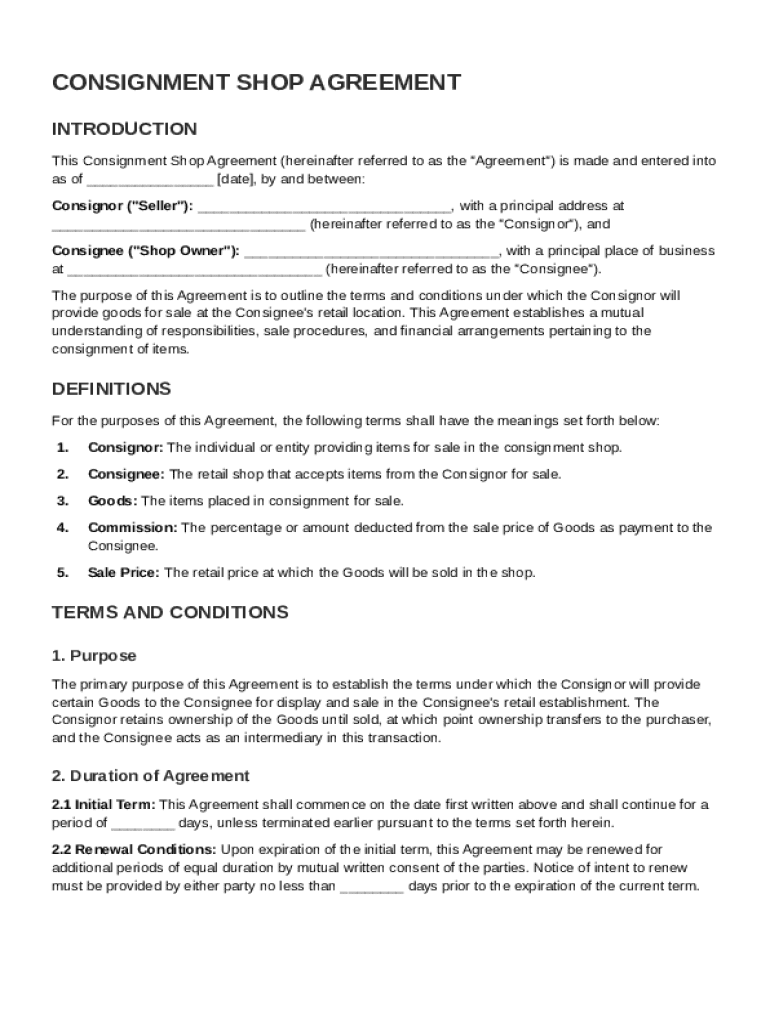
A "Consignment Shop Agreement Template" is a legal document that outlines the terms and conditions under which a consignor provides goods to a consignee, who is responsible for selling those goods in a retail environment. This type of agreement specifies the responsibilities of both parties, which often include how items are displayed and sold, the commission structure, payment schedules, and liability issues in case of damage or loss. The document ensures clarity and mutual understanding, reducing the likelihood of disputes by detailing the expectations and obligations of each party involved.
Key Elements of the Consignment Shop Agreement Template
The Consignment Shop Agreement Template consists of several crucial elements that help define the relationship between the consignor and consignee:
-
Item Description and Ownership: Clearly states each item being consigned, including detailed descriptions, conditions, and ownership rights.
-
Commission Structure: Outlines how sales proceeds will be divided, detailing the percentage of the sale price that the consignee retains and what the consignor receives.
-
Payment Terms: Specifies when and how the consignor will be paid for items sold, including any minimum sales thresholds before payments are issued.
-
Sales and Display Conditions: Describes how the goods will be presented in the shop and any specific promotional activities the items will undergo.
-
Liability and Insurance: Details who is responsible for items while in the consignee's possession and whether insurance covers potential damages or losses.
-
Termination Clause: Provides the conditions under which the agreement can be terminated, including required notice periods and any penalties for early termination.
Steps to Complete the Consignment Shop Agreement Template
Completing a consignment agreement involves a systematic approach to ensure that all aspects are covered:
-
Identify the Parties Involved: Clearly specify the names and contact information of the consignor and consignee.
-
Detail the Goods for Consignment: List the items being consigned, including descriptions, quantities, and any identifying numbers or marks.
-
Set the Commission Terms: Agree upon the percentage split of sales revenue and include provisions for any adjustments.
-
Define Payment Procedures: Establish how and when payments will be processed to the consignor.
-
Clarify Responsibilities: Outline responsibilities concerning the display, security, and care of the items consigned.
-
Include Legal Provisions: Add clauses related to confidentiality, indemnity, governing law, and dispute resolution.
-
Review and Sign: Both parties should thoroughly review the agreement to ensure all details are satisfactory before signing.
Legal Use of the Consignment Shop Agreement Template
Legally, a Consignment Shop Agreement provides a framework that is enforceable by law, detailing the rights and obligations of the involved parties:
-
Governing Law: Typically includes a clause specifying the state laws that will govern the agreement, ensuring that any disputes are resolved under the specified jurisdiction.
-
Enforceability: This agreement must meet state-specific legal standards, which may include conformity to contract laws and the Uniform Commercial Code (UCC) for sales of goods.
-
Limitation of Liability: Consignees and consignors are protected by specifying liabilities, helping avoid unwarranted legal claims but also ensuring responsibility for negligence or misconduct.
Important Terms Related to the Consignment Shop Agreement Template
Several technical terms frequently appear in a consignment agreement, each holding specific relevance:
-
Consignor: The party providing goods to be sold.
-
Consignee: The party responsible for selling the goods in their retail shop.
-
Inventory Reconciliation: The process of verifying the goods delivered, sold, and returned.
-
Sales Proceeds: The money received from the sale of the consigned items.
-
Recourse: Legal rights reserved by the consignor if the consignee fails to adhere to agreed terms.
State-Specific Rules for the Consignment Shop Agreement Template
Different states may impose various regulations and requirements related to consignment agreements:
-
Licensing Requirements: Some states mandate that consignees hold specific licenses to operate consignment shops.
-
Sales Tax Obligations: Consignees need to understand state-specific sales tax rules and ensure compliance in collecting and remitting sales taxes.
-
Consumer Protection Laws: State consumer protection laws might affect how consignment items are priced, promoted, or displayed.
Who Typically Uses the Consignment Shop Agreement Template
The template is commonly utilized by several types of individuals and businesses:
-
Retailers: Often used by small to medium-sized retail businesses that want to diversify inventory without upfront investment.
-
Artisans and Craftsmen: Provides a way for creators to sell handmade goods in local shops.
-
Collectors: Allows collectors to sell items through established networks without relinquishing ownership until the sale.
-
Boutiques: Fashion and lifestyle boutiques frequently use consignment agreements to showcase unique items.

Examples of Using the Consignment Shop Agreement Template
Various scenarios illustrate the practical application of the consignment agreement:
-
Local Artists: A gallery may use a consignment agreement to showcase and sell local artists' work, agreeing on a commission for each sale.
-
Antique Dealerships: Dealers use the template to consign furniture or collectibles to retail antique shops, keeping terms clear on profit sharing.
-
Fashion Design: Designers often provide unique clothing items on consignment to retail boutiques, which agree to showcase and sell the items under agreed terms.
Such examples highlight the versatile use of consignment agreements across different markets, ensuring clarity and fairness in business transactions.




