






Definition and Meaning
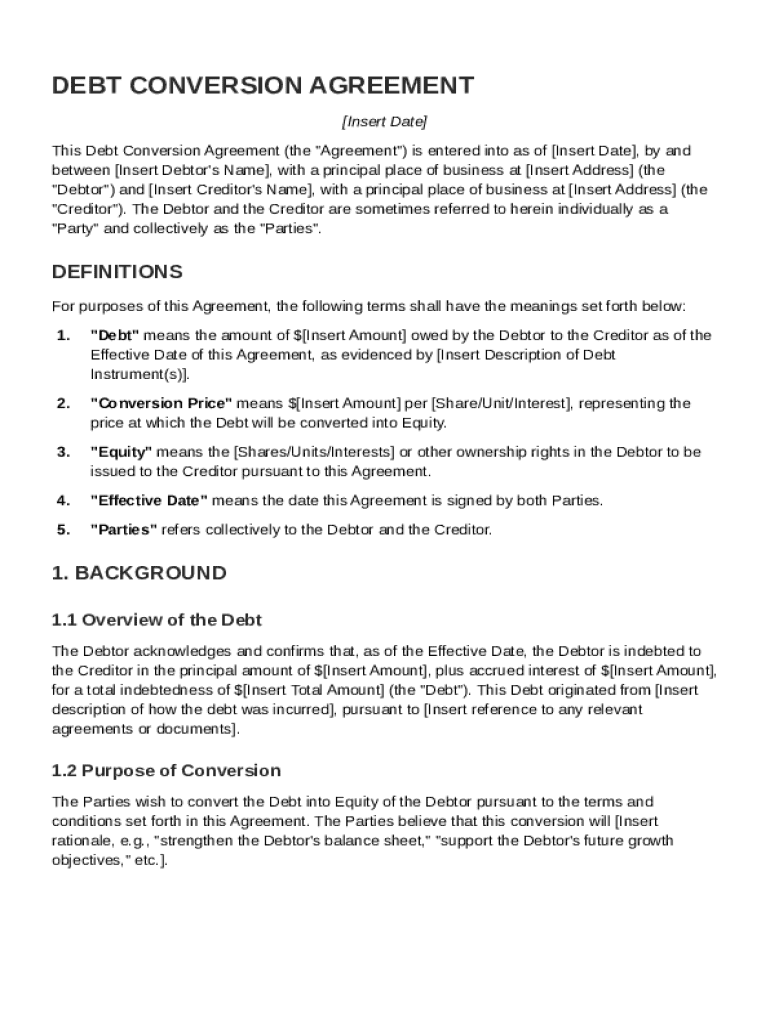
A Debt Conversion Agreement is a legal contract outlining the terms for converting outstanding debt into equity. This transformation allows a debtor to exchange a debt obligation for ownership interests, which can help strengthen their financial position and alleviate cash flow issues. Key terms often defined within the agreement include 'Debt', referring to the monetary obligation; 'Conversion Price', which is the predetermined price per share applicable to the conversion; and 'Equity', denoting the ownership interests exchanged in return for debt.
Practical Application Scenarios
- Startups Seeking Capital: Startups often use debt conversion agreements to convert loans into equity, facilitating access to funding without immediate cash outflows.
- Financial Restructuring: Companies looking to restructure their finances may opt for this approach, transforming challenging debt burdens into equity, thereby reducing liabilities.
- Investor Relations: Investors might agree to debt conversion agreements when they desire equity stakes in potential high-growth companies, offering a strategic advantage over remaining creditors.
Key Elements of the Debt Conversion Agreement Template
Conditions Precedent
Before executing a debt conversion, specific conditions must be fulfilled, such as approval from relevant authorities or existing shareholders. These conditions safeguard the interests of both parties, ensuring the conversion process aligns with regulatory and corporate policies.
Representations and Warranties
Both parties must provide declarations about their legal authority to engage in the conversion. Typical representations include the creditor’s assurance of holding valid claims over the debt and the debtor's confirmation that the conversion complies with corporate resolutions and relevant regulations.
Steps to Complete the Debt Conversion Agreement Template
- Gather Necessary Information: Collect details of the debt, such as outstanding amount, maturity date, and any applicable interest rates.
- Define Conversion Terms: Establish the conversion ratio, which dictates the equity each unit of debt will convert into. Ensure clarity in defining the conversion price.
- Input Representations and Warranties: Each party must affirm they hold the requisite authority and capabilities to proceed.
- Specify Conditions Precedent: Highlight any prerequisites essential for the conversion’s execution.
- Finalize and Review: Before signing, review all sections for accuracy and compliance.
Detailing each Step
- Conversion Ratio: This critical metric must reflect a fair valuation process. Inaccurate ratios might lead to inequitable outcomes, necessitating expert financial consultation.
- Review Process: Engage legal advisors to ensure all terms meet compliance and protect interests satisfactorily, particularly in complex financial arrangements.
Who Typically Uses the Debt Conversion Agreement Template


Common User Groups
- Corporations: Companies of various sizes can benefit, particularly those undergoing financial restructuring.
- Investors and Venture Capitalists: Those with convertible notes may utilize this to gain equity interests in promising enterprises.
- Financial Advisors and Legal Professionals: These stakeholders play essential roles in drafting and overseeing the agreement execution.
Use-Case Examples
- Failing Enterprises: Businesses on the brink of insolvency may utilize these agreements as part of rescue strategies, converting overwhelming debts to equity as a last resort.
- Innovative Startups: Startups that have accrued significant venture debt from supportive investors might convert this debt to equity, providing both liquidity relief and investor buy-in.
Important Terms Related to Debt Conversion Agreement Template
Essential Concepts
- Equity Conversion: Refers to the transformation of debt instruments into stock ownership, impacting debtor-creditor relationships significantly.
- Conversion Price: The agreed-upon share price for converting debt into equity. It's fundamental in determining the stakeholder’s equity interest.
Legal Use of the Debt Conversion Agreement Template
Compliance Considerations
Agreements must align with the Securities Act and related regulations, ensuring legality and enforceability. They must be drafted with attention to statutory compliance to avoid legal pitfalls.
Jurisdictional Variations
State laws may impose additional requirements or caps on conversion ratios, impacting agreement drafting and execution. Understanding variations in state corporate laws ensures proper adherence and avoids regional compliance issues.
Who Issues the Form
Debt conversion agreements are typically issued by legal departments within corporations, authorized to formalize the transition of debt into equity. This issuance often comes in collaboration with external law firms to ensure comprehensive legal oversight.
Real-World Example
- Corporate Reorganizations: Large companies may route such agreements through centralized law departments, whereas smaller businesses might rely on retained legal counsel for the same purpose.
State-Specific Rules for the Debt Conversion Agreement Template
Diverse State Regulations
- California: May require additional disclosures related to shareholder agreements and dilution impacts.
- New York: Emphasizes detailed prospectus requirements, ensuring comprehensive financial disclosures during conversions.
Examples of Using the Debt Conversion Agreement Template
Case Studies
- Tech Startup Case: A tech company utilized a debt conversion agreement to turn investor loans into equity, aligning investor interests with company growth.
- Manufacturing Firm Transition: A manufacturing business executed a debt conversion to stabilize its balance sheet, allowing creditors to transition into forward-looking stakeholders.
Each example demonstrates how strategically applied debt conversion agreements can pivot financial trajectories and align creditor and debtor interests more closely.