
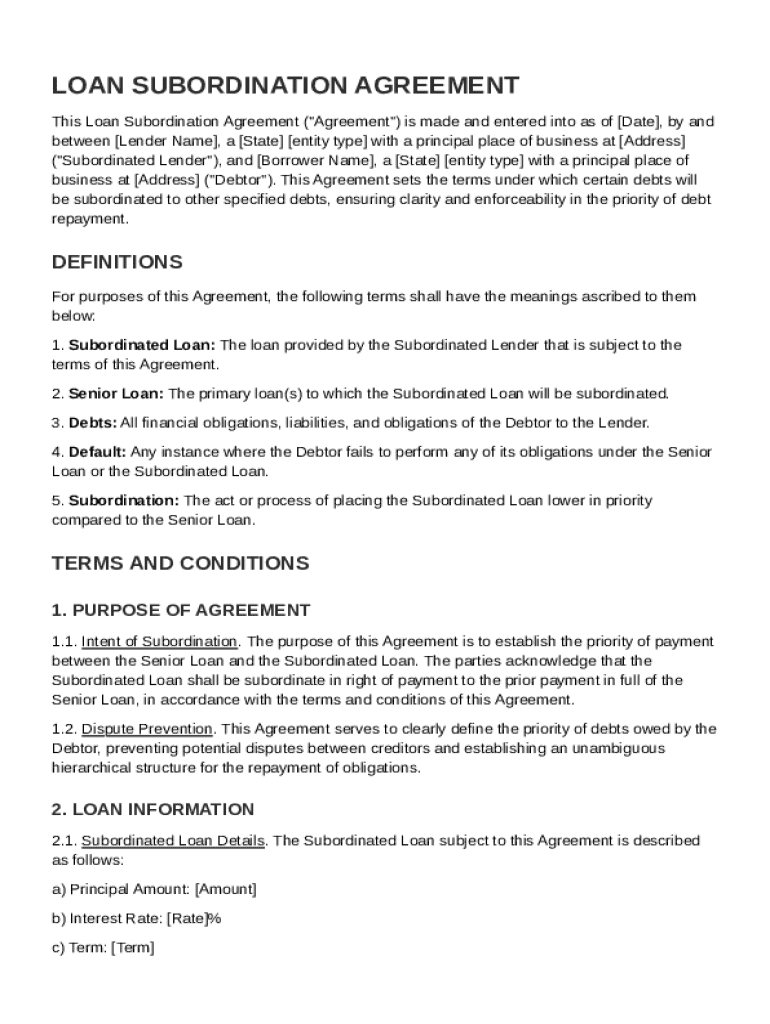







Definition & Meaning
A Loan Subordination Agreement Template is a formal document utilized to arrange the priority in which multiple loans or credit facilities will be repaid in the event of a default. It delineates a subordinated loan, which is positioned lower in the hierarchy for repayment than a senior loan. This document aims to prevent disputes among creditors by explicitly defining the payment priorities. The template sets the framework for establishing consistent standards and procedures for debt repayment.
Key Components
- Hierarchy of Debt Repayment: Sets the order in which loans are to be paid, ensuring that senior loans are prioritized.
- Parties Involved: Identifies all parties, including the borrower, subordinated lender, and senior lender.
- Terms and Conditions: Specifies the terms of subordination, including payment installments and any conditions that might alter repayment priorities.
- Default Provisions: Outlines procedures if the borrower defaults, detailing consequences for creditors and any legal ramifications.
- Governing Law: Specifies which state laws will govern the agreement. This clause is important for resolving disputes.
How to Use the Loan Subordination Agreement Template
Using a Loan Subordination Agreement Template ensures that the structured guidelines are followed for setting debt repayment priorities. It helps to mitigate conflicts and saves time associated with drafting such detailed agreements from scratch.
Steps to Follow
- Identify the Need: Determine if subordination is required by assessing the needs of senior and subordinated lenders.
- Gather Details: Collect necessary information from all parties involved, including lenders and borrowers.
- Customize the Template: Modify the template to reflect specific terms, repayment schedules, and unique conditions applicable to involved parties.
- Legal Review: Have legal counsel review the customized document to ensure compliance with applicable laws and completeness.
- Sign and Distribute: Obtain signatures from all parties and ensure copies are distributed to lenders and other stakeholders.
Key Elements of the Loan Subordination Agreement Template
This template comprises essential components necessary for a comprehensive subordination agreement, ensuring no critical detail is overlooked.
Core Sections
- Definition of Terms: Clearly explains all relevant terminology to avoid ambiguity.
- Debt Subordination: Details the level of priority assigned to each debt.
- Payment Terms: Specifies the schedule and method of payment for subordinated debt.
- Rights of Lenders: Outlines the rights retained by each lender, including foreclosure rights and repayment rights upon default.
- Amendments: Provides for how changes to the document can be made, including required consents.
Important Terms Related to Loan Subordination Agreement Template
Understanding the terminology used in a Loan Subordination Agreement Template is crucial for all parties.
Common Terms
- Senior Debt: The loans that have repayment priority over subordinated debt.
- Subordinated Debt: Debt that is repaid only after senior debts have been settled in full.
- Interest Rate: The agreed percentage at which interest will be calculated on the subordinated loan.
- Covenants: Stipulations in the agreement that the borrower must comply with to avoid default.
- Collateral: Assets pledged by the borrower to secure the subordinated loan.
Legal Use of the Loan Subordination Agreement Template
The legal application of a Loan Subordination Agreement carries significant implications for both lenders and borrowers.
Compliance and Enforcement
- Legally Binding: It is a legally enforceable contract recognized by financial and judicial authorities.
- Dispute Resolution: The agreement typically includes arbitration or mediation clauses to handle disputes.
- Jurisdiction Clause: Determines the specific court systems with authority to interpret the agreement.
- Compliance with Laws: Must adhere to state and federal financial regulations.
State-Specific Rules for the Loan Subordination Agreement Template
While the overall structure of the Loan Subordination Agreement Template remains consistent, certain states might have additional requirements or variations.
Insights by State
- California: Requires specific language regarding borrower acknowledgments.
- New York: Demands explicit consent from all parties for future modifications.
- Texas: Specifies unique disclosures related to lien priorities.
- Florida: Stipulates notification procedures in cases of foreclosure.
Examples of Using the Loan Subordination Agreement Template
Various real-world scenarios showcase how a Loan Subordination Agreement Template facilitates smooth financial transactions.
Practical Scenarios
- Corporate Financing: When a company seeks additional funding, subordinating existing lender rights ensures new investment opportunities.
- Real Estate Development: Utilizing subordination to obtain construction loans by prioritizing new loans over existing ones.
- Merger & Acquisition Dealings: Settlement of debts through structured subordination during acquisitions to align creditor interests.
Versions or Alternatives to the Loan Subordination Agreement Template
The use of alternative documents or different versions of this template can impact the efficacy of subordination arrangements.
Common Alternatives
- Intercreditor Agreement: More complex than subordination, involves multiple creditors.
- Debenture Agreement: Often used when public disclosure of debts is required.
- Line of Credit Agreement: Provides flexibility in subordinating revolving credit lines.
Exploring these alternatives ensures that parties select the most appropriate contractual framework for their unique financial transactions.


