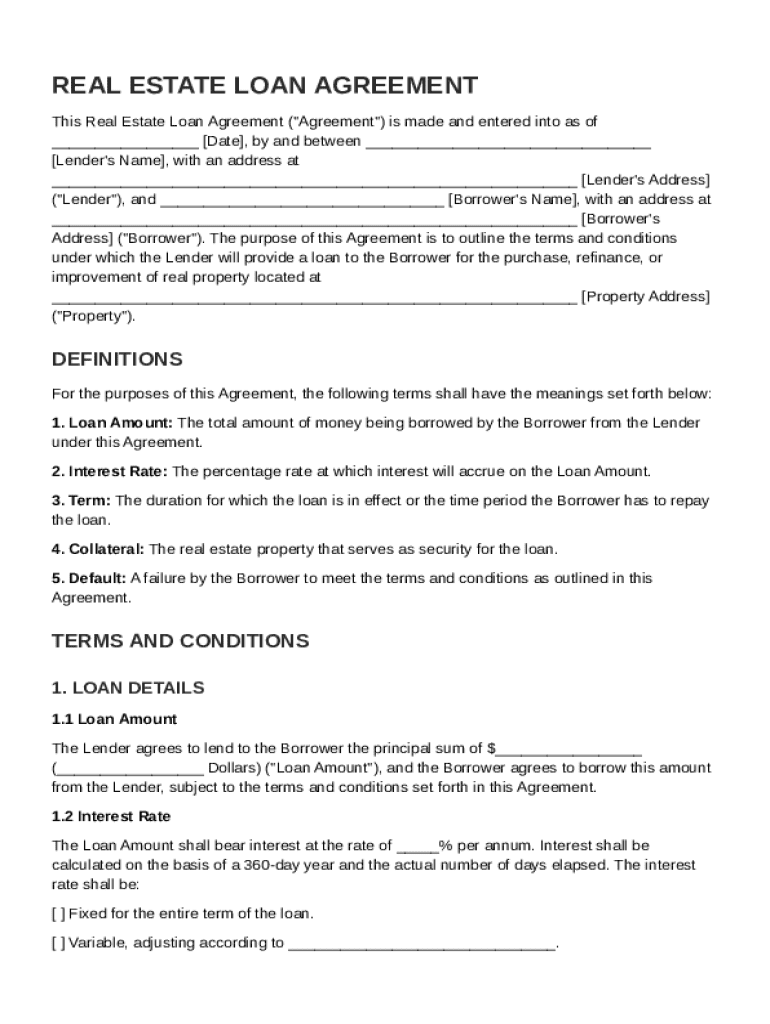







Definition & Meaning
The "Real Estate Loan Agreement Template" is a legal document that formalizes the loan conditions between a lender and a borrower related to real property transactions. It is integral in outlining the parties' respective rights and duties. This template typically includes comprehensive information regarding the loan amount, interest rate, repayment terms, and any collateral pledged by the borrower. By defining these crucial terms, the document helps mitigate misunderstandings or disputes that may arise during the loan's tenure.
Core Components
- Loan Amount: This specifies the principal sum borrowed by the borrower from the lender to finance the real estate transaction.
- Interest Rate: The rate at which interest will accrue on the unpaid principal, significantly impacting the total repayment amount.
- Repayment Schedule: Detailed timelines and amounts for how and when the borrower will repay the lender.
- Collateral Requirements: Items or property that the borrower pledges as security for the loan, protecting the lender's interest.
Key Elements of the Real Estate Loan Agreement Template
For a robust and effective Real Estate Loan Agreement, several elements must be followed meticulously. These elements are vital to ensure that all parties understand their commitments and the governing rules.
Primary Sections
- Parties Involved: Names and contact details of both the lender and borrower must be clearly stated to identify the parties legally bound by the agreement.
- Definitions: Clarification of key terms used throughout the document, such as “default,” “failure to pay,” and “loan disbursement.”
- Payment Provisions: Details the loan repayment process, including due dates and accepted payment methods.
- Default Clauses: Sets forth conditions that constitute a default event and the potential remedies available to the lender.
- Governing Law: Declares which jurisdiction’s laws will apply in case of a legal dispute.
Supporting Elements
- Amendment Clauses: Procedures outlining how changes to the agreement may be initiated and formalized.
- Notices Provisions: Specifications for how and when communications between parties should be carried out regarding the agreement.
Steps to Complete the Real Estate Loan Agreement Template
Creating an accurate and legally binding Real Estate Loan Agreement requires a systematic approach. Here’s a detailed step-by-step guide:
- Gather Information: Start by collecting all necessary information, including the full legal names of the lender and borrower, loan specifics, and collateral details.
- Fill in Loan Details: Clearly input the principal loan amount, the agreed interest rate, and any fees or charges.
- Outline Repayment Terms: Include all repayment terms, specifying the period of the loan and the installment amounts.
- Include Security Details: Document any collateral provided by the borrower.
- Review Default Provisions: Clearly state what constitutes a default and what actions will be taken in such an event.
- Finalize and Sign: Once thoroughly reviewed by both parties, ensure the document is signed and dated in the presence of witnesses, if required.
Legal Use of the Real Estate Loan Agreement Template
The template serves as a legally enforceable document, conforming to laws pertinent to real estate transactions within the United States. For optimal legal protection:
- Compliance with the ESIGN Act: The template includes provisions for electronic signatures, ensuring legal recognition in electronic transactions.
- State Legislation: It outlines the choice of governing law, which is crucial in cross-state transactions.
- Validity and Enforceability: As a legal document, it must be accurate and correctly executed to be enforceable in court.
Important Terms Related to the Real Estate Loan Agreement Template
Understanding the terminology associated with real estate loans is crucial for executing a successful agreement.
Vital Terminology
- Principal: The initial sum of money borrowed or still owed on a loan, separate from interest.
- Amortization: The process of spreading out loan payments over time.
- Lien: A legal right or interest that a lender has in the borrower's property, granted until the debt obligation is satisfied.
- Foreclosure: The process through which a lender seizes and sells a property after the borrower fails to meet the repayment terms.
State-Specific Rules for the Real Estate Loan Agreement Template
Given the varying laws across different U.S. states, adapting the Real Estate Loan Agreement to state specifics is key for ensuring compliance.
Examples of Variations
- Interest Rate Limits: Some states have usury laws limiting the maximum interest rate lenders can charge.
- Foreclosure Procedures: The legal process for foreclosure may differ, with varying notice period requirements and procedural rules.
- Recording Requirements: Certain states require that the agreement be recorded publicly to protect the lender's interest.
Examples of Using the Real Estate Loan Agreement Template
Utilizing the Real Estate Loan Agreement Template in practical scenarios can help illustrate its application.
Case Studies
- First-Time Home Buyer: A first-time home buyer receives a loan secured by the purchased property. The agreement outlines all terms, providing peace of mind by clarifying obligations.
- Property Development Loan: A developer seeking funds to renovate a commercial property uses the template to secure capital while agreeing to specific project milestones.
Versions or Alternatives to the Real Estate Loan Agreement Template
While the Real Estate Loan Agreement Template is widely used, several variations and alternatives may better suit specific circumstances or needs.
Alternatives and Variants
- Adjustable-Rate Mortgage (ARM) Agreements: For borrowers accepting fluctuating interest rates.
- Unsecured Real Estate Loans: When the property is not used as collateral for the loan.
- Bridge Loans: Short-term loan option suitable for borrowers between major real estate transactions.