






Definition and Meaning
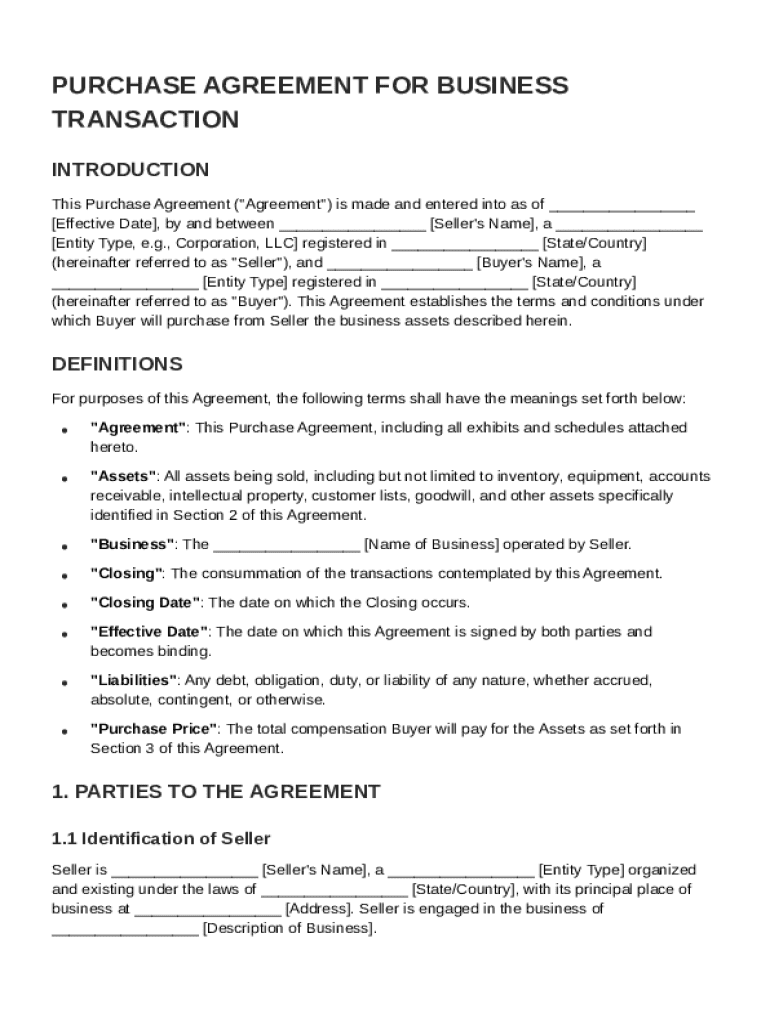
A Purchase for a Business Agreement Template serves as a foundational document outlining the terms and conditions for the sale of business assets between two parties: the Seller and the Buyer. This template is crucial for formalizing the transaction, ensuring both parties agree on the key elements necessary for a smooth exchange. The agreement includes definitions of critical terms, which clarify the meaning of specific language used within the document. By having defined terms, the possibility of misinterpretation is minimized, providing clearer communication between all involved parties. This template helps establish a comprehensive understanding of the transaction's framework and is essential for mitigating potential legal disputes.
Key Elements of the Template
The Purchase Agreement typically includes several vital components, each serving a specific purpose in the business transaction:
- Identification of Parties: Clearly states the legal names and addresses of the Buyer and Seller.
- Asset Description: Provides a detailed list of the assets being transferred, ensuring both parties have a mutual understanding of the items included in the sale.
- Purchase Price and Payment Terms: Details the agreed-upon price for the assets, along with how and when payment will be made.
- Closing Conditions: Lists the conditions that must be met for the transaction to be finalized, helping both parties understand their obligations ahead of the closing date.
- Representations and Warranties: Sets forth assurances made by both parties concerning their legal capacity to enter the agreement and the condition of the assets.
- Covenants and Indemnification Clauses: Defines obligations and protections for both parties, including any non-compete agreements or indemnities.
- Governing Law and Dispute Resolution: Specifies under which jurisdiction's laws the agreement will be governed and the agreed method for dispute resolution.
How to Use the Template
Using the Purchase for a Business Agreement Template involves adapting it to suit the specifics of the transaction at hand. Here are the general steps:
- Review the Template: Understand each section and customize areas pertaining to the individual transaction.
- Insert Specific Details: Include precise information about the Seller, Buyer, and the business assets, ensuring the description matches the items being sold.
- Adjust Payment Terms: Make necessary modifications to the payment schedule to reflect the agreement between parties.
- Legal Review: It's advisable to have the customized agreement reviewed by legal counsel to ensure compliance with applicable laws.
- Execution of the Agreement: Both parties should sign the completed document to officially enter the agreement.
Important Terms Related to the Template
Understanding the terminology used in the Purchase Agreement is essential for both parties involved:
- Earnest Money: A deposit made to demonstrate the Buyer’s serious intent to proceed with the purchase.
- Escrow: Involves a third party holding funds or assets until all conditions of the sale are satisfied.
- Due Diligence Period: Timeframe during which the Buyer can review financials, inspect assets, and assess the viability of the purchase.
- Non-Disclosure Agreement (NDA): Ensures confidential information shared during negotiations remains private.
Legal Use of the Template
In the U.S., using a Purchase for a Business Agreement Template must comply with state-specific regulations to be enforceable:
- Compliance: Ensure the agreement adheres to state laws where the business or assets are located to prevent potential nullification.
- Legal Capacity: Both parties must have the legal right and authority to enter into the agreement.
- Signatures: The agreement must be signed by both parties and, in some cases, notarized, to be legally binding.
Examples of Template Utilization
To provide context, here are scenarios illustrating the effective use of the Purchase Agreement:
- Small Business Sale: A local coffee shop owner sells their business assets, including equipment and brand trademarks, to a new entrepreneur utilizing this template for a comprehensive transfer.
- Asset Purchase: A tech company buys another company’s software licenses and patents, detailing each in the agreement to ensure clear asset delineation and transfer conditions.
Steps to Complete the Template
Crafting a complete Purchase for a Business Agreement requires careful attention to detail:
- Gather Information: Collect all relevant data about the assets, Seller, and Buyer.
- Fill Out Basic Information: Populate the template with names, addresses, and the business entity type.
- Describe the Transaction: Clearly define what is being purchased, and include an accurate price and terms.
- Define Responsibilities: Assign responsibilities for legal fees, taxes, and other potential costs.
- Clarify Conditions: Ensure conditions precedent are clearly listed and understood by both parties.
- Finalize: Review for accuracy, make necessary edits, and obtain signatures from all parties.
Business Types That Benefit Most
The Purchase Agreement is particularly suited for:
- Franchises: Commonly used when transferring ownership of franchise locations, ensuring all assets and operational requirements are addressed.
- Retail: Useful for businesses such as boutiques, where tangible assets like furniture and inventory are integral.
- Professional Services: Like accounting or legal firms, where customer lists and existing contracts need to be carefully transitioned to the Buyer.
Who Typically Uses the Template
This template assists a variety of business professionals:
- Entrepreneurs: Individuals purchasing or selling an entire business or its assets.
- Business Brokers: Facilitators of business sales, making use of the template to streamline agreements.
- Legal Representatives: Attorneys representing clients in transactions, who use the template as a basis to prepare a more tailored agreement.
The "Purchase for a Business Agreement Template" provides an essential foundation for secured business asset transactions. By covering all necessary elements comprehensively, it ensures clarity and protection for all involved parties.