
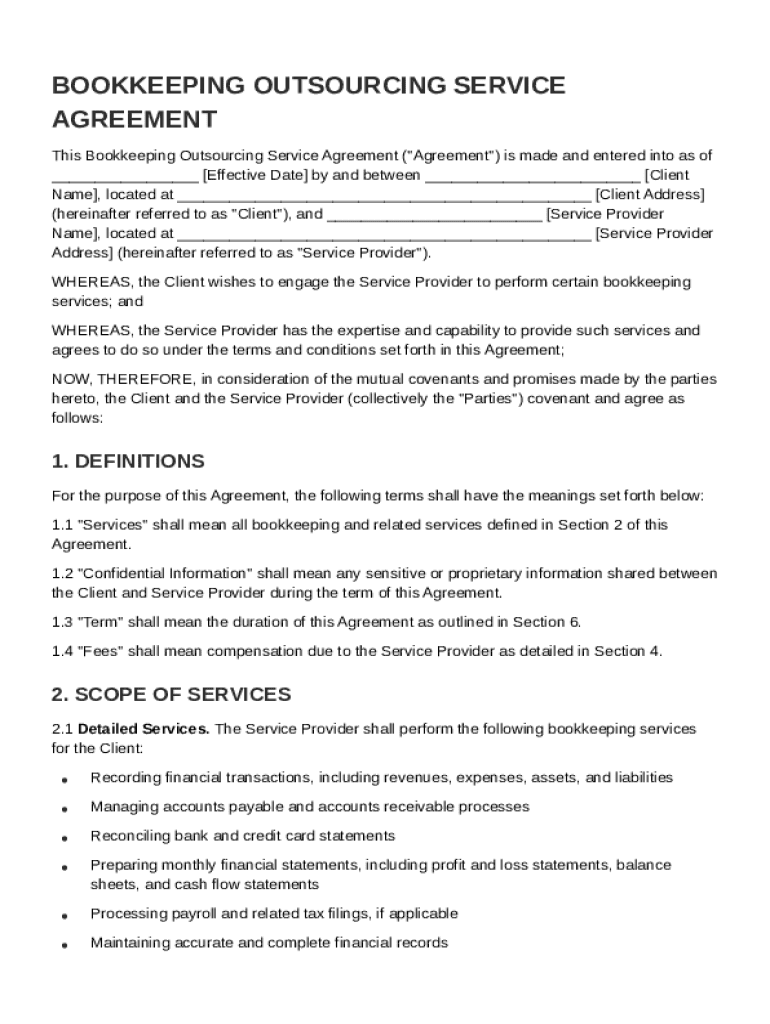







Key Elements of the Bookkeeping Outsourcing Service Agreement Template
The Bookkeeping Outsourcing Service Agreement Template is designed to clarify roles and responsibilities between a Client and a Service Provider. It encompasses a variety of critical elements to ensure a thorough understanding by all parties involved. Core components include:
-
Scope of Services: Define the specific bookkeeping services the provider will perform. This can range from simple data entry tasks to comprehensive financial analysis, ensuring every task is clearly outlined.
-
Responsibilities of Parties: Detail the obligations of both the client and the service provider. This may include providing necessary materials and maintaining communication for the client and timely delivery of services for the provider.
-
Fee Structures and Payment Terms: Clearly outline the financial arrangements, including the method of payment, due dates, and any penalties for late payment, which helps prevent financial disputes.
-
Confidentiality Obligations: Set out protocols for handling confidential financial information to safeguard against data breaches and unauthorized information sharing.
Steps to Complete the Bookkeeping Outsourcing Service Agreement Template
Completing the Bookkeeping Outsourcing Service Agreement Template involves several precise steps to ensure all relevant aspects are covered:
-
Begin with Identification of Parties: Clearly state the names and contact details of both the client and the service provider to establish a clear line of accountability.
-
Outline the Scope of Services: Specify what bookkeeping services are included, like payroll processing, account reconciliation, or financial reporting.
-
Set Clear Responsibilities: Document the deliverables expected from both parties, including timelines for delivery and accuracy standards.
-
Detail Financial Terms: Clearly articulate the fees involved, including any retainer fees, the billing cycle, and acceptable payment methods.
-
Include Legal Provisions: Add clauses for data protection, dispute resolution, and indemnification to protect both parties legally.
-
Review and Finalize: Ensure both parties review the document thoroughly and agree to its terms before signing.
Legal Use of the Bookkeeping Outsourcing Service Agreement Template
Legal considerations are paramount when crafting a Bookkeeping Outsourcing Service Agreement. Key legal aspects include:
-
Governing Law: Identify which state's laws will govern the agreement, as this impacts dispute resolution and interpretation of terms.
-
Dispute Resolution: Outline procedures for resolving disputes, whether through mediation, arbitration, or litigation, to prevent escalation.
-
Indemnification Clauses: Protect each party by including terms that limit liability and allocate responsibility for legal costs in specific circumstances.
-
Term and Termination Conditions: Specify conditions under which the agreement can be terminated, including breach of contract or mutual consent.
State-Specific Rules for the Bookkeeping Outsourcing Service Agreement Template
Variations may exist based on state-specific regulations. Businesses must be mindful of:
-
Compliance with State Laws: Ensure the contract aligns with local business laws, including tax regulations and employment laws.
-
Licensing Requirements: Some states may require specific licenses for bookkeeping activities; the agreement should reference compliance with these regulations.
-
Privacy Laws: Varying state privacy laws mean confidentiality clauses must be tailored to state standards for personal data protection.
Important Terms Related to Bookkeeping Outsourcing Service Agreement Template
Understanding terminologies within the template aids in effective execution. Important terms include:
-
Client: The entity hiring the bookkeeping services, typically responsible for providing necessary resources and timely payments.
-
Service Provider: The individual or business that offers bookkeeping services, tasked with delivering services as per the agreement.
-
Confidential Information: Data disclosed in the course of the agreement, requiring protection and limited sharing.
-
Deliverables: Specific outputs the service provider must supply, aligned with the scope of services defined.
Versions or Alternatives to the Bookkeeping Outsourcing Service Agreement Template
Various iterations or alternatives can be used depending on business needs:
-
Basic Agreements: Simplified versions for small businesses or single-function services.
-
Comprehensive Contracts: More detailed versions for larger, more complex services, including multiple roles and advanced services.
-
Addenda and Amendments: Customizable extensions or modifications to an existing agreement for ongoing changes or additional services.
Business Types That Benefit Most from Bookkeeping Outsourcing Service Agreement Template
Many businesses stand to gain from a structured agreement:
-
Small Businesses: Ensures clarity for businesses without an in-house accounting team.
-
Startups: Helps new enterprises manage finances without diverting focus from core business activities.
-
Freelancers and Consultants: Facilitates financial management without requiring full-time accounting staff.
How to Use the Bookkeeping Outsourcing Service Agreement Template
For users unfamiliar with the template, here’s how to navigate its completion:
-
Selection of Template: Choose a template best suited for the business size and nature.
-
Customization: Adjust sections to address specific business needs and responsibilities.
-
Review and Adjust: Ensure all changes align with current business operations and compliance requirements before finalization.




