






Definition & Meaning
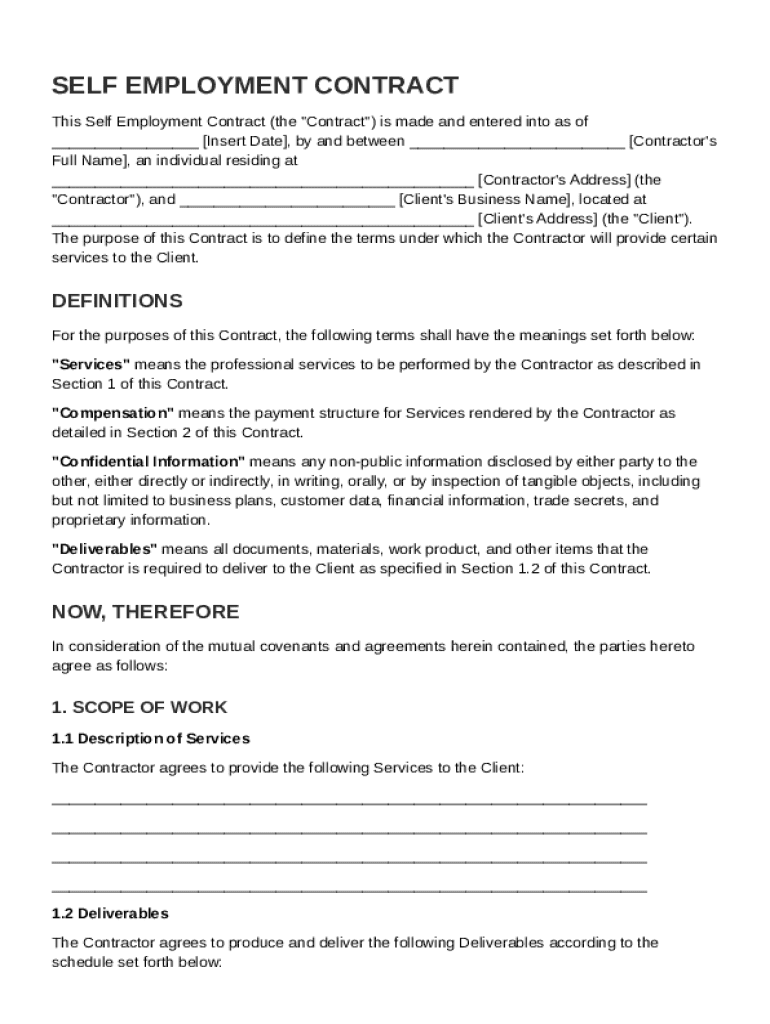
A Self Employment Contract Template is a document used to formalize the working arrangement between an independent contractor and a client. This contract outlines the terms of the professional relationship, ensuring both parties are clear on their responsibilities, expectations, and obligations. It serves as a legal agreement to define details around services, fees, and deadlines. Contractors use this template to protect their interests and assert their independence from clients, affirming they are not employees but self-employed individuals providing specific services. Key sections typically cover aspects such as compensation, confidentiality, intellectual property, and termination clauses.
How to Use the Self Employment Contract Template
Using a Self Employment Contract Template involves customizing the document to fit the specific needs of both the contractor and the client. Begin by filling in the names and contact information for both parties. Clearly define the scope of work, including the nature of services provided and any limitations. Establish compensation details, specifying payment amounts, methods, and schedules. It's crucial to outline confidentiality and intellectual property rights, ensuring all sensitive information and creations are protected. Review the contract with the client and make any necessary adjustments before signing. Both parties should have a signed copy for their records.
Key Elements of the Self Employment Contract Template
The Self Employment Contract Template encompasses several critical elements to protect both the contractor and the client. Key components include:
- Scope of Work: Detailed description of the services to be provided.
- Compensation: Payment terms, including rates, invoicing schedules, and payment methods.
- Confidential Information: Clauses that safeguard sensitive data shared during the project.
- Intellectual Property Rights: Ownership details of any work products or deliverables.
- Termination Conditions: Guidelines for ending the contract by either party, including notice periods.
- Dispute Resolution: Procedures for addressing disagreements or breaches of contract.
- Governing Law: Jurisdiction and laws applicable to the contract.
- Indemnification: Provisions for protecting both parties from potential legal claims.
Steps to Complete the Self Employment Contract Template
Completing the Self Employment Contract Template involves several systematic steps:
- Gather Information: Collect essential details about the client, project, and terms.
- Customize the Template: Adjust the template to address specific job requirements and client needs.
- Define Services: Clearly state the services offered and any pertinent deadlines.
- Set Compensation Terms: Specify payment terms, including amounts and intervals.
- Include Legal Provisions: Add necessary clauses regarding confidentiality and intellectual property.
- Review with Client: Discuss the contract's contents with the client, making adjustments if needed.
- Sign the Contract: Once both parties agree to the terms, sign the document to make it legally binding.
- File Copies: Ensure both parties retain a copy of the signed contract for future reference.
Legal Use of the Self Employment Contract Template
The Self Employment Contract Template ensures legal compliance for both contractors and clients by establishing clear terms of engagement. It serves as evidence of an independent contractor relationship, which is significant for tax and legal purposes. The contract must adhere to relevant laws and regulations, including those regarding labor and intellectual property. Including legal provisions such as dispute resolution and governing law clauses can mitigate risks and protect the interests of both parties in case of disagreements. It is advisable to consult legal counsel when drafting or modifying the contract to ensure it complies with applicable laws.
Who Typically Uses the Self Employment Contract Template
A wide range of professionals and clients utilize the Self Employment Contract Template to formalize their working relationships. This includes:
- Freelancers: Writers, designers, developers, and other independent professionals who offer services to multiple clients.
- Consultants: Experts in fields such as strategy, marketing, and finance who provide specialized advice to businesses.
- Creative Professionals: Photographers, videographers, and artists engaged in project-based assignments.
- Clients: Companies and individuals seeking to employ the services of freelancers or consultants without establishing an employer-employee relationship.


State-Specific Rules for the Self Employment Contract Template
While a Self Employment Contract Template provides a general framework, it's important to consider state-specific regulations that may affect its terms. Variations in labor laws, taxation, and legal requirements can influence the contract's provisions. For instance, some states have specific rules regarding independent contractor classification, which can impact clauses related to compensation and employment rights. It's crucial to research local regulations or consult legal counsel to ensure compliance with state laws and protect both parties from potential legal issues. Adjustments may be necessary to address these regional differences adequately.
Important Terms Related to the Self Employment Contract Template
Understanding key terminology is crucial when utilizing the Self Employment Contract Template:
- Independent Contractor: An individual providing services under agreed-upon terms but without being an employee.
- Confidential Information: Sensitive data shared during the project that must be kept private.
- Intellectual Property: Creations of the mind, such as designs, methodologies, or inventions, resulting from the contractor's work.
- Indemnification: A clause ensuring protection against financial losses or legal liabilities.
- Termination Clause: Provisions regarding the ending of the contract and associated notice periods.
- Governing Law: The jurisdiction whose laws will apply to the interpretation and enforcement of the contract.