






Key Elements of the Employment Contract Template
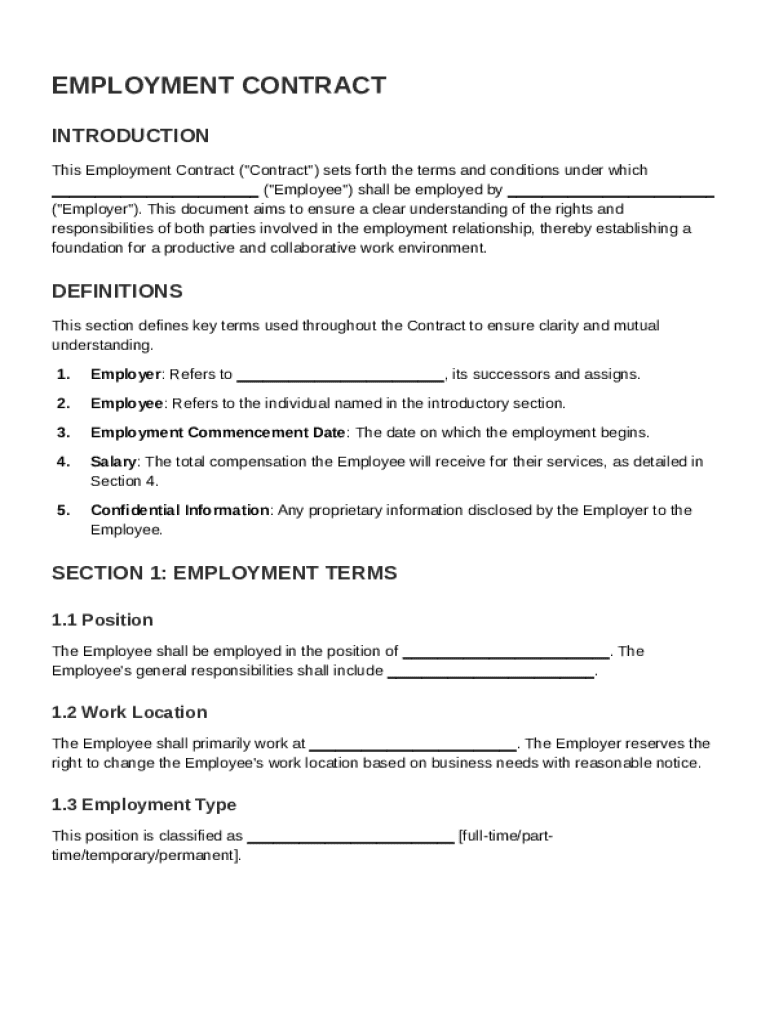
Employment contracts are legal documents crafted to delineate the terms and conditions between an employee and employer. They typically encompass a range of crucial elements that establish a clear framework for the working relationship. These elements include:
- Employment Terms: Define the job title, role, and specific responsibilities of the employee. This section clarifies the expectations from both parties.
- Compensation and Benefits: Outline the salary, payment schedule, bonuses, and any additional benefits such as health insurance, retirement plans, and leaves.
- Confidentiality Clauses: Protect sensitive company information by detailing the obligations of the employee to safeguard confidential data.
- Termination Procedures: Specify the conditions under which either party can terminate the agreement, including notice periods and severance pay.
- Governing Law: Indicate the jurisdiction under which the contract is governed, ensuring legal clarity.
These elements work collectively to ensure transparency and mutual understanding between the parties involved.
How to Use the Employment Contract Template
Using an employment contract template involves several structured steps to ensure a comprehensive and legally sound document. Here is how you can effectively utilize this template:
- Customizing the Template: Start by inserting specific details such as the name of the employee and employer, job title, and start date.
- Inserting Job Responsibilities: Clearly list the primary duties and responsibilities associated with the position to manage expectations.
- Determine Compensation Details: Fill out the sections related to salary, bonuses, and other financial elements to avoid future discrepancies.
- Include Legal Clauses: Make sure to include necessary legal terms covering confidentiality, non-compete agreements, and other clauses to protect company interests.
- Review and Finalize: Once all sections are filled, review the contract for completeness and accuracy. Amend as required by consulting with legal counsel before signing.
Following these steps ensures that the contract serves its intended purpose effectively.
Steps to Complete the Employment Contract Template
Completing an employment contract with precision requires a systematic approach. Adhering to the below guide can simplify the process:
- Gather Information: Collect all essential information regarding the employee, employer, role, and compensation.
- Draft Initial Terms: Use the template to draft an initial version, ensuring all fundamental terms are covered.
- Consult with Stakeholders: Share the draft with relevant parties, such as HR and legal teams, to gather feedback and ensure compliance with organizational policies.
- Incorporate Feedback: Amend the contract based on the received feedback to incorporate any necessary changes.
- Review Legality: Verify with legal counsel to ensure the contract adheres to applicable laws and does not omit any critical legal elements.
- Finalize and Sign: Once finalized, arrange for the signing of the contract by both parties to officially enact the agreement.
Ensuring accuracy and legal compliance at each step minimizes the potential for future conflicts.
Legal Use of the Employment Contract Template
Compliance with legal standards is critical when using employment contracts. Legal use entails:
- Adhering to Labor Laws: Ensure the contract aligns with national and state labor laws, including minimum wage, work hours, and discrimination policies.
- Including Essential Clauses: Integrate clauses that protect both parties, such as non-disclosure agreements and intellectual property rights.
- Review by Legal Experts: Have a legal professional review the document to ensure it holds enforceability under law.
- Amendments and Updates: Regularly update the contract template to reflect changes in legislation or organizational policies.
Compliance with these standards not only protects the business but also fosters trust with employees.
Who Typically Uses the Employment Contract Template
Various stakeholders within a business or organization typically utilize employment contract templates. Key users include:
- Human Resources Departments: HR professionals use these templates to streamline the onboarding process and standardize employment terms across the organization.
- Small Business Owners: Entrepreneurs and small business owners often rely on templates for creating legally sound contracts without incurring hefty legal costs.
- Legal Professionals: Legal advisors may use templates as starting points for drafting contracts tailored to specific client needs and industries.
- Recruitment Agencies: Agencies may employ these templates to quickly generate contracts for temporary and permanent placements.
These stakeholders leverage templates to facilitate efficient and compliant contract creation.


Important Terms Related to Employment Contracts
Understanding key terminologies is vital for interpreting employment contracts accurately. Common terms include:
- At-will Employment: A type of employment relationship where either party can terminate the agreement without cause or notice, subject to certain exceptions.
- Non-compete Agreement: A clause preventing the employee from engaging in business that competes with the employer’s operations post-termination.
- Probationary Period: A trial period at the commencement of employment during which either party may terminate with short notice.
- Severance Pay: Compensation provided to employees upon involuntary termination, subject to conditions specified in the contract.
- Collective Bargaining: Negotiations between an employer and a group of employees intended to establish agreements regarding employment conditions.
Being familiar with these terms ensures a clearer understanding of contract nuances.
State-Specific Rules for Employment Contracts
State laws heavily influence employment contract terms in the U.S. Some state-specific considerations include:
- At-Will State Variations: While most states adhere to at-will employment laws, some, like Montana, provide more employee protection.
- Non-Compete Enforceability: States like California have strict regulations that limit the enforceability of non-compete agreements.
- Overtime Pay and Minimum Wage Differences: States may enact laws that exceed federal minimum wage and overtime pay requirements.
- Right-to-Work States: In such states, employees are not required to join a union or pay union dues as a condition of employment.
Understanding these state-specific nuances ensures that contracts are compliant and enforceable.
Examples of Using the Employment Contract Template
Practical examples can elucidate the application of employment contracts. Consider these scenarios:
- Tech Startups: In burgeoning tech firms, contracts may emphasize intellectual property rights and confidentiality to protect innovative developments.
- Remote Work Arrangements: Contracts for remote positions often include specific terms relating to working hours, communication expectations, and provision of equipment.
- Seasonal Employment: Industries that rely on seasonal hires, such as tourism or agriculture, utilize customized contracts to specify terms of temporary employment, including duration and specific conditions pertinent to seasonal work.
Using examples, businesses can adapt the template to fit the unique needs of their operations.