
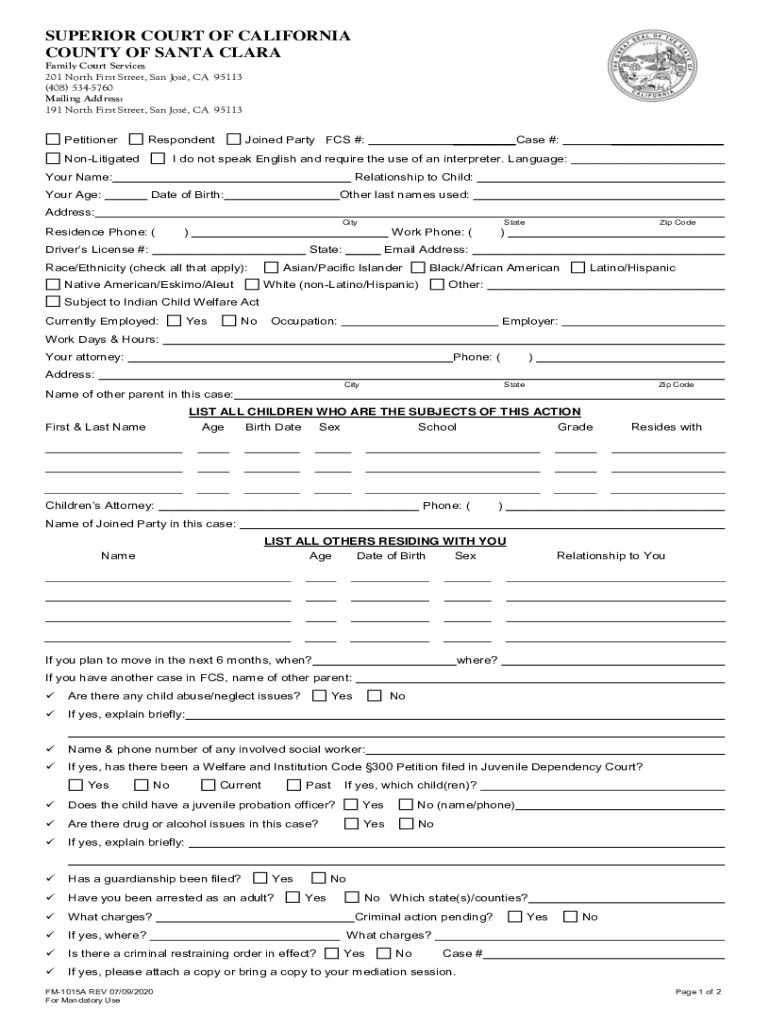







Definition and Meaning of Family Court Services Documentation
The Family Court Services Documentation is a critical form utilized in family law cases in the Superior Court of California, County of Santa Clara. It is designed to capture essential personal and legal information about the individuals involved in family disputes, such as custody or visitation negotiations. This documentation plays a pivotal role in legal proceedings by ensuring that the court has a comprehensive understanding of family dynamics, domestic violence history, and any existing protective orders. This enables the court to make informed decisions that prioritize the well-being and safety of children and other vulnerable parties involved.
Key Components of the Documentation
- Personal Information: Includes details about both the petitioner and respondent, such as names, addresses, and relationship history.
- Children’s Details: Captures the number and ages of children involved, as well as their current living arrangements.
- Domestic Violence and Protective Orders: Documents any history of domestic violence and the presence of protective orders to ensure safety during proceedings.
- Service Fees: Explains fee requirements for court services, ensuring transparency and understanding of potential costs.
- Mediation Rights: Outlines the rights related to mediation sessions, particularly emphasizing safeguards for cases involving domestic violence.
How to Use the Family Court Services Documentation
Using the Family Court Services Documentation involves understanding its various sections and the specific details required. It's essential to fill out the form accurately to facilitate a smooth legal process.
Step-by-Step Guide
- Gather Necessary Information: Before beginning, collect personal details for all parties involved, including addresses, dates of birth, and contact information.
- Review Domestic Violence Section: If applicable, provide detailed information on past domestic violence incidents and any protective orders in place.
- Complete Children's Information: Clearly document the children’s living situations, schooling, and any special needs or considerations.
- Understand Fee Requirements: Carefully read the section on service fee amounts and requirements, ensuring there are no surprises during the process.
- Acknowledge Mediation Rights: Familiarize yourself with your rights regarding mediation, including conditions that apply in domestic violence situations.
Considerations and Tips
- Double-check all information for accuracy to avoid delays or complications.
- Consult with a legal advisor if any section is unclear, particularly regarding sensitive areas like domestic violence.
- Ensure that all fields are completed, especially mandatory ones, to facilitate the processing of your documentation.
Steps to Complete the Family Court Services Documentation
Completing the Family Court Services Documentation requires precision and attention to detail. This guide will assist you in filling out the form thoroughly and correctly.
Step-by-Step Instructions
- Start with Personal Information: Fill in the basic identities of all involved parties, ensuring to cross-verify all details.
- Children’s Section: Include comprehensive information about each child, such as full names, birthdates, and custody details.
- Detail Domestic Violence History: Provide honesty about any incidents and the existence of legal orders, which is crucial for court proceedings.
- Heart of the Documentation - Fee and Rights Sections: Read and understand the financial implications and your mediation rights.
- Final Review and Submission: Go through each question and answer carefully to confirm that everything is complete and accurate before submitting.
Common Mistakes to Avoid
- Leaving blanks in mandatory fields.
- Misrepresenting facts concerning domestic violence history or personal information.
- Overlooking the requirements for service fees and mediation rights.
Legal Use of the Family Court Services Documentation
Legal clarity is paramount when dealing with Family Court Services Documentation. It serves as a formal record that can significantly impact family law cases.
Legal Significance
- Evidence in Court: Acts as an official document that courts rely on to assess family situations.
- Informed Decisions: Aids judges in making fair decisions tailored to the welfare of the children and non-offending family members.
- Compliance and Enforcement: Helps establish compliance with legal mandates, particularly surrounding existing protective orders and mediation protocols.
Instances Where Legal Use is Essential
- Custody and Visitation Disputes
- Situations involving Protective and Restraining Orders
- Cases that require Mediation
Key Elements of the Family Court Services Documentation
Understanding the crucial elements of the Family Court Services Documentation allows participants to navigate family law scenarios effectively.
Key Components Overview
- Identification: Basic personal data to establish identity and relationship to children involved.
- Child Information: Critical specifics that help determine the children's best interests.
- Violence and Protection: Sections that safeguard vulnerable parties by documenting violence and protective measures.
- Financial and Legal Obligations: Outlines fees and legal rights regarding mediation, placing emphasis on case-specific issues.
Importance of Each Element
- Ensures equitable assessments and rulings by the court.
- Protects the rights and faculties of all parties, particularly minors and victims of violence.
Important Terms Related to Family Court Services Documentation
Familiarity with terms used in the Family Court Services Documentation can enhance understanding and result in more accurate documentation.
Vocabulary Breakdown
- Petitioner: The individual who initiates the legal proceedings.
- Respondent: The individual against whom the legal proceedings are initiated.
- Mediation: A facilitative process aimed at resolving disputes without resorting to litigation.
- Protective Order: A legal injunction ensuring the safety of individuals by imposing restraints on another party.
- Custody: Legal rights concerning the care and guardianship of children.
Practical Application of Terms
Applying these terms contextually ensures clarity in communication and documentation, paving the way for precise legal actions and outcomes.
Who Typically Uses the Family Court Services Documentation
Determining the typical users of Family Court Services Documentation can provide insight into its scope and application.


Primary Users
- Divorcing Couples: Those undergoing separation and needing legal clarity on child custody and visitation.
- Domestic Violence Survivors: Individuals seeking protection and rights, especially concerning their children.
- Legal Representatives: Lawyers who facilitate the legal process and ensure accuracy and comprehensiveness in documentation.
Specific Scenarios
- Disputes regarding child support and visitation.
- Advocacy for child safety and welfare within contentious family dynamics.




