







Definition & Meaning
The initial license application for family care homes is a crucial document provided by the North Carolina Department of Health and Human Services. It serves to formally request authorization to operate a family care home, a residential facility designed to offer long-term, non-medical care for individuals with disabilities, the elderly, or other persons needing assisted living. The application ensures that facilities comply with state regulations concerning the safety, welfare, and rights of residents.
Key Components
- Facility Details: Essential information about the location, capacity, and type of care provided.
- Licensee Information: Personal details of the applicant, including qualifications and experience in caregiving.
- Ownership Structure: Description of the ownership and organizational framework of the proposed family care home.
Importance
Submitting a thorough and accurate initial license application is vital to meet state requirements and avoid delays in opening a family care home.
Steps to Complete the Initial License Application for Family Care Homes
Completing the initial license application involves a series of detailed tasks that ensure compliance and readiness.
- Gather Required Information: Collect all necessary details about the proposed care facility, including the location, services, and key personnel.
- Document Preparation: Prepare supporting documents, such as background checks, financial statements, and facility plans.
- Complete the Application Form: Accurately fill out each section of the form, ensuring that no critical information is omitted.
- Review and Submission: Double-check the application for completeness and precision before submitting it through the designated method.
Detailed Steps
- Facility Overview: Describe the physical space and layout, including safety features.
- Compliance History: Provide records of any previous inspections or compliance issues for existing facilities owned by the applicant.
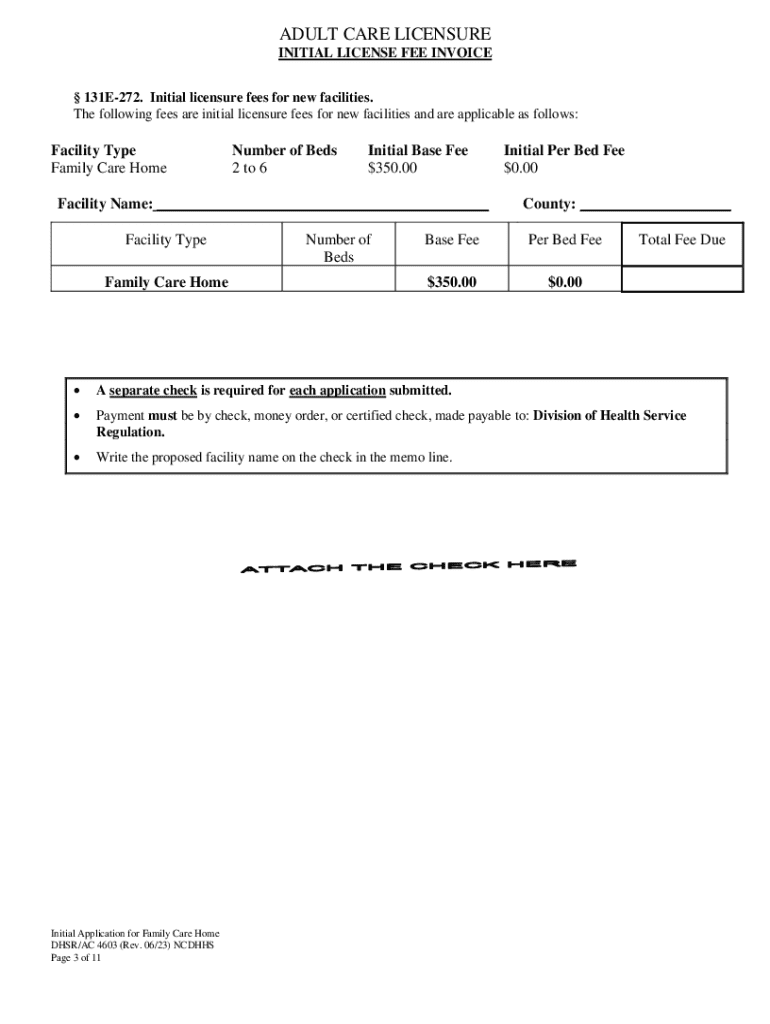
- Fee Payment: Include the applicable fees as outlined by the Department of Health and Human Services.
Eligibility Criteria
The eligibility to apply for an initial license hinges on specific criteria that ensure the suitability of applicants and the proposed care facility.


Basic Requirements
- Professional Background: Experience in health care or management, particularly involving residential care services.
- Financial Stability: Evidence of financial resources to support facility operations and sustain resident care.
- Legal Compliance: Demonstration of adherence to state and federal laws regarding residential care services.
Specific Considerations
- Applicants with a history of facility violations may face additional scrutiny.
- Facilities located in densely populated areas might need additional zoning approvals.
Important Terms Related to Initial License Application for Family Care Homes
Understanding the terminology used in the initial license application is crucial for its successful completion.
Common Terms
- Licensee: The individual or organization applying for the license to operate a family care home.
- Resident Rights: Legal entitlements of individuals living in residential care facilities, ensuring their dignity and independence.
- Regulatory Compliance: Adherence to state regulations governing health, safety, and operational standards for family care homes.
Contextual Examples
- Knowing the difference between a licensee and an operator can prevent misinterpretation of roles and responsibilities.
State-Specific Rules for the Initial License Application for Family Care Homes
North Carolina has distinct regulations governing the application process for family care homes.
North Carolina Specifics
- Capacity Limits: Regulations on the number of residents that can be housed per facility.
- Staffing Requirements: Mandates on staff-to-resident ratios and qualifications.
- Inspection Protocols: Regular site visits by state inspectors to ensure ongoing compliance.
Implementation
- Facilities must be prepared for unexpected inspections to maintain their license status.
- Variances in county-level enforcement of state rules may require local adaptations of the application process.
Required Documents
The document submission process involves several key materials to validate the application.
Essential Documents
- Business Plan: A detailed strategy for operation, sustainability, and service delivery.
- Background Checks: Criminal record checks for all personnel involved in caregiving.
- Facility Schematics: Architectural layouts and plans meeting state safety standards.
Comprehensive Checklist
- Each document is cross-referenced with its corresponding section in the application to ensure nothing is overlooked.
Application Process & Approval Time
The timeline from application submission to approval is structured but may vary depending on several factors.
Steps in the Approval Process
- Application Review: Initial assessment of the form and accompanying documents by health department officials.
- Site Inspection: Verification of facility readiness and adherence to licensing requirements.
- Issuance of License: Upon successful review, the license is granted, allowing operations to commence.
Average Timeframes
- The typical processing period ranges from 60 to 90 days, depending on the completeness of the application and the facility's readiness for inspection.
Form Submission Methods (Online / Mail / In-Person)
Applicants have options for submitting their initial license application, each with its own procedures and benefits.
Submission Options
- Online: Expedites processing with digital verification features.
- Mail: Suitable for applicants preferring physical documentation, albeit with longer processing times.
- In-Person: Offers personal interaction with departmental staff for real-time feedback and corrections.
Pros & Cons
- Online submissions facilitate faster feedback, while in-person filings reassure applicants through direct communication.
Focusing on these comprehensive blocks will ensure full understanding and successful completion of the initial license application for family care homes.




