






Definition and Meaning of the WV-110 Temporary Restraining Order
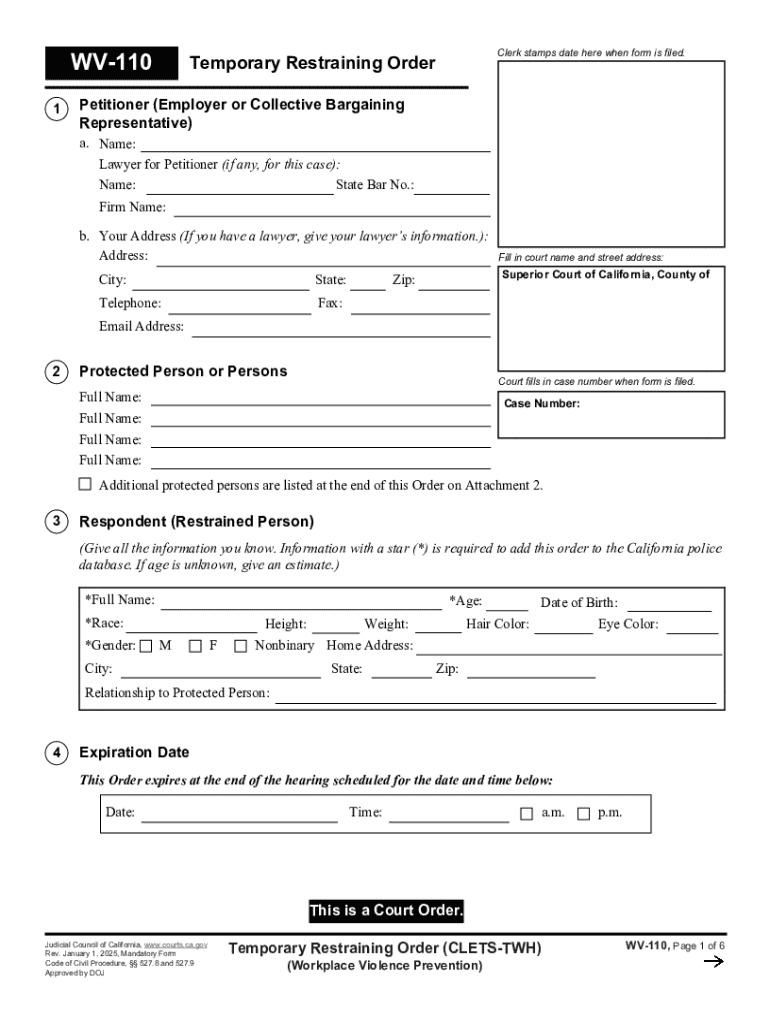
The WV-110 Temporary Restraining Order is a legal document used in California, specifically aimed at preventing workplace violence. This form initiates legal protection for individuals who believe they are at risk from others in their work environment. The order seeks to prevent harmful behavior by mandating specific actions, such as maintaining a certain distance from the protected individuals, and prohibiting the respondent from possessing firearms.
Legal Implications
- Prohibited Behaviors: Includes threats, harassment, stalking, or any form of violence towards protected persons.
- Protection Scope: Can apply to individuals and groups typically involved in a workplace like employees, employers, and contractors.
- Firearm Restrictions: Respondents may be prohibited from owning, possessing, or purchasing firearms.
Key Considerations
- Duration: These orders remain effective until a hearing for a permanent restraining order is conducted.
- Violations: Non-compliance with the TRO can result in criminal charges, including fines and imprisonment.
How to Use the WV-110 Temporary Restraining Order
The WV-110 TRO serves multiple purposes, including protection and legal documentation. It is utilized primarily by individuals and organizations experiencing or fearing workplace violence. The form is comprehensive and mandates legal orders to ensure the safety of the petitioners.
Practical Applications
- Employer Usage: Employers can file on behalf of employees if there is a credible threat.
- Employee Safety: Used by employees to obtain immediate protection against colleagues or external threats related to work.
- Documentation for Future Action: Acts as formal documentation of complaints and protective measures that can be referenced in future legal proceedings.
How to Obtain the WV-110 Temporary Restraining Order
Acquiring a WV-110 TRO involves navigating the legal system to ensure protection is granted lawfully and promptly.
Step-by-Step Process
- Determine Eligibility: Confirm the situation qualifies for a TRO under California workplace violence laws.
- Gather Required Information: Collect necessary personal information about the petitioner and respondent.
- Complete the Form: Fill out the WV-110 form accurately, ensuring all details are clear and complete.
- File the Form: Submit the form at the appropriate California court, typically located in the jurisdiction where the alleged conduct occurred.
- Notification of Respondent: Ensure the respondent is officially notified to attend the court hearing.
Timing and Locations
- Expedited Processing: TROs can be processed quickly to provide immediate protection.
- Court Assistance: Many courts offer legal aid or forms processing assistance for individuals who require help.
Steps to Complete the WV-110 Temporary Restraining Order
Completing the WV-110 form requires attention to detail and understanding of the respondent's and petitioner's details to avoid any delays or rejections.
Instructions
- Petitioner's Information: Include name, address, and relationship to the respondent.
- Respondent's Information: Provide as much detail as possible about the respondent, including known aliases and contact information.
- Allegations of Violence: Clearly describe incidents or threats of violence, including dates, times, and any evidence available.
- Requested Orders: Specify the types of protections or prohibitions you are seeking.
- Signature and Date: Ensure the form is signed and dated. If filed by a representative, their signature may be required as well.
Common Mistakes
- Incomplete Information: Leaving fields blank can delay processing.
- Poorly Documented Allegations: Failing to provide specific examples or evidence can weaken the petition.
Who Typically Uses the WV-110 Temporary Restraining Order
The WV-110 is a vital resource for those in professional settings who anticipate or have experienced conflict that could lead to violence.


Use Cases
- Small Businesses: Owners seeking protection for themselves or staff.
- Corporates: Larger organizations aiming to protect employees from risks posed by outsiders, like disgruntled clients.
- Schools and Universities: Used by educational institutions protecting staff and students from potential threats.
Example Scenarios of Using the WV-110 Temporary Restraining Order
Understanding specific situations where the WV-110 order is beneficial can help potential filers assess their needs.
Illustrative Cases
- An employee harassed after a workplace conflict files a TRO to ensure separation from a threatening colleague.
- A business owner is threatened by an ex-employee, necessitating a restraining order to protect their family and establishment.
Illustrative Details
- Incident Documentation: Includes exact phrases or actions leading to the request.
- Witness Accounts: Statements or affidavits from third parties supporting the need for intervention.
Important Terms Related to the WV-110 Temporary Restraining Order
Being familiar with legal terminology is crucial for understanding the protections and obligations under the WV-110.
Terminology Breakdown
- Petitioner: The person or entity requesting the restraining order.
- Respondent: The individual against whom the order is sought.
- TRO: Abbreviation for Temporary Restraining Order, an immediate but short-term legal remedy.
- Prohibited Contact: Any direct or indirect communication with the protected persons that the court deems as potential harm.
Key Elements of the WV-110 Temporary Restraining Order
The WV-110 form is detailed, addressing various scenarios and protections, emphasizing its comprehensive nature in preventing workplace violence.
Core Components
- Identifying Information: Clearly identifying all involved parties.
- Specific Orders: Outlines of the actions the respondent is prohibited from taking.
- Enforcement Details: Directions for law enforcement on implementing the order.
Variations and Nuances
- Customizable Conditions: Orders can be tailored based on the specifics of the work environment or threat-level.
- Dynamic Restrictions: May include varied distances or limits depending on the nature of contact required to prevent threats.