






Definition & Meaning
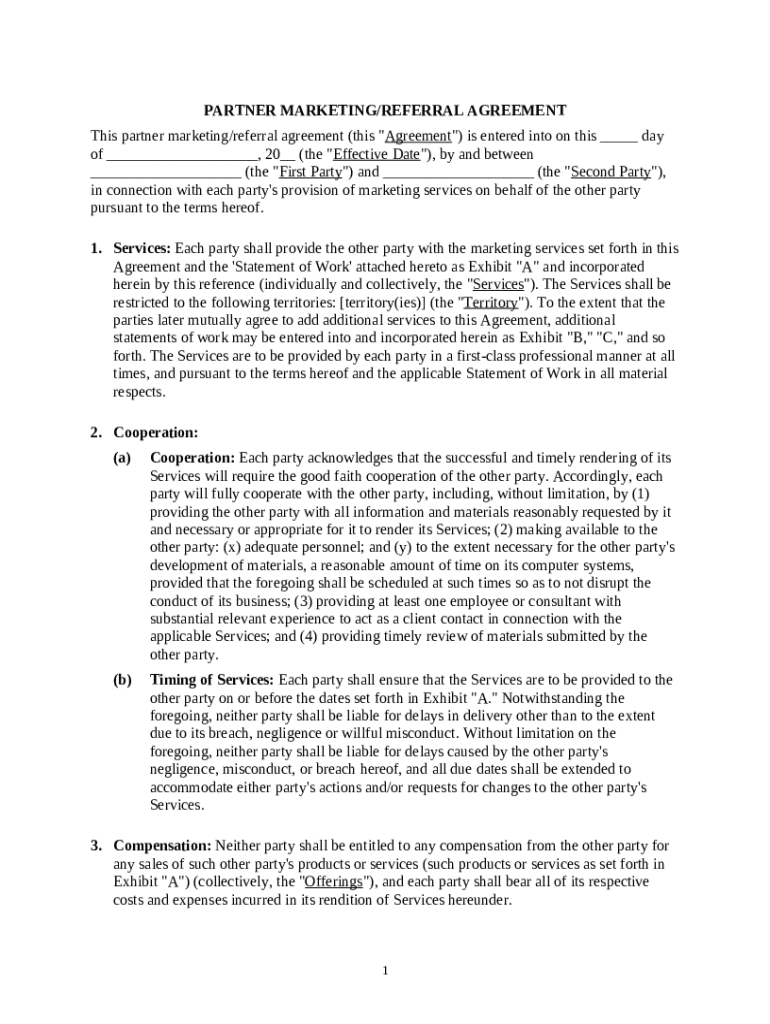
A Mutual Referral Partner Agreement is a formal contract between two parties, often businesses or professionals, agreeing to refer potential clients or customers to each other. This agreement sets the framework for mutual cooperation, defining the responsibilities and benefits for each party involved. These agreements are typically used in industries where networking and word-of-mouth referrals play a critical role in client acquisition. By establishing clear terms, both parties aim to create a win-win situation that encourages ongoing cooperation and maximizes business opportunities. Each party is responsible for making referrals to the other, contributing to shared growth and success.
Key Elements of the Mutual Referral Partner Agreement
Understanding the core components of a Mutual Referral Partner Agreement is crucial for its effective implementation. Here are the primary elements usually found in such an agreement:
- Roles and Responsibilities: Clearly defined expectations for each party in terms of the assistance and referrals to be provided.
- Compensation Terms: Outlining any financial arrangements, such as referral fees or commissions, ensuring transparency over any payments resulting from successful referrals.
- Confidentiality and Privacy: Protecting sensitive information exchanged between parties, ensuring data privacy and compliance with relevant legislation.
- Term and Termination: Specifying the duration of the agreement and conditions under which it can be terminated, providing clarity on how either party can opt out.
- Dispute Resolution: Establishing mechanisms for resolving conflicts, including mediation or arbitration procedures, helping prevent protracted legal disputes.
Each of these elements plays a significant role in clarifying the terms of partnership, ensuring mutual understanding and minimizing potential conflicts.
Steps to Complete the Mutual Referral Partner Agreement
Completing a Mutual Referral Partner Agreement involves several key steps to ensure the document is comprehensive and legally binding:
- Draft the Agreement: Begin by compiling all relevant clauses, focusing on clearly outlining roles, compensation, and confidentiality.
- Review Legal Requirements: Ensure that the agreement complies with relevant local laws and regulations, possibly with legal counsel to avoid any potential legal issues.
- Negotiate Terms: Discuss and modify terms as needed with the other party to ensure mutual satisfaction and enhance bilateral cooperation.
- Final Approval: Obtain signatures from both parties to finalize the agreement, making it legally binding.
- Distribute Copies: Provide copies to all parties involved, ensuring everyone has access to the finalized terms for future reference.
These steps help ensure that the agreement is thorough, enforceable, and clear to all involved parties.
How to Use the Mutual Referral Partner Agreement
Using a Mutual Referral Partner Agreement requires strategic planning and continuous monitoring to maximize its effectiveness. Here's how parties typically utilize these agreements:
- Identify Opportunities: Use the agreement to actively explore and identify new business opportunities where collaboration can lead to mutual growth.
- Track Referrals: Implement a system to track referrals and their outcomes, ensuring transparency and accountability in the referral process.
- Evaluate Performance: Regularly assess the effectiveness of the referral arrangement, making adjustments to strategies or terms if necessary to improve results.
- Maintain Open Communication: Keep consistent and open lines of communication with the partner to address any issues and enhance cooperation.
Proper utilization of the agreement can significantly boost the success of a referral partnership, leveraging the strengths and networks of both parties.
Who Typically Uses the Mutual Referral Partner Agreement
This type of agreement is widely used across various industries and by different types of organizations, including:
- Small and Medium Enterprises (SMEs): To expand their customer base through strategic partnerships.
- Freelancers and Consultants: To generate more leads and leverage mutual client connections.
- Professional Firms: Such as legal or accounting firms, which often rely on referrals for business development.
- Real Estate Agents: Who frequently use these agreements to refer clients seeking different property services.
The flexibility of the agreement makes it a valuable tool for any business or professional looking to enhance their client acquisition strategy through partnerships.


Legal Use of the Mutual Referral Partner Agreement
Understanding the legal implications of a Mutual Referral Partner Agreement is essential for its safe and effective use. Key legal considerations include:
- Compliance with Contract Law: Ensuring the agreement fulfills all legal requirements for a valid contract, including offer, acceptance, and consideration.
- Privacy Laws: Adhering to data privacy regulations, especially when handling sensitive customer information.
- Intellectual Property Rights: Protecting any brand names, trademarks, or proprietary information shared during the partnership.
- Liability Limitations: Including clauses that limit each party's liability, clarifying responsibilities and mitigating risks.
These legal aspects are crucial to ensure that the agreement is enforceable and protects both parties' interests.
State-Specific Rules for the Mutual Referral Partner Agreement
While the core elements of a Mutual Referral Partner Agreement are generally consistent, certain states may have specific rules or regulations:
- Brokerage Regulations: In some states, industries like real estate have specific laws governing referral agreements to protect consumer interests.
- Tax Implications: State tax laws can affect the financial aspects of the agreement, such as how referral fees are treated.
- Employment Laws: If the agreement involves independent contractors, it's essential be aware of any state-specific employment law that could impact the agreement.
Understanding state-specific rules helps customize the agreement to ensure compliance with local laws.
Examples of Using the Mutual Referral Partner Agreement
Practical examples illustrate how these agreements function in real-world scenarios:
- Real Estate Partnership: A property management firm and a real estate broker enter a referral agreement to mutualize lead generation, sharing commissions on successful transactions.
- Tech Collaboration: Two IT companies leverage such an agreement to refer clients needing each other's specialized services, like cybersecurity and network infrastructure.
- Healthcare Network: A group of clinics uses an agreement to refer patients requiring specialized services available from another group, enhancing patient care and business efficiency.
These examples demonstrate the diverse applications and benefits of using a Mutual Referral Partner Agreement.