






Definition and Purpose of Roll Call
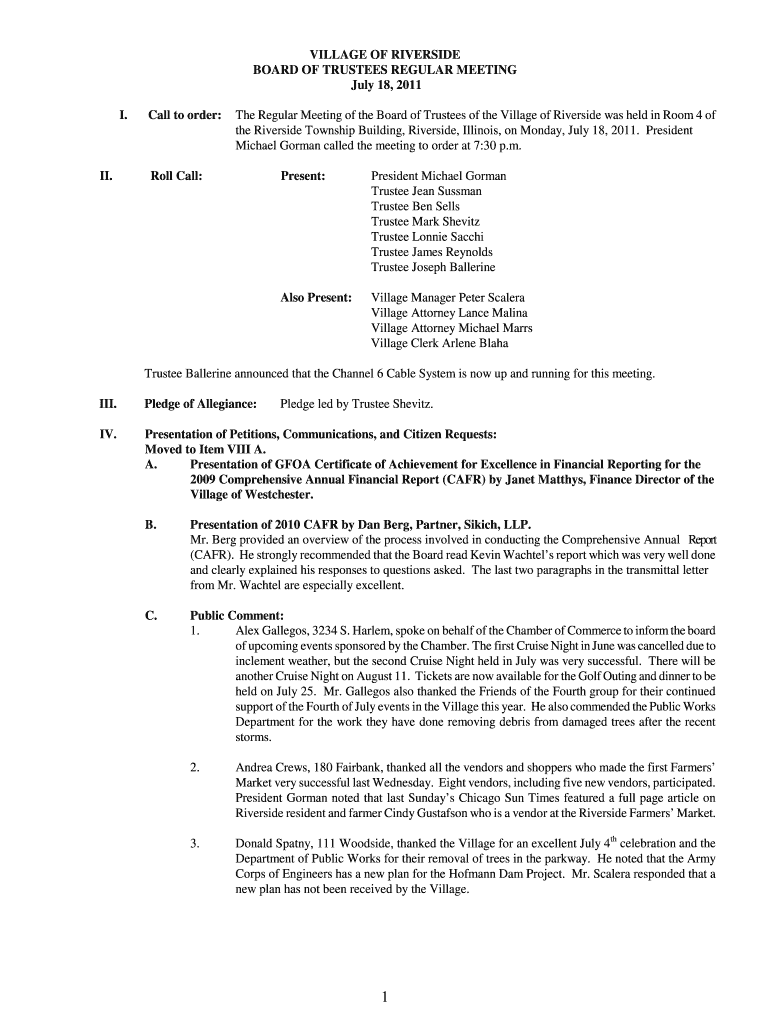
Roll Call serves as a method to record the presence of key figures in a meeting or assembly. In this context, it documents the attendance of President Michael Gorman, Trustee Jean Sussman, Trustee Ben Sells, and Trustee Mark She. The Roll Call confirms the quorum, ensuring that enough members are present to make decisions legally. This list is essential for maintaining transparency and accountability in decision-making processes.
Steps to Complete the Roll Call
-
Preparation Before the Meeting:
- Compile a list of expected attendees, including key decision-makers and stakeholders.
- Ensure all necessary documentation is ready for recording attendance.
-
Conducting the Roll Call:
- Announce each attendee's name at the start of the meeting.
- Confirm their presence verbally or through a digital acknowledgment.
-
Documenting the Attendance:
- Record each confirmed attendee in the meeting minutes.
- Note any absences and, if applicable, designate alternates or deputies present.
Key Elements of Roll Call
- Name and Title: It includes the names and titles of individuals expected to attend, such as President and Trustees.
- Attendance Status: This notes whether the person is present or absent.
- Quorum Confirmation: Establishing that the minimum number of members is present to conduct official business.
Legal Use and Compliance
Legal implications of the Roll Call include ensuring decisions made during the meeting are valid. Roll Call confirms a quorum, which is a legal requirement for meeting proceedings in many jurisdictions. Failure to achieve a quorum could invalidate decisions made, necessitating proper documentation of attendance.
Examples of Roll Call in Practice
- Board Meetings: In corporate or municipal board meetings, the Roll Call confirms which members are present.
- Annual General Meetings (AGMs): It verifies attendance for official record-keeping and to validate the meeting's proceedings.
- Community Meetings: Used to confirm participation of community leaders, ensuring diverse representation in discussions.
Importance of the Roll Call
Roll Call is vital for accountability. It ensures that decisions are made with proper representation and consent. It also provides a record for future reference and legal compliance, avoiding disputes over the validity of meeting outcomes.
Who Typically Uses Roll Call
- Municipal Bodies: Town or village boards to verify presence of officials required to conduct business.
- Corporate Boards: To ensure directors’ attendance for resolutions that require approval.
- Educational Institutions: During trustee meetings to confirm participation.
State-Specific Rules for Roll Call
While Roll Call is generally similar across the United States, some states might have specific requirements regarding quorum and documentation. It is crucial to consult state laws to ensure compliance with these local regulations to avoid legal challenges.
Digital vs. Paper Versions
The adoption of digital Roll Call systems offers benefits like real-time updating and remote confirmation of attendance. In contrast, paper Roll Calls might be used in more traditional settings but can result in delayed updates and potential for errors in transcription.
Why Roll Call is Conducted
Conducting Roll Call at the beginning of meetings serves several purposes: it establishes formal member presence, informs all attendees of the attending participants, and confirms the meeting's legitimacy. This practice underlines the commitment to transparency and effective governance.
Examples and Case Studies
A village board meeting could begin with a Roll Call of all trustees, which ensures all necessary members are present. Illustrating this process emphasizes the importance of establishing a quorum for legal and operational effectiveness, thereby maintaining order and meeting governance standards.
By addressing these critical elements comprehensively, the Roll Call ensures effective meeting management and procedural compliance, reinforcing the integrity and accountability of organizational leadership.