






Definition and Meaning
The Privacy Impact Assessment (PIA) for Decision Support System (DSS) is a structured evaluation process designed to ensure that the deployment and operation of the DSS align with privacy laws and policies. The system itself is a crucial tool adopted by organizations, particularly within the Department of Veterans Affairs, for managerial cost accounting, data collection, and analysis. By conducting a PIA, organizations identify and manage risks associated with the handling of personally identifiable information (PII) and protected health information (PHI). This assessment is integral to maintaining transparency, building trust, and ensuring compliance with privacy regulations.
Key Components
- Purpose Definition: The main aim is to manage cost recovery, budgeting, and resource allocation effectively.
- Data Examination: Types of PII and PHI stored must be thoroughly identified and cataloged.
- Risk Management: Identifying and mitigating risks related to data security and privacy breaches.
- Legal Framework: Detailing the legal authorities governing the system's operations.
Steps to Complete the Privacy Impact Assessment for Decision Support System (DSS)
Conducting a Privacy Impact Assessment for DSS involves a series of critical steps, each contributing to a comprehensive evaluation process.
- Initial Analysis: Determine whether PIA is required for the system by identifying the nature and scope of data involved.
- Data Mapping: Document all data flows related to PII and PHI, including origins, destinations, and processing activities.
- Risk Assessment: Analyze potential privacy risks and their impacts on individuals' data privacy.
- Legal Review: Ensure the system's operations comply with relevant laws, regulations, and privacy policies.
- Mitigation Strategies: Develop measures to minimize identified risks, including data encryption and access control.
- Documentation and Reporting: Create detailed documentation and reports of findings and recommendations.
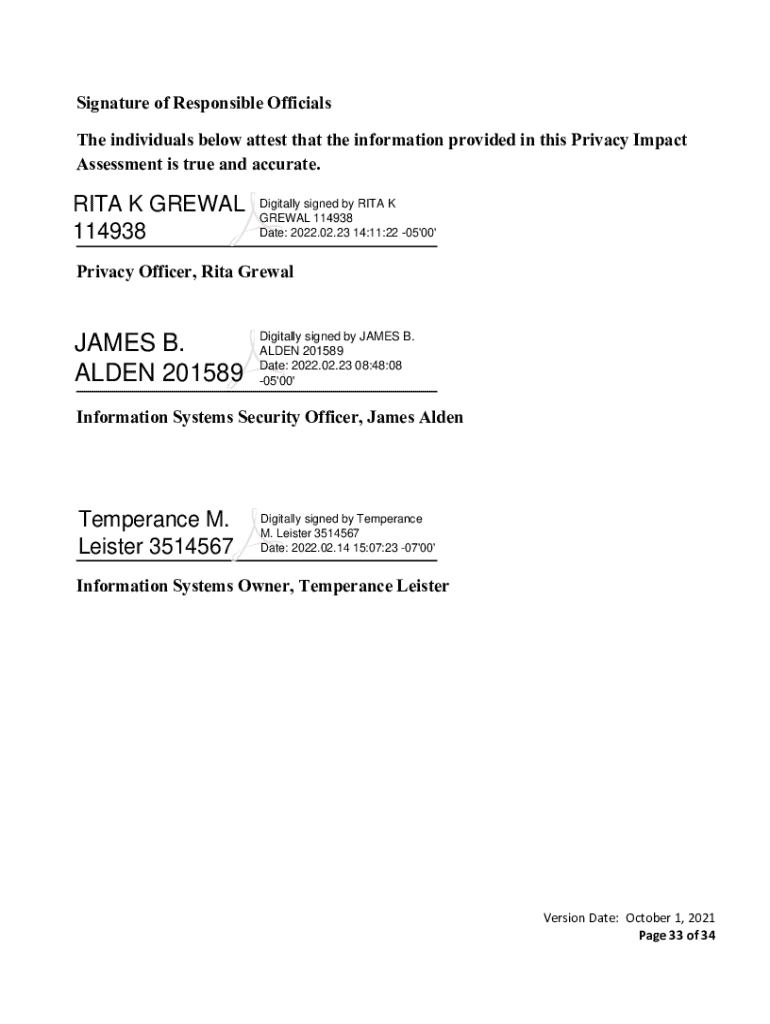
- Review and Approval: Submit the PIA report for review by privacy officers or compliance authorities for approval.
Key Elements of the Privacy Impact Assessment for Decision Support System (DSS)
To conduct a successful PIA, several fundamental components must be addressed:
- Scope and Objectives: Define clear objectives and scope to guide the assessment process.
- Data Collection and Storage: Analyze how data is collected, used, stored, and accessed within the DSS.
- Security Measures: Review existing security measures such as encryption, authentication protocols, and SSL certificates.
- Data Sharing Practices: Assess internal and external data sharing mechanisms to ensure controlled and secure transfers.
- User Access Controls: Implement robust access controls to limit data exposure to authorized personnel only.
- Training Requirements: Establish training programs for staff to ensure adherence to privacy and data protection standards.
Legal Use of the Privacy Impact Assessment for Decision Support System (DSS)
Conducting a PIA is not only a best practice but often a legal requirement for systems handling sensitive information, including DSS.
- Compliance Drivers: Adhere to U.S. privacy laws such as the Privacy Act, HIPAA, and other federal regulations.
- Regulatory Enforcement: Ensure systems are prepared for audits and inspections by regulatory bodies.
- Contractual Obligations: Meet contractual privacy obligations with clients and stakeholders.
- Risk Mitigation: Legally protect organizations by documenting due diligence in assessing privacy risks.
Who Typically Uses the Privacy Impact Assessment for Decision Support System (DSS)
The primary users are organizations that manage decision support systems incorporating sensitive personal and health-related data. Key users include:
- Government Agencies: Particularly departments like the Department of Veterans Affairs.
- Healthcare Providers: Institutions that need to manage large volumes of patient data.
- Financial Institutions: For systems related to financial data analysis and record management.
- IT and Compliance Teams: Within organizations, responsible for implementing and maintaining privacy practices.


Examples of Using the Privacy Impact Assessment for Decision Support System (DSS)
Case studies illustrate how PIAs for DSS are implemented and their impact on organizational practices:
- VA Healthcare System: Implemented PIA to secure and optimize resource allocation, improving healthcare delivery.
- Insurance Companies: Conducted PIA to ensure compliant handling of customer PII, leading to more reliable data management.
- University Research Departments: Leveraged PIA to safeguard sensitive research data, promoting future collaboration projects.
Important Terms Related to Privacy Impact Assessment for Decision Support System (DSS)
Understanding the terminology within a privacy impact assessment context is crucial for clarity and compliance:
- PII (Personally Identifiable Information): Any data that could potentially identify a specific individual.
- PHI (Protected Health Information): Health-related data that is protected under law.
- Data Minimization: The principle of limiting data collection to what is necessary for the specific purpose.
- Data Protection Impact Assessment (DPIA): A term often used interchangeably with PIA to denote a broader data context evaluation.
Required Documents
To effectively conduct a PIA, several essential documents are necessary:
- System Overview Documentation: Provides a comprehensive overview of the DSS.
- Data Inventory and Mapping: Lists all data types and flows handled by the DSS.
- Risk Analysis Reports: Details identified risks and proposed mitigation strategies.
- Compliance Checklists: Ensures alignment with relevant legal and regulatory standards.