






Definition and Meaning of the Backflow Assembly Test Report
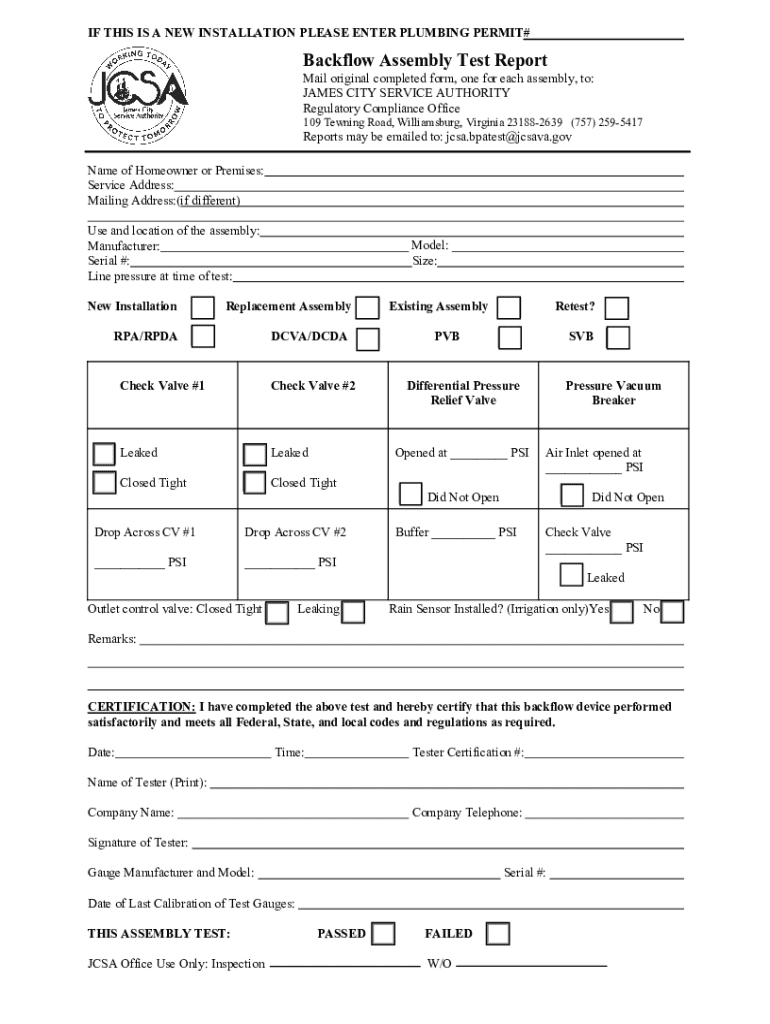
The Backflow Assembly Test Report is an essential document used to record the installation or replacement of backflow prevention assemblies in water systems. This form serves as a means to track and certify that backflow assembly installations comply with safety standards and regulatory requirements. The report typically captures detailed information about the homeowner, the specific assembly tested, the results of the test, and the certification provided by the authorized tester. This documentation is crucial for protecting potable water supplies from contamination and ensuring that assemblies are functioning optimally within the specified parameters.
How to Use the Backflow Assembly Test Report
To effectively use the Backflow Assembly Test Report, users must:
- Gather Relevant Information: Collect all necessary details about the installation site, the specific backflow assembly, and the testing procedures to fill the form accurately.
- Follow Instructions: Carefully read the instructions provided on the form to understand each section's requirements, ensuring compliance with any local regulations.
- Record Test Results: Accurately document the results of the backflow assembly test, ensuring all data is comprehensive and precise.
- Certify the Document: Have the tester sign and certify the report, attesting to the accuracy of the information and the adequacy of the backflow assembly's performance.
- Submit the Report: Mail or email the completed form to the James City Service Authority or the relevant local authority for regulatory compliance verification.
Steps to Complete the Backflow Assembly Test Report
Filling out the Backflow Assembly Test Report entails several key steps:
-
Enter Homeowner Information: Provide detailed details about the property owner, including name, contact information, and address.
-
Specify Assembly Details: Include specific information about the backflow assembly, such as the type, size, manufacturer, and serial number.
-
Conduct and Record Test Results: Perform the backflow test and capture the results in the designated section, ensuring that all relevant parameters are documented.
-
Certify Results: The tester should certify the document by signing it, confirming that the assembly functions correctly and complies with relevant standards.
-
Verification and Submission: Review the completed form for accuracy before mailing or emailing it to the appropriate authorities to ensure compliance.
Key Elements of the Backflow Assembly Test Report
- Homeowner Information: Necessary for identifying the property and linking the assembly to a specific location.
- Assembly Details: Include the make, model, and specifications of the backflow device to ensure traceability and precise identification.
- Test Results: Record all necessary performance metrics, including pressure differentials and other relevant parameters confirming the assembly's functionality.
- Certification by Tester: An essential component that requires the tester's signature to validate the test results and ensure credibility.
Legal Use of the Backflow Assembly Test Report
The Backflow Assembly Test Report is a legally mandated document in some jurisdictions, stipulating that specific water installations must be tested and certified to protect public health. Users should understand the applicable legal frameworks and requirements pertinent to their locality by consulting local authorities or water management agencies. Complying with these legal stipulations ensures the safety and quality of the water supply and mitigates potential contamination risks.
State-Specific Rules for the Backflow Assembly Test Report
Although the fundamental components of the Backflow Assembly Test Report remain consistent, specific states may have unique regulations or additional requirements. It's crucial for test administrators and property owners to:
- Consult Local Regulations: Research state-specific specifications that dictate additional testing procedures or documentation requirements.
- Adapt Practices Accordingly: Modify testing procedures based on variations in legal obligations across different jurisdictions.
Important Terms Related to the Backflow Assembly Test Report
Users should familiarize themselves with key terms commonly associated with the Backflow Assembly Test Report:
- Backflow: The undesirable reversal of water flow that can introduce contaminants into the potable water system.
- Assembly: A collection of devices and components configured to prevent backflow into the clean water supply.
- Pressure Differential: A measurement indicating whether the backflow prevention assembly is operating within expected parameters.
- Compliance: Adhering to established legal standards and regulatory practices through accurate testing and reporting.
Examples of Using the Backflow Assembly Test Report
Consider a scenario where a residential community in the United States requires all homes to install and test backflow assemblies annually. Utilizing the Backflow Assembly Test Report, homeowners collaborate with certified testers to document the performance of installed devices. The completed report is then submitted to the local water authority to ensure ongoing compliance. Such practices help maintain the integrity of the community’s water supply by preventing contamination and safeguarding public health.