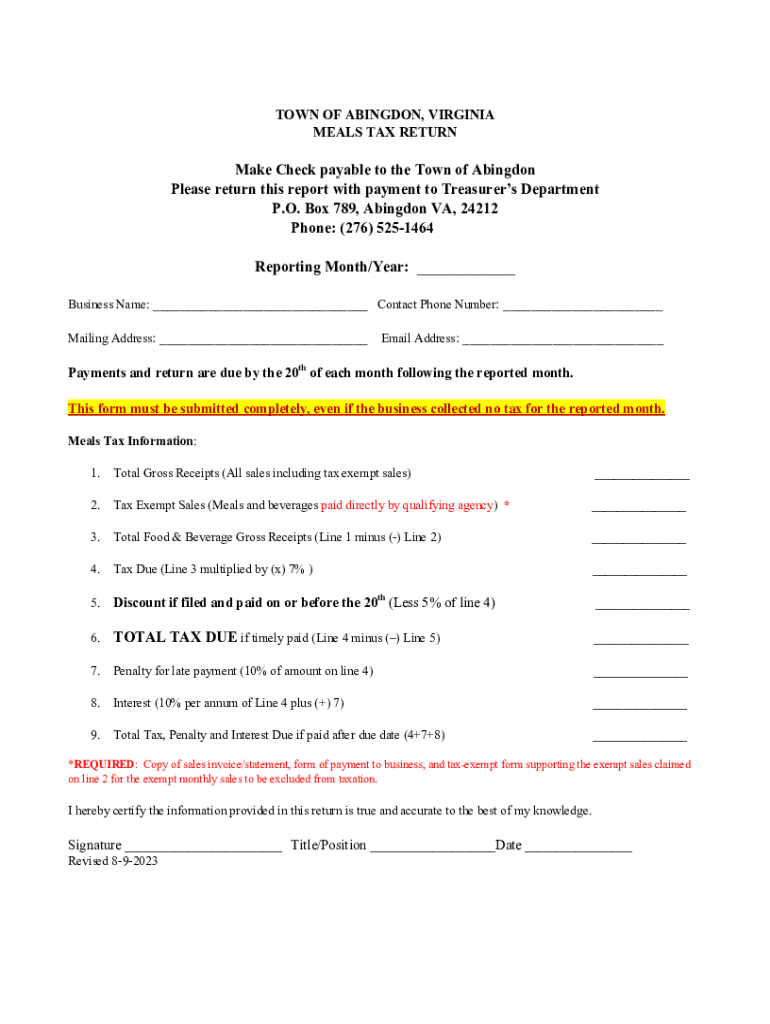







Definition and Meaning of Meals Tax Return
The Meals Tax Return is a financial document that businesses in specific jurisdictions, like the Town of Abingdon, Virginia, use to report and pay taxes on meals sold. This tax is generally levied on food and beverage sales and is essential for local governments to collect revenue. The form serves as an official record of gross receipts and helps ensure compliance with local tax regulations. It is crucial for businesses involved in selling prepared meals to understand and accurately complete this return to avoid penalties.
Steps to Complete the Meals Tax Return
-
Gather Financial Records: Collect all financial records related to meal sales within the reporting period. This includes gross receipts from all taxable sales of food and beverages.
-
Calculate Taxable Sales: Segregate taxable sales from exempt sales, if any, and calculate the total taxable amount. Ensure that tax-exempt sales are supported by the necessary documentation to substantiate claims.
-
Compute the Tax: Apply the meals tax rate — in Abingdon, Virginia, it's typically 7% — to the total taxable sales figure to determine the amount owed.
-
Complete the Form: Fill out all required sections of the Meals Tax Return form accurately. Ensure all figures are correct, and attach any supplementary documentation that might be needed.
-
Verify Information: Double-check all entered data for accuracy. Mistakes can lead to penalties or a need for amendment, so verification is crucial.
-
Submit the Return: Depending on jurisdiction requirements, submit the completed form along with the tax payment by the due date, which is commonly the 20th of each month following the reporting period.
Important Terms Related to Meals Tax Return
- Gross Receipts: These are the total sales of foods and beverages subject to the meals tax before any deductions.
- Tax-Exempt Sales: Transactions not subject to the meals tax, often requiring specific documentation to be excluded from taxable sales.
- Penalty: A financial consequence imposed for late filing or payment, emphasizing the importance of meeting deadlines.
- Filing Period: The time frame for which sales are reported on the tax return, typically monthly.
Filing Deadlines and Important Dates
Compliance with established deadlines prevents penalties. For most jurisdictions like Abingdon, the Meals Tax Return is due by the 20th of each month for the previous month's sales. Early preparation of financial records aids in timely submission. Missing the deadline could incur penalties, stressing the need for consistent reminders and calendar alerts.
Penalties for Non-Compliance
Failing to file the Meals Tax Return on time or inaccurately completing it can incur significant penalties. Common penalties include late fees and interest on outstanding payments. The exact penalties vary by location but emphasize the need for accurate record-keeping and timely submission. Avoiding these penalties requires vigilance and accuracy in compliance activities.
Software Compatibility for Meals Tax Return
Many businesses use software like TurboTax or QuickBooks to streamline tax preparation. These platforms can help automate calculations and ensure that the correct amounts are reported. Compatibility with such software can reduce human error and improve efficiency in completing tax returns. Verify that your accounting software supports meals tax features to facilitate seamless integration and filing.
Required Documents for Filing
Several documents are necessary when preparing the Meals Tax Return:
- Sales Records: Detailed accounts of all sales transactions during the reporting period.
- Tax-Exempt Documentation: Proper documentation for sales not subject to the meals tax.
- Previous Tax Returns: Access to prior filings for consistency and comparison.
- Submission Proof: Retain proof of filing, such as confirmations or receipts, to avoid disputes over compliance.
Business Entity Types Benefitting from Meals Tax Return
Entities like restaurants, cafes, and food trucks primarily benefit, as their revenue largely hinges on sales that are subject to the meals tax. These businesses must understand how the meals tax impacts their operations and budget for the associated tax liability. Compliance is crucial for maintaining local operational licenses and for upholding the business’s reputation within the community.