






Definition & Meaning
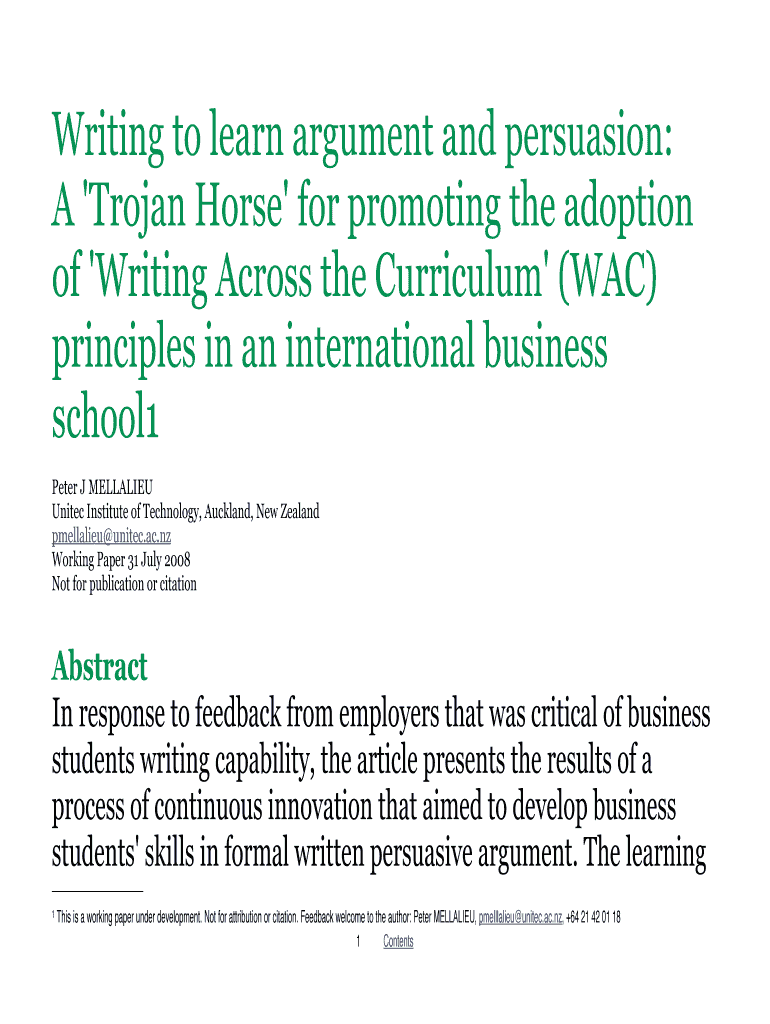
The term "A 'Trojan Horse' - Unitec Learning and Teaching Symposium" refers to an educational strategy employed by Unitec Institute of Technology. This approach involves embedding innovative teaching methods under the guise of traditional pedagogy to enhance educational outcomes. It aligns with the pedagogical focus on Writing Across the Curriculum (WAC), which aims to improve students' writing skills across various subjects.
Key Elements of the Symposium
The symposium's core elements include workshops, panel discussions, and presentations on innovative teaching strategies. Key topics often involve:
- Enhancing persuasive writing skills through structured formats like the five-paragraph essay.
- Addressing challenges faced by ESL students.
- Implementing peer critique methods and minimal marking policies to encourage learning and feedback.
Steps to Complete the Symposium
- Registration: Participants must register online through the Unitec website to secure their spot at the symposium.
- Preparation: Attendees should review the agenda and prepare any preliminary questions or topics for discussion.
- Participation: Engage actively in workshops and panels by asking questions and sharing insights.
- Feedback: Upon completion, provide feedback through post-event surveys to help improve future symposiums.
How to Use the Symposium
Participants can use insights and strategies from the symposium in various educational settings. Teachers may integrate techniques into their curriculum to bolster student writing skills, while students can apply learned methods to improve their academic performance. The symposium's collaborative environment also fosters networking and the sharing of teaching resources.
Who Typically Uses the Symposium
The primary users of "A 'Trojan Horse' - Unitec Learning and Teaching Symposium" are educators and academic professionals. Secondary participants include students, particularly those studying education or with an interest in pedagogical strategies. The symposium is also valuable for curriculum developers and educational policymakers.


Legal Use of the Symposium
The symposium operates under legal guidelines that ensure the protection of intellectual property and the privacy of participants. Attendees are provided with documentation that outlines their rights and responsibilities, ensuring compliance with educational standards and legalities.
Important Terms Related to the Symposium
- WAC (Writing Across the Curriculum): An instructional approach that incorporates writing assignments and activities across various academic disciplines.
- Peer Critique: A method where students review each other's work to provide feedback and learn collaboratively.
- Minimal Marking: A feedback strategy that involves marking only essential corrections to encourage students to identify and correct their own errors.
Examples of Using the Symposium
An ESL teacher attending the symposium may adopt peer critique in their classroom to help students improve their literacy skills. A business lecturer might use the five-paragraph essay structure to teach persuasive writing in a course. These practical applications demonstrate the symposium's effectiveness in diverse educational contexts.
Software Compatibility
While the symposium itself does not involve software, educators can utilize digital tools, such as word processors and online collaboration platforms, to implement strategies discussed. Compatible software includes educational apps tailored for writing and collaboration, like Google Docs and Microsoft Word.
Filing Deadlines / Important Dates
The symposium typically announces its schedule well in advance. Interested participants should note registration deadlines and key event dates to ensure full participation. These dates are advertised on Unitec's official channels and require attention to avoid missed opportunities.
Required Documents
Participants are generally required to bring identification and any pre-assigned materials for discussion. Educators may also be encouraged to bring lesson plans or student work samples for workshops to gain practical feedback.
Form Submission Methods (Online / Mail / In-Person)
Registration for the symposium is primarily handled online, providing an accessible method for participants to sign up. Notifications and confirmations are sent via email, ensuring clear communication and record-keeping.
Penalties for Non-Compliance
While there are no legal penalties for non-compliance with symposium procedures, participants may miss the opportunity to fully engage or gain intended educational benefits if they fail to adhere to the guidelines and timelines.