
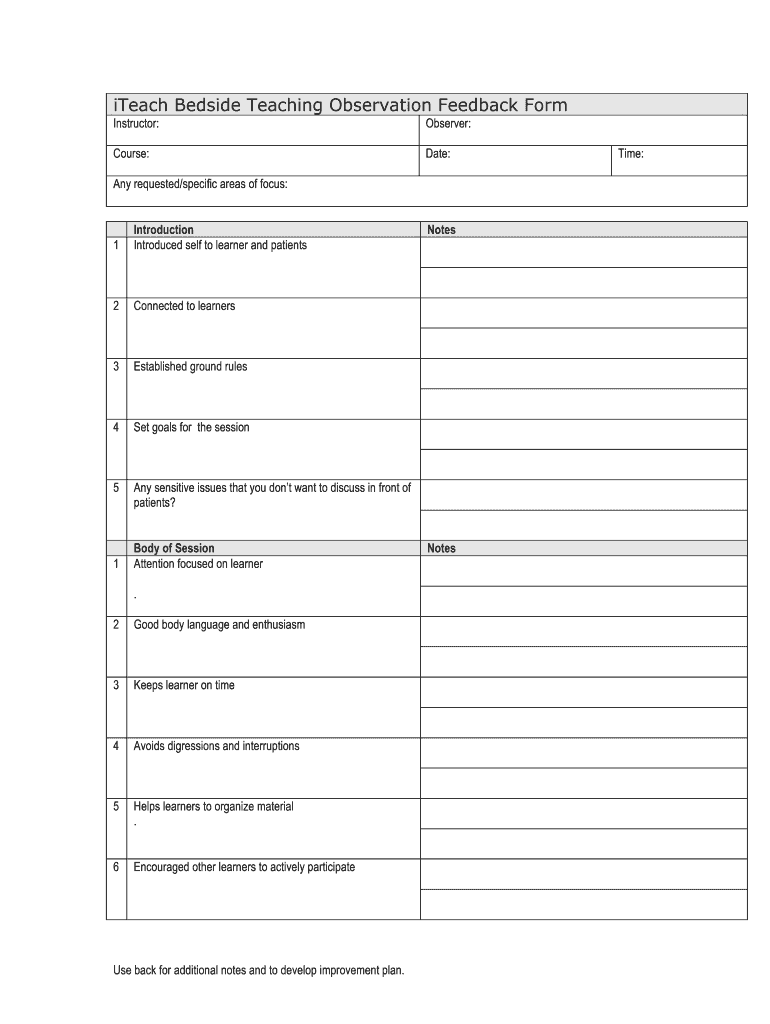







Definition and Meaning of the Bedside Teaching Feedback Form
The bedside teaching feedback form is an evaluative tool utilized in medical education to assess the effectiveness of teaching sessions conducted at the bedside. This form is primarily aimed at facilitating constructive feedback for instructors during clinical teaching. The feedback collected often focuses on key areas such as learner engagement, teaching methods, communication skills, and overall instructional quality.
Understanding the terminology associated with this form is essential for effective use. Key phrases within this context include:
- Learner engagement: Refers to how actively students participate in the learning process.
- Feedback provision: Involves the ways an instructor provides constructive criticism and guidance to learners.
This form promotes a culture of continuous improvement in teaching practices. By gathering insights from learners, instructors can refine their techniques and address any gaps in their teaching approach.
How to Use the Bedside Teaching Feedback Form
Utilizing the bedside teaching feedback form involves a structured approach to ensure comprehensive feedback. The steps below outline this process:
-
Preparation:
- Distribute the feedback form at the end of a teaching session.
- Explain its purpose and the importance of candid responses.
-
Filling Out the Form:
- Encourage learners to provide insights on various aspects like clarity of instruction, engagement level, and areas needing improvement.
- Use specific examples to illustrate points wherever possible.
-
Submission and Review:
- Collect completed forms and review the feedback as soon as possible.
- Identify common themes or recurring comments to address specific areas of concern.
-
Action Plan:
- Create an action plan based on the feedback received, setting goals for future teaching sessions.
- Consider following up with students to show responsiveness to their feedback.
-
Increase Transparency:
- Share the outcomes of the feedback process with learners, reinforcing the idea that their input is valued and taken seriously.
Key Elements of the Bedside Teaching Feedback Form
A well-structured bedside teaching feedback form typically includes several essential components to capture comprehensive feedback. Each element serves a distinct purpose:
-
Identification Section:
- Includes the date, subject matter, and names of the instructor and learners involved in the session.
-
Rating Scale:
- Employs a numerical scale (e.g., 1 to 5) to evaluate various aspects of the teaching session, such as organization, engagement, and effectiveness.
-
Open-Ended Questions:
- Provides space for learners to give qualitative feedback, allowing for elaboration on specific ratings.
-
Strengths and Areas for Improvement:
- Sections dedicated to highlighting what went well and what could be enhanced.
-
Next Steps:
- Opportunities for learners to suggest follow-up actions or additional topics for future sessions.
Incorporating these elements ensures that the feedback is not only quantitative but also rich in qualitative insights.
Who Typically Uses the Bedside Teaching Feedback Form?
The bedside teaching feedback form is predominantly utilized by various stakeholders within the medical education field, including:
-
Medical Educators:
- Instructors and professors who wish to enhance their teaching effectiveness based on real-time feedback from students.
-
Residents and Clinical Instructors:
- Often used during clinical rotations to assess teaching sessions and improve clinical education practices.
-
Medical Students:
- Learners who provide feedback on teaching quality and effectiveness, serving as the primary input source for improvements.
-
Educational Administrators:
- Individuals involved in program development and assessment use this feedback to monitor the quality of teaching across educational programs.
Using the feedback form in this way fosters an environment of collaboration and continuous learning, benefiting both educators and students.


Examples of Using the Bedside Teaching Feedback Form
Practical examples illustrating the effective use of the bedside teaching feedback form can reinforce its importance in medical education:
-
Scenario One:
- A resident conducts a bedside teaching session on managing acute respiratory distress syndrome. After completing the teaching, the feedback form reveals that students felt they needed more real-world examples to understand the management protocols better. The resident can then prepare specific case studies for future sessions.
-
Scenario Two:
- An attending physician receives feedback indicating that while her explanations were clear, students felt there was insufficient time for questions. In response, she decides to allocate time at the end of each session for open Q&A to address this specific need.
These examples demonstrate how actionable insights from feedback can directly influence teaching practices, ultimately enhancing the educational experience for learners.




