







Definition & Meaning
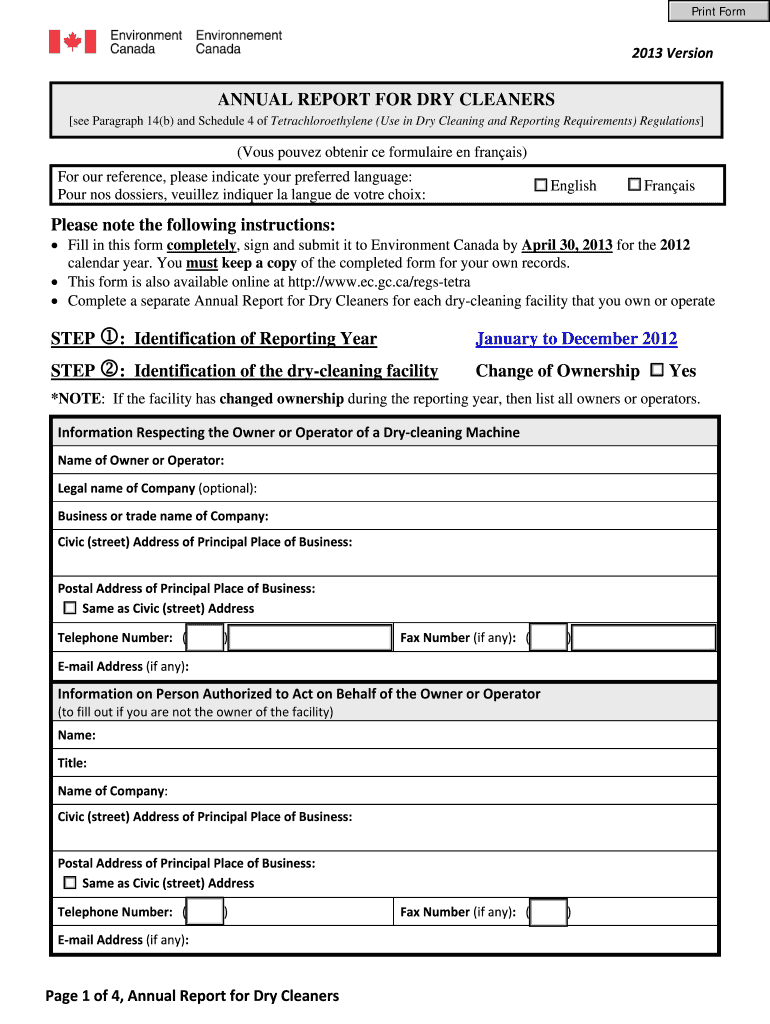
The Annual Report for Dry Cleaners is a critical document used by dry cleaning businesses to report their use of tetrachloroethylene (also known as PERC) to regulatory bodies. This form is essential for compliance with environmental regulations, detailing key metrics such as chemical usage, waste management practices, and machine details. As environmental protection is a major concern, the form ensures that dry cleaners maintain transparency regarding their impact on the environment.
Key Elements of the Annual Report for Dry Cleaners
This report includes multiple sections that capture essential information:
- Facility Identification: This section requires details about the location and ownership of the dry cleaning facility.
- PERC Purchases: Dry cleaners must report the total volume of PERC purchased during the calendar year.
- Machine Details: Specifics about the dry-cleaning machines used, including make and model, are required.
- Waste Management Practices: Information regarding disposal practices for hazardous waste generated is crucial.
- Confidentiality Requests: Businesses have the option to request confidentiality for sensitive operational data.
Steps to Complete the Annual Report for Dry Cleaners
- Identify Facility Information: Begin by entering the name, address, and contact details of the dry cleaning facility.
- Record PERC Purchases: Collect invoices and receipts from suppliers to accurately report the annual volume of PERC purchased.
- Detail Equipment Usage: List all dry-cleaning machines and include their operational details, ensuring accuracy.
- Document Waste Management: Specify the methods used for hazardous waste disposal. Include all relevant service providers.
- Submit the Form: Ensure all sections are complete before submitting. The report is typically due by a specific deadline, such as April 30 following the reporting year.
Important Terms Related to the Annual Report for Dry Cleaners
- Tetrachloroethylene (PERC): A volatile organic compound commonly used in dry cleaning that poses environmental and health risks.
- Hazardous Waste: Byproducts from the dry-cleaning process, particularly those containing PERC, requiring careful disposal.
- Regulatory Compliance: Adherence to laws and regulations governing the use of PERC, managed by entities like Environment Canada.
Legal Use of the Annual Report for Dry Cleaners
The submission of this annual report is a legal obligation for dry cleaners using PERC. Non-compliance can lead to penalties and legal action. By submitting the report, businesses demonstrate their commitment to environmental standards and transparency, aligning with both federal and regional regulatory requirements.
Filing Deadlines / Important Dates
The deadline for submission is April 30 following the end of the reporting year. This timetable aligns with environmental reporting standards, ensuring regulatory bodies have timely access to data necessary for monitoring and policy adjustments.
Who Typically Uses the Annual Report for Dry Cleaners
This form is predominantly used by dry cleaning businesses that utilize PERC in their operations. These businesses can range from small, independent shops to large chains. Additionally, companies involved in the maintenance and sale of dry-cleaning equipment may also reference this report for compliance and operational insights.


Form Submission Methods (Online / Mail / In-Person)
- Online Submission: Many jurisdictions offer online portals for easy submission, enhancing convenience and efficiency.
- Mail: Physical forms can be mailed to the designated regulatory office, ensuring a paper trail of submission.
- In-Person: Some businesses may prefer hand-delivering forms to ensure receipt confirmation.
Penalties for Non-Compliance
Failure to submit the Annual Report for Dry Cleaners can result in significant fines and legal repercussions. Repeated non-compliance might lead to stricter audits and potentially impact operational licenses. It is crucial for dry cleaners to adhere to submission deadlines and requirements to avoid these penalties.




