





Definition and Purpose of Form 5329
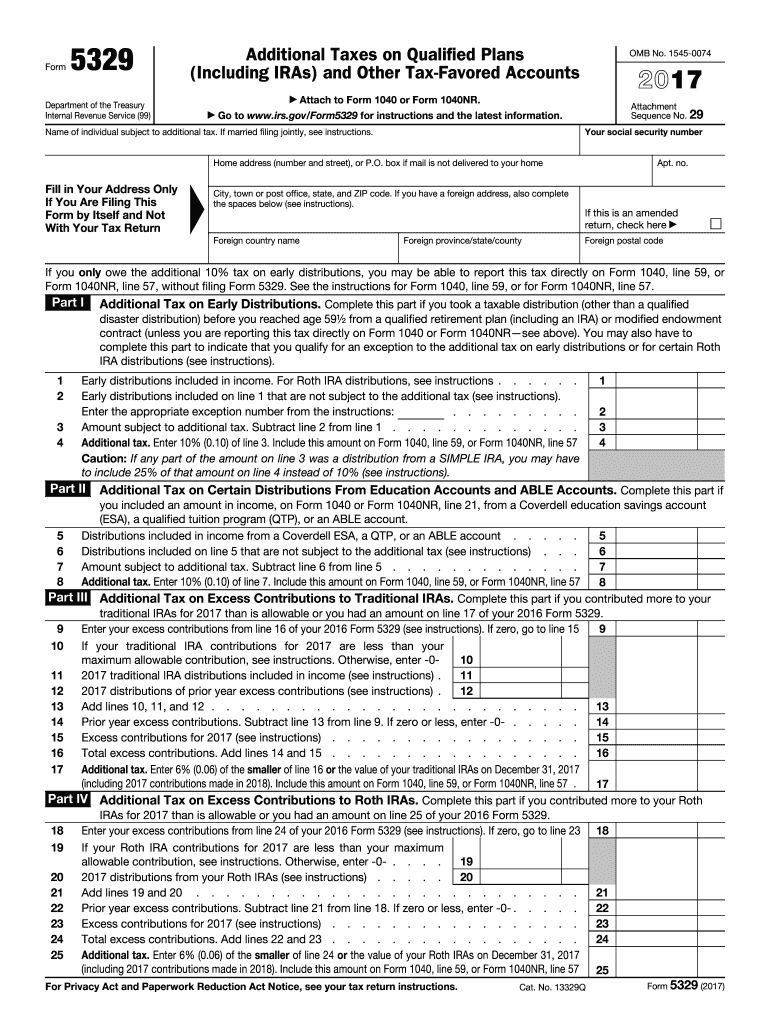
Form 5329 is an IRS tax form used by taxpayers to report additional taxes on qualified retirement plans, including IRAs and other tax-favored accounts. This form addresses several scenarios where additional taxes may be due, such as early distributions, excess contributions, or failure to take required minimum distributions (RMDs). By completing this form, taxpayers disclose their tax liabilities related to these specific situations and include it with their Form 1040 or Form 1040NR for accurate reporting.
How to Use Form 5329 for 2017
Taxpayers utilize Form 5329 to calculate and report additional taxes on premature distributions or discrepancies in contributions. The form breaks down into specific parts, addressing different tax situations, such as:
- Part I: Calculating the 10% additional tax on early distributions from IRAs and retirement plans.
- Part II to IX: Cover excess contributions to IRAs, failure to take RMDs, and other specific scenarios.
Each part requires detailed calculations based on the taxpayer's unique situation. Individuals are expected to follow the instructions in each section, which guide the reporting of the appropriate taxes or exemptions.
Obtaining Form 5329 for the Year 2017
To acquire Form 5329 for 2017, taxpayers can visit the IRS website, where forms from previous years are available for download. Alternatively, tax software platforms that support filing for previous years may have archived versions of the form. Taxpayers may also request physical copies by contacting the IRS directly or visiting local IRS offices, although digital forms provide convenience and additional features such as autofill.
Steps to Complete Form 5329 in 2017
- Review Eligibility and Requirements: Determine which parts of Form 5329 apply to your tax situation, such as early withdrawals, excess contributions, or RMD penalties.
- Gather Required Information: Collect all necessary financial documents, including forms 1099-R, records of contributions, and account statements.
- Complete Applicable Sections: Fill out each part of the form that corresponds to your tax circumstances, ensuring accurate calculations of any additional tax liabilities.
- Double-Check Calculations and Entries: Verify all entered details and calculations for accuracy before submission.
- Attach to Form 1040/1040NR: Once completed, attach Form 5329 to your main tax return and submit it by the due date.
Common Users of Form 5329
Individuals who typically use Form 5329 include those who have taken early withdrawals from their retirement accounts, contributed more than the allowed limits to their retirement funds, or failed to withdraw the minimum required distributions after reaching a certain age. These taxpayers need to report additional taxes or apply for exemptions using this form to ensure compliance with IRS regulations.


Key Elements of Form 5329
Form 5329 is comprised of several crucial elements:
- Identification Information: Includes taxpayer's name, social security number, and the year being reported.
- Specific Sections for Each Penalty Type: Each scenario that incurs additional taxes is broken down into separate parts, ensuring specific calculation and reporting.
- Detailed Calculations: Precise tax computations based on individual situations are required to determine additional taxes due or any applicable exemptions.
Examples of Using Form 5329
- Early Distribution Scenario: A 45-year-old who withdrew from their IRA for non-emergency purposes would use Part I of Form 5329 to calculate the 10% additional tax unless an exception applies.
- Excess Contribution Situation: An individual who contributed more than the allowable limit to their Roth IRA must report and calculate the penalty in Part III.
- RMD Failure: Retirees aged 72 or older who did not take their RMD must use Form 5329 Part IX to report and calculate the 50% penalty on the shortfall.
IRS Guidelines for Completing Form 5329
The IRS provides specific guidelines and instructions accompanying Form 5329. These instructions give detailed explanations for each section, including eligibility for certain exceptions and exact calculations needed for penalty assessments or exemptions. Adherence to IRS guidelines ensures compliance and reduces the risk of errors in tax filing.
Filing Deadlines for Form 5329
Form 5329 is due by the tax return filing deadline, typically April 15th, for the tax year being reported. Taxpayers should ensure that Form 5329 is included with their Form 1040 or Form 1040NR submission. Failure to file timely may result in interest and penalties, particularly if additional taxes are owed. Extensions for filing are available but do not extend the deadline for tax payments.
Penalties for Non-Compliance
Failure to file Form 5329 when required can lead to significant penalties and interest. Specifically, unreported early distributions or excess contributions may result in additional taxes and fines. In cases of failing to take RMDs, the IRS imposes a 50% penalty on the amount not withdrawn as required. It is critical to accurately report any violations and seek exemptions where applicable.