






Definition & Meaning
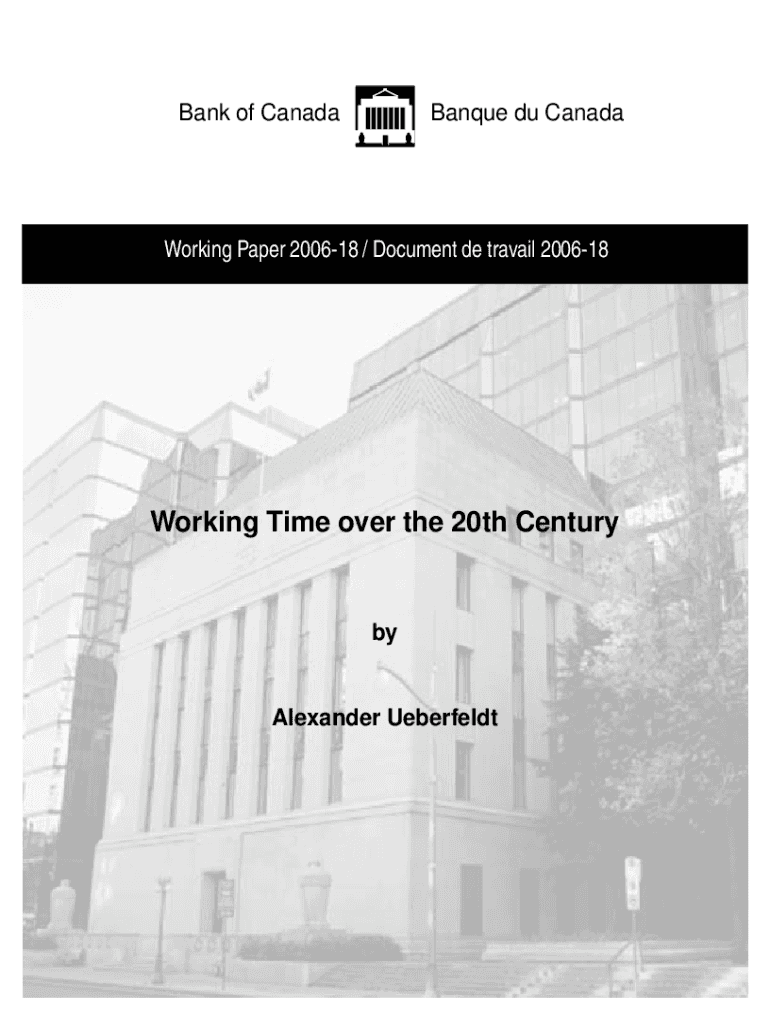
The working paper "Working Time over the 20th Century - Bank of Canada," authored by Alexander Ueberfeldt, delves into the evolution of workweek length throughout the 20th century. It examines the substantial 41% decline in the length of the workweek in industrialized countries from 1870 to 2000. The paper investigates the driving factors behind this trend using a dynamic general-equilibrium model. This model particularly highlights productivity gains in supervisory roles as significant contributors to the reduction in workweek length and variations in employment rates across countries such as Japan, the UK, and the US.
How to Use the Working Time Over the 20th Century
Engaging with the "Working Time over the 20th Century - Bank of Canada" document involves understanding its analytical approach and leveraging its insights. Individuals can use this document to explore historical work patterns, productivity metrics, and labor market fluctuations. By focusing on the various factors contributing to changes in workweeks, users can glean insights into the socioeconomic impacts of these shifts. Academics and policymakers can incorporate its findings into broader economic studies or policy formulations, whereas business analysts may utilize it to benchmark historical productivity trends against modern-day practices.
Steps to Analyze the Document
-
Access the Document: Acquire the working paper through academic or institutional channels affiliated with the Bank of Canada.
-
Examine Historical Context: Begin by understanding the socio-economic background of the time periods covered in the document.
-
Review the Model: Study the dynamic general-equilibrium model used to assess the causative factors influencing working time.
-
Identify Key Factors: Focus on productivity gains and supervisory roles as critical components highlighted in the analysis.
-
Draw Comparisons: Compare the paper's historical data with current labor trends to identify consistent patterns or significant shifts.
Key Elements of the Working Time Over the 20th Century
This working paper encompasses various critical elements central to understanding workweek evolution. Key highlights include:
- Productivity Gains: A major focus of the document is on how increases in productivity, especially in supervisory roles, contributed to reducing working hours.
- Employment Variations Across Countries: The study points out significant differences in employment patterns and working hours in nations like Japan, the UK, and the US.
- Dynamic General-Equilibrium Model: The use of this model provides a structured method for analyzing economic dynamics and labor market shifts over time.
Influencing Factors
- Technological Advancements: Innovations that spiked productivity and reduced manual labor demands.
- Socio-economic Changes: Shifts in industrial and post-industrial economies impacting labor.
- Policy Developments: Legislation and labor rights evolution affecting working hours.
Important Terms Related to Working Time over the 20th Century
Understanding specific terminology within the document is crucial for comprehensive analysis:
- Dynamic General-Equilibrium Model: A complex economic model used to assess variables and predict outcomes over time.
- Productivity Gains: Increases in output per hour worked, influencing overall work efficiency and economic growth.
- Supervisory Roles: Positions within an organization responsible for managing personnel and processes, pivotal in increasing productivity.
Why Should You Engage with the Working Time Document?
Utilizing the "Working Time over the 20th Century - Bank of Canada" document provides several advantages:
- Academic Insight: Offers a robust historical analysis ideal for research and thesis projects on labor economics.
- Policy Development: Guides policymakers in understanding past labor trends to forge future labor laws and economic policies.
- Economic Analysis: Supports economists and business leaders in correlating past trends with current economic challenges and opportunities.
Examples of Using the Working Time Over the 20th Century
Real-world applications of insights from this working paper include:
- Policy Reform: Government bodies analyzing historical data to reform labor laws in line with productivity trends.
- Corporate Strategy: Businesses using productivity insights for strategic planning and optimizing current work structures.
- Academic Research: Researchers leveraging historical data to draft theses or working papers on labor market evolution.
Penalties for Non-Compliance
Though the document itself may not impose penalties, disregarding its insights in relevant sectors could lead to:
- Economic Disadvantages: Businesses failing to adjust to productivity insights may miss out on cost-reduction opportunities.
- Policy Negligence: Governments not factoring historical labor trends into policy decisions risk outdated or ineffective governance.
Versions or Alternatives to the Working Time Document
While this document provides pivotal insights, other analyses and papers can complement or extend its findings:
- Comparative Studies: Exploring similar studies conducted by other central banks or academic institutions.
- Updated Models: Seeking out more recent analyses using updated dynamic models to account for modern economic shifts.
By integrating different sources of information, stakeholders can achieve a more well-rounded view of historical and current labor trends.