







Definition & Meaning
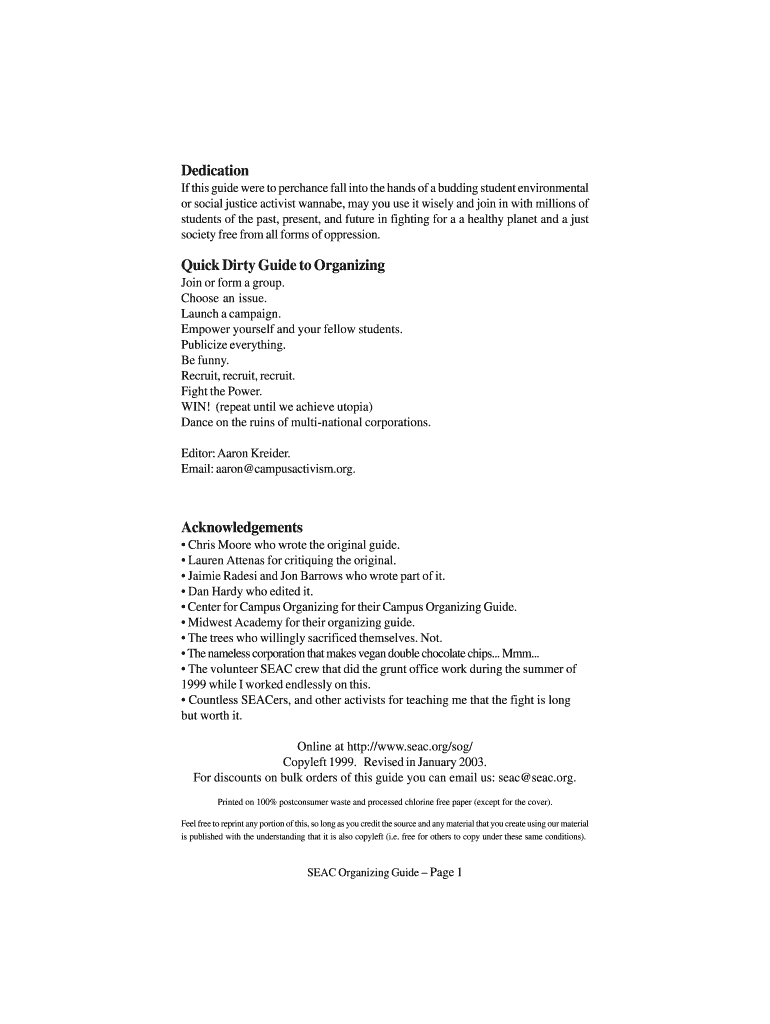
The SEAC Organizing Guide serves as a roadmap for students and young activists committed to environmental and social justice issues. It is designed to instruct and inspire individuals to actively participate in campus activism, focusing on the challenges presented by climate change. By providing strategic guidance on how to initiate or revive student groups, the guide aims to empower its readers to spearhead effective campaigns that address pressing issues like environmental racism and corporate accountability.
Core Focus Areas
- Empowerment and Participation: The guide underscores the importance of empowering individuals and promoting active participation in addressing climate challenges.
- Coalition Building: Highlights the significance of forming alliances to tackle interconnected social issues in a comprehensive manner.
- Strategic Planning: Offers practical steps for organizing, launching campaigns, and mobilizing students for impactful activism.
Key Elements of the SEAC Organizing Guide
This section of the guide outlines the primary components essential for organizing an effective campus movement. Understanding these elements is crucial for maximizing the guide's utility in your activism efforts.
Organizing Strategies
- Starting or Reviving Groups: Tactics to form or rejuvenate student groups to foster a strong activist presence on campuses.
- Campaign Tactics: Guidance on planning and launching campaigns, which may include rallies, educational initiatives, and civil disobedience.
Interconnected Approaches
- Holistic Activism: Encourages recognizing the interconnectedness of social issues and recommends approaches that include self-reflection and community engagement.
- Strategic Communication: Effective communication strategies to ensure alignment and coherence in activism efforts.
How to Use the SEAC Organizing Guide - Campus Activism - climatechallenge
Following a clear methodology can maximize the effectiveness of this guide. Below are step-by-step instructions on utilizing the guide.
Step-by-Step Instructions
- Initial Assessment: Evaluate your campus's current climate activism landscape to identify existing opportunities and gaps.
- Forming a Core Team: Gather a dedicated team of individuals passionate about climate challenges to lead efforts.
- Setting Objectives: Define clear and achievable goals for your campaigns to focus resources and efforts effectively.
- Implementing Campaigns: Roll out strategically planned actions, engaging a broad student base through various methods.
- Monitoring Progress: Continuously track the effectiveness of campaigns and make adjustments where necessary.
Who Typically Uses the SEAC Organizing Guide
This guide is primarily intended for students, youth activists, and campus leaders who are driven to make a difference in environmental and social justice.


Target Audience Characteristics
- Student Activists: Individuals seeking to engage in environmental activism on college or university campuses.
- Campus Organizations: Student groups and clubs focused on driving change on climate issues.
- Youth Leaders: Young individuals who aspire to lead movements and inspire peers in their activism journeys.
Examples of Using the SEAC Organizing Guide
Understanding real-world applications of the guide can provide deeper insight into its potential impact on campus activism.
Practical Scenarios and Case Studies
- Campus Rally for Climate Legislation: Student groups using the guide to organize a large-scale rally advocating for climate policy changes supported by legislative petitions.
- Sustainable Campus Initiatives: Creation of recycling and waste reduction programs on campus, using strategies from the guide to gain administrative and student support.
Legal Use of the SEAC Organizing Guide
Understanding the legal considerations in activism is crucial for ensuring compliance and protecting your organization and members.
Compliance and Regulations
- Right to Assembly: Information on legal rights to peaceful assembly and protest on campus.
- Permits and Regulations: Guidance on obtaining necessary permits for rallies and events in a lawful manner.
Software Compatibility and Integration
Although the content primarily targets student activism, there is value in understanding technological tools that enhance document management for activism planning.
Compatible Platforms
- Document Management Tools: Utilization of platforms like DocHub for digitizing and managing documents related to organizing activities.
- Cloud Storage Integration: Leveraging tools such as Google Drive for collaborative document editing and sharing.
Required Documents
For effective activism initiatives and organizational sustainability, documentation is key.
Essential Documentation
- Campaign Plans: Detailed plans illustrating objectives, timelines, and resources for proposed activism activities.
- Membership Lists: Records of participating members to facilitate communication and accountability within the activist group.




