





Definition & Meaning
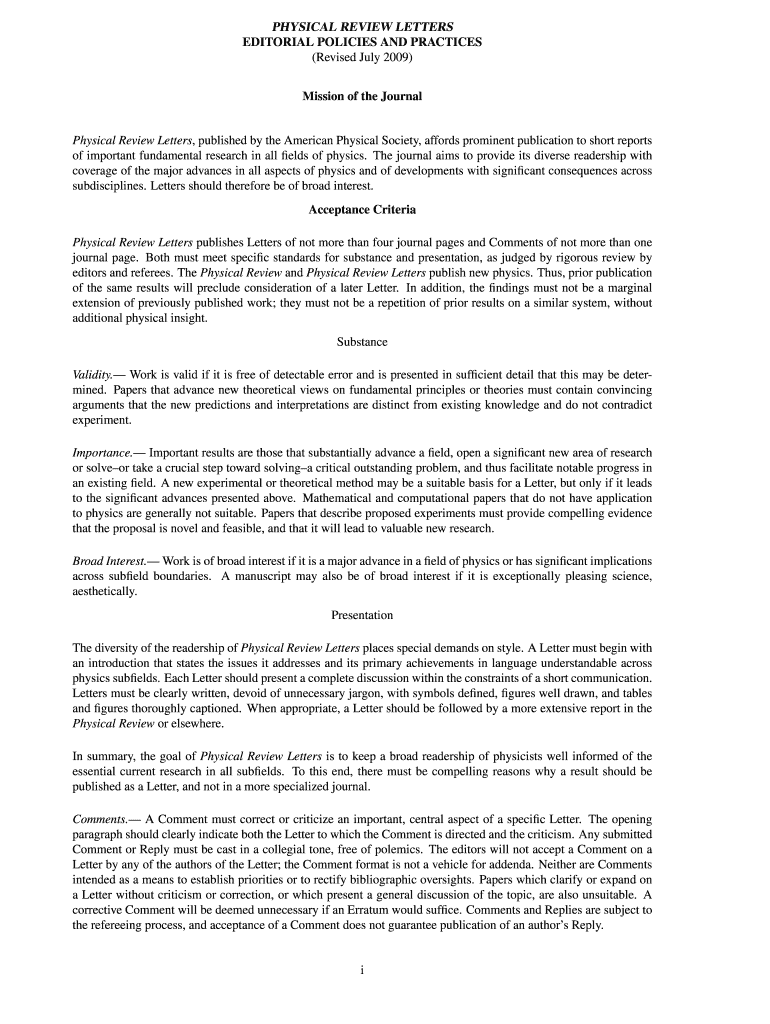
Physical Review Letters, published by the American Physical Society, is known for offering a platform for significant short reports in all fields of physics. This journal is widely regarded in the scientific community for its stringent editorial standards and its emphasis on publishing research that upholds high levels of validity, significance, and broad interest. The publication is pivotal for professionals who aim to disseminate influential scientific findings swiftly and effectively to a global audience.
How to Use Physical Review Letters
Researchers and scientists interested in contributing to Physical Review Letters must adhere to rigorous submission guidelines. The process involves:
- Preparing a concise manuscript that emphasizes the novelty and importance of the research.
- Ensuring adherence to the journal's formatting and presentation standards, including proper citations and a well-structured abstract.
- Submitting the manuscript via the journal's online platform, where authors can track the review process.
These steps ensure that submissions are evaluated fairly and efficiently, maximizing the chances for publication.
Steps to Complete a Submission
Completing a submission to Physical Review Letters involves several key stages:
- Manuscript Preparation: Authors must prepare a document that aligns with the journal's strict requirements, focusing on clarity and impact.
- Peer Review: Once submitted, the manuscript undergoes a peer review process, where expert referees assess its scientific merit and validity.
- Revisions: Authors may need to revise their manuscript based on feedback from the reviewers to address any concerns or enhance clarity.
- Final Approval: After revisions, the manuscript is reviewed again before the final decision on publication is made.
This structured approach ensures that the research published is of the highest standard.
Who Typically Uses the Journal
The principal users of Physical Review Letters are physicists and researchers from related fields who seek a reputable outlet for reporting significant discoveries. The journal's audience also includes academic institutions, research organizations, and industry professionals interested in the latest developments in physics. Moreover, policymakers and government agencies use this publication to guide decisions on scientific research funding and policy-making.


Key Elements of Physical Review Letters
Several key elements define the structure and content of submissions to Physical Review Letters:
- Significance: The research must contribute meaningfully to the field.
- Clarity: Manuscripts should be clearly written with a well-defined argument.
- Novelty: New discoveries or novel approaches that broaden understanding.
- Broad Interest: Findings should be of interest to a wide range of physicists.
These elements ensure that the journal remains a leading platform for groundbreaking physics research.
Legal Use of the Journal
The publication is used legally within the context of peer-reviewed reporting and dissemination of scientific findings. It upholds ethical and legal standards of scientific publishing through mechanisms that include:
- Confidentiality: Maintaining privacy and confidentiality during the review process.
- Copyright: Respecting intellectual property rights and copyright laws.
- Authenticity: Validating the originality of research content.
Compliance with these standards ensures the integrity and credibility of the journal.
Important Terms Related to the Journal
Understanding terms commonly associated with Physical Review Letters is crucial:
- Manuscript: The document submitted for review and potential publication.
- Peer Review: The evaluation process by experts in the field.
- Referees: Individuals who review and provide feedback on submissions.
- Errata: Corrections to published papers.
These terms help authors navigate the submission and publication process effectively.
Examples of Using Physical Review Letters
Several use cases of Physical Review Letters highlight its importance:
- Pioneering Research: An innovator in quantum physics might submit a manuscript demonstrating a new quantum computing technique.
- Policy Reference: Government bodies might reference published papers to support the development of scientific policies.
- Educational Use: Academic institutions often use articles from the journal as exemplary resources in advanced physics courses.
These examples illustrate the diverse applications of publications in the journal.
Who Issues the Journal
Physical Review Letters is issued by the American Physical Society, a leading organization dedicated to advancing knowledge in physics. The society's mission is to publish research that informs, inspires, and influences the global physics community. Through its network of journals including Physical Review Letters, it fosters an environment where cutting-edge research thrives.
Software Compatibility and Digital Accessibility
The digital format of Physical Review Letters ensures that it is accessible through various platforms:
- Electronic Databases: Access via institutional subscriptions to databases like JSTOR or the APS Digital Library.
- PDF Formats: Available in PDF for ease of reading and downloading.
- Citation Software: Compatible with reference management tools such as EndNote and Zotero.
These capabilities enhance the accessibility and usability of the journal's content for both contributors and readers alike.