






Definition and Meaning
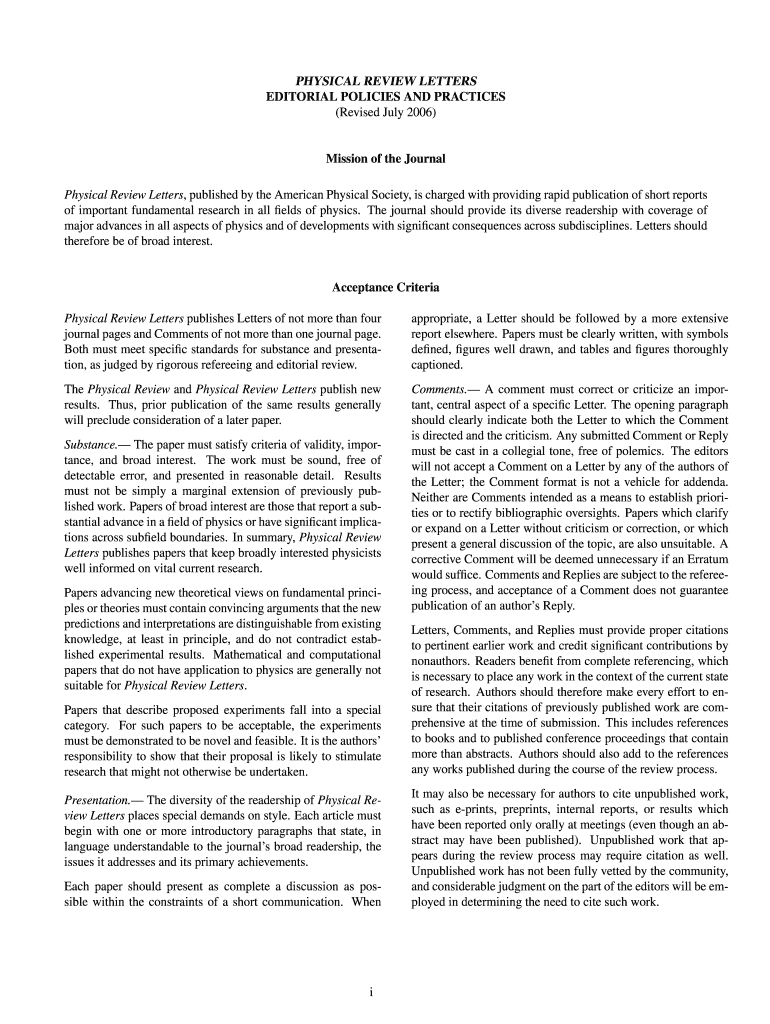
The "Mission of the Journal - forms aps" pertains to a document detailing the editorial policies and practices of a journal, likely associated with the American Physical Society (APS). This document elucidates the journal's goals, which primarily focus on the expedited dissemination of significant research across diverse areas of physics. It encompasses various aspects such as submission criteria, manuscript presentation standards, and the editorial review process.
Key Components
- Purpose: Outlines the journal’s commitment to rapid publication and maintaining high standards of research dissemination.
- Editorial Policies: Details on how the journal manages manuscript submissions, ensuring ethical standards are met.
- Research Areas: The journal covers all major physics fields, emphasizing the impact and broad interest of published works.
Steps to Complete the Mission of the Journal - Forms APS
Understanding the steps to complete forms associated with the journal’s mission is crucial for prospective contributors. This involves both submitting manuscripts and adhering to guidelines.
Submission Process
- Manuscript Preparation: Authors must format their manuscripts according to specific guidelines, focusing on clarity and compliance with ethical standards.
- Review Submission: The completed manuscript is submitted for editorial review, often through the journal’s online portal.
- Addressing Feedback: Respond to reviewers’ comments and make necessary revisions in line with feedback.
Key Considerations
- Ensure originality and proper citation of sources.
- Highlight the significance and potential impact of the research findings.
Who Typically Uses the Mission of the Journal - Forms APS
This document is primarily utilized by researchers and academics within the physics community. Its users also extend to journal editors and review boards, who enforce the outlined practices.


Typical Users
- Researchers: Physicists seeking to publish their work in a reputable journal.
- Academic Institutions: Departments aiming to ensure their members adhere to high publication standards.
- Editorial Boards: Overseeing the review and publication process.
Why Should You Use the Mission of the Journal - Forms APS
Understanding and utilizing this form is essential for researchers intending to publish their work effectively. It ensures compliance with stringent publication standards, enhancing the credibility and impact of one's research.
Benefits
- Enhanced Visibility: Publications in a well-regarded journal achieve broader dissemination in the scientific community.
- Standard Compliance: Familiarity ensures that submissions adhere to ethical and formatting standards.
Important Terms Related to the Mission of the Journal - Forms APS
Familiarity with specific terminology associated with the journal’s mission is vital for clear communication and adherence to guidelines.
Key Terms
- Peer Review: A critical process where submitted works are evaluated by experts in the field.
- Manuscript: The original form of the research paper submitted for publication.
- Citations: References to prior works which are fundamental to supporting the submission’s validity.
Legal Use of the Mission of the Journal - Forms APS
Legal considerations sometimes accompany the submission and publication processes, ensuring protection of intellectual property and adherence to ethical standards.
Legal Considerations
- Copyright: Understanding ownership rights over the submitted material.
- Ethics Compliance: Adherence to national and international standards for ethical research publication.
Key Elements of the Mission of the Journal - Forms APS
The form includes core components that contributors must consider to ensure successful submission and publication.
Core Elements
- Editorial Criteria: Standards that dictate the acceptance of submissions based on scholarly merit and originality.
- Review Process: Structured methodology for evaluating the robustness and contribution of submitted research.
State-Specific Rules for the Mission of the Journal - Forms APS
While the journal's mission may be universally applicable within the physics community, contributors within the United States should be aware of any specific state-oriented guidelines or standards that might influence their submissions.
Considerations
- Institutions in different states might have varied emphasis on compliance and ethical oversight, affecting the publication process.
By understanding these detailed aspects of the "Mission of the Journal - forms aps," contributors can adequately prepare their submissions and navigate the publication process efficiently.