







Definition and Purpose of the Form
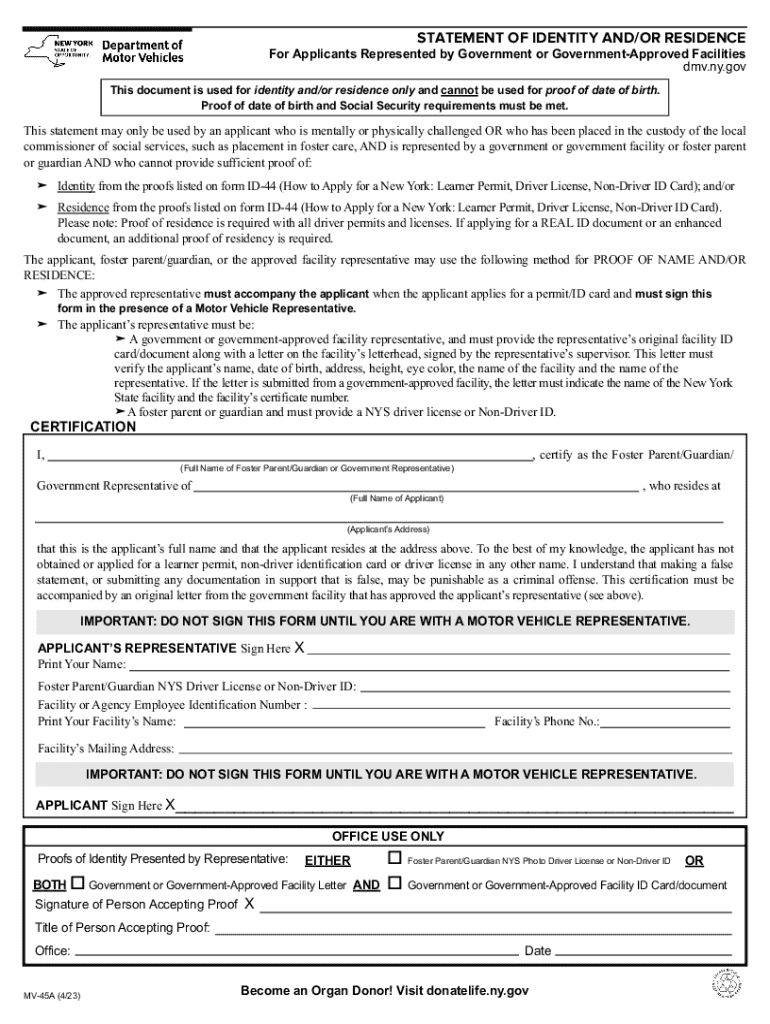
The Statement of Identity and/or Residence for Applicants Represented by Government or Government-Approved Facilities serves as a vital document for individuals who face challenges in establishing their identity or residence. This includes those who are mentally or physically challenged or under the custody of social services. The primary aim is to provide a structured method for representatives to vouch for an applicant's identity and residence when typical documentation is unavailable, streamlining processes for access to necessary services and support.
Filing Requirements and Eligibility Criteria
Understanding who can file the Statement of Identity and/or Residence is crucial. The form is specifically designed for those under the care of government or government-approved entities, such as foster care or social services. Eligibility extends to individuals who cannot present standard identification documents due to their circumstances. The presence of a representative, often a social worker or government officer, accompanies the applicant to provide necessary validation and accompanying documents.


How to Use the Form
To use the Statement of Identity and/or Residence effectively, begin by ensuring that all fields are accurately filled out. This involves providing the applicant’s personal details, including full name and last known address. The representative must certify the information’s accuracy by including their credentials. Careful adherence to the instructions on the form ensures clear, concise submission, minimizing delays in processing.
Steps for Completing the Form
- Gather Information: Assemble all known personal data of the applicant.
- Accompanying Representative: Ensure the chosen representative is available to sign and validate the form.
- Complete the Form: Fill in all required fields, including details from the representative.
- Attach Necessary Documents: Include any possible supporting documents that verify identity or residency.
- Review and Submit: Double-check for accuracy before submission through designated channels.
Required Documentation
When completing the Statement of Identity and/or Residence, having the correct supporting documents is essential. This may include court orders, social service records, or affidavits from caretakers. These documents bolster the application, providing necessary context and supporting the representative's affirmations.
Legal Implications and Compliance
The legal use of this statement mandates cautious adherence to privacy and authentication protocols to prevent misuse or fraudulent claims. Ensuring the representative's details are thoroughly vetted against official records safeguards the integrity of the form.
Form Submission Methods
The completed form can typically be submitted through various channels depending on the state’s provisions. Common methods include online submission through secure portals, mailing to designated government offices, or in-person delivery to ensure immediate receipt confirmation. The choice of submission method should align with what is available and most efficient for your locale.
State-Specific Rules and Regulations
Rules governing the use of the Statement of Identity and/or Residence may vary by state. For example, New York might have different stipulations compared to California in terms of the necessary documentation or acceptable forms of representative verification. Therefore, it's crucial to check specific state guidelines to ensure full compliance and prevent rejection of the form.
Practical Scenarios and Examples
Consider an individual in foster care unable to access birth certificates or passports; the representative from the state’s social service department can certify their identity and address using this form. Another scenario may involve a mentally challenged adult under state care, needing recognition for government assistance without personal identity documents.
Variations and Alternatives to the Form
Depending on the situation and state requirements, there may be alternative forms or methods to validate an individual’s identity or residency. However, the Statement of Identity and/or Residence is directly tailored for complicated scenarios involving government authorities where other identification means are infeasible. Understanding these alternatives aids in selecting the most appropriate documentation strategy.
Penalties for Non-Compliance
Failing to accurately complete or submit the Statement of Identity and/or Residence can lead to delays in service access or legal complications. It's essential to adhere strictly to submission guidelines to prevent such issues, emphasizing the need for precision and thoroughness in the document’s completion and verification by a competent authority.
Form Variants and Documentation Requirements
There are instances where older versions or similar documents can substitute, though this depends largely on the state's regulations. Ensuring that you possess the most current form can prevent any issues during the submission process, reinforcing the importance of staying updated on relevant procedural changes.




