






Definition and Meaning
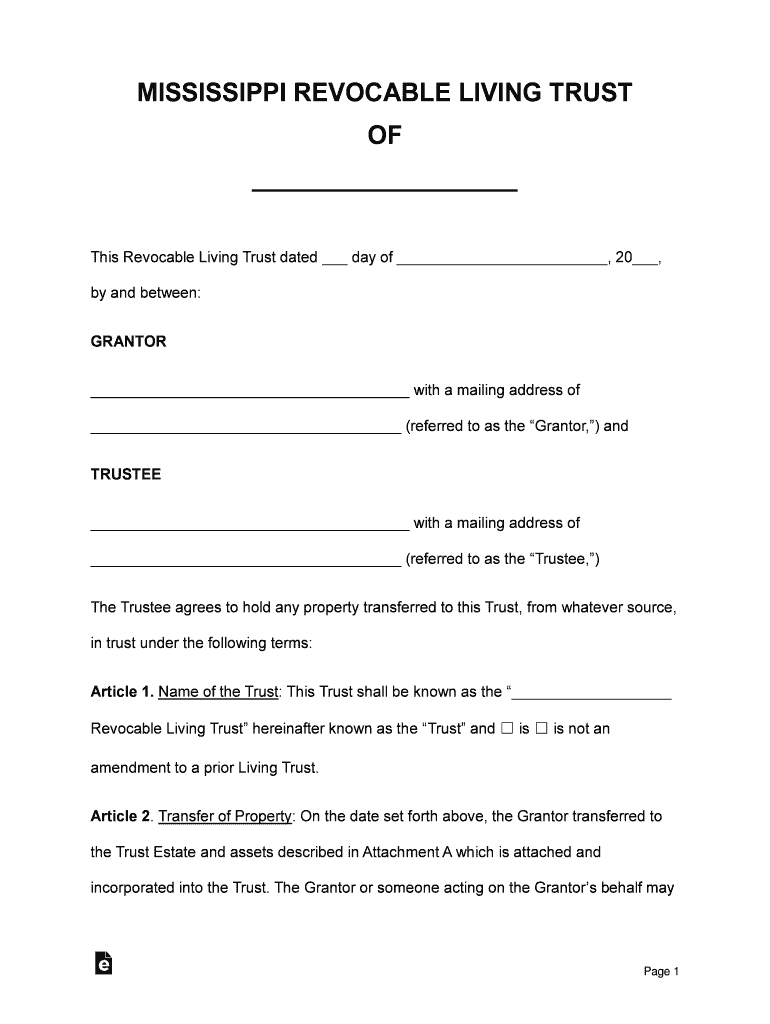
A Mississippi Revocable Living Trust is a legal entity created to manage a person's assets both during their lifetime and after their death. It involves transferring ownership of property or assets from the individual, known as the Grantor, to a Trustee, who then oversees the management and eventual distribution of these assets. The Grantor retains the ability to modify or revoke the trust, offering flexibility in financial planning.
Key Distinctions
- Revocable Nature: The Grantor can alter or dissolve the trust.
- Living Aspect: Takes effect during the Grantor's lifetime, unlike a will.
- Trustee Role: Manages assets as per the trust’s terms.
Steps to Complete the Mississippi Revocable Living Trust
Creating a Mississippi Revocable Living Trust involves several key steps. It is essential to ensure accuracy and compliance with state laws.
- Draft the Trust Document: Start by creating the trust document, detailing the terms under which assets will be managed and distributed.
- Appoint a Trustee: Choose a reliable party to manage the trust.
- Specify Beneficiaries: Clearly define who will receive the trust's benefits.
- Transfer Assets: Legally transfer ownership of designated assets into the trust.
- Sign and Notarize: Execute the trust document in the presence of a notary to ensure legality.
- Store Safely: Keep the document in a secure, accessible location.
Subtasks
- Selecting a Trustee and Successor: Ensure there is a clear line of succession in case the initial Trustee is unable to serve.
- Funding the Trust: All intended assets must be properly titled in the name of the trust.
Key Elements of the Mississippi Revocable Living Trust
Understanding the critical components of a Mississippi Revocable Living Trust is vital to its proper setup and execution.
- Grantor: The person who creates the trust and transfers assets.
- Trustee: Individual or entity responsible for managing the assets.
- Successor Trustee: Steps in if the primary Trustee can no longer fulfill their duties.
- Beneficiaries: Individuals or entities designated to receive assets from the trust.
- Terms of Distribution: Specific instructions on how and when beneficiaries receive assets.
Who Typically Uses the Mississippi Revocable Living Trust
This type of trust is frequently used by individuals seeking to manage their estate during their lifetime and efficiently transfer assets to heirs.
- Estate Planners: To ensure a smooth transition of assets.
- Pet Owners: To provide care instructions and funding for pets.
- Business Owners: For succession planning and asset protection.


Case Scenarios
- Elderly Individuals: Who wish to manage their affairs should they become incapacitated.
- Parents of Minors: To manage inheritance until minors reach a certain age.
Legal Use of the Mississippi Revocable Living Trust
Understanding the legal purpose and benefits of the trust is essential for effective estate planning in Mississippi.
- Avoids Probate: Assets in the trust bypass the costly and time-consuming probate process.
- Privacy Protection: Unlike wills, trust details remain private and are not subject to public record.
- Incapacity Planning: Allows for asset management if the Grantor becomes incapacitated.
Legal Considerations
- Ensure trust complies with Mississippi law regarding revocable trusts.
- Amend trust documents to reflect legal changes or personal updates.
Important Terms Related to Mississippi Revocable Living Trust
Familiarize yourself with the terminology commonly associated with these trusts to ensure accurate understanding and communication.
- Grantor: Creator of the trust.
- Trustee: Manager of the trust assets.
- Beneficiary: Recipient of trust benefits.
- Revocation: The act of rescinding the trust, which is allowed at any time by the Grantor.
Frequently Used Terms
- Declaration of Trust: Another name for the trust document.
- Corpus: The assets held within the trust.
State-Specific Rules for the Mississippi Revocable Living Trust
Understanding Mississippi-specific regulations is crucial when establishing a Revocable Living Trust in this state.
- Mississippi law allows trusts to manage real estate and personal property.
- Trusts must comply with state taxing rules.
- Certain asset classes must be re-titled according to Mississippi legal standards to be included in the trust.
Unique Considerations
- Compliance with state fiduciary duties for Trustees.
- Potential state-specific tax benefits or obligations.
Practical Examples of Using the Mississippi Revocable Living Trust
Examining real-world applications clarifies the advantages and practical uses of a Mississippi Revocable Living Trust.
- Property Management: Enables efficient management of rental properties or real estate portfolios.
- Minor Children: Trusts can hold funds for educational expenses until minors reach adulthood.
- Charitable Giving: Designate charities as beneficiaries to fulfill philanthropic goals.
Scenario Outcomes
- Asset Protection: Shields assets from beneficiaries' creditors while ensuring intended usage.
- Multi-Generational Planning: Preserves wealth for future generations seamlessly.