






Definition and Meaning
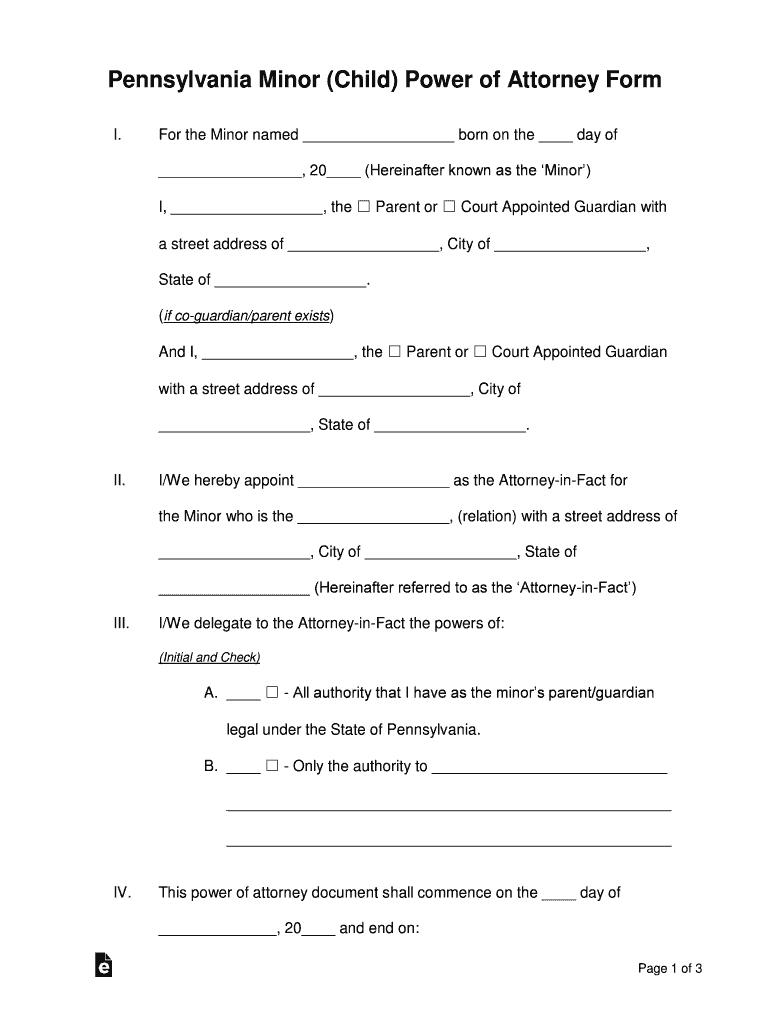
The Minor Child Power of Attorney Form, often associated with platforms like eForms, is a legal document that enables a parent or guardian to temporarily transfer decision-making authority to another adult. This form is essential for situations where a parent is unable to be present and needs someone else to make educational, medical, or general care decisions for their child. It typically outlines the scope of powers being granted, the time period for which the power is valid, and any specific conditions or constraints.
Practical Examples
- A military parent deploying overseas might use this form to assign a family member as the temporary guardian for their child's school-related decisions.
- A single parent traveling for work could authorize a trusted friend to make healthcare decisions for their child in their absence.
How to Use the Minor Child Power of Attorney Form - eForms
When using the Minor Child Power of Attorney Form, it’s crucial to understand its components and how to complete it accurately. The form generally includes fields for the details of the parent or guardian, the appointed Attorney-in-Fact, and the minor child or children involved.
Step-By-Step Usage
- Identify Participants: Clearly enter the full names and contact information of the parent or guardian, the Attorney-in-Fact, and the minor child.
- Specify Powers: Detail the specific powers you intend to grant, such as making medical or educational decisions.
- Set the Duration: Define the start and end dates for the power of attorney.
- Sign and Notarize: The document must be signed by all parties and typically requires notarization for legal validity.
Steps to Complete the Minor Child Power of Attorney Form - eForms
Completing this form involves a detailed process to ensure that all legal requirements are met.
Detailed Steps
- Gather Information: Before commencing, collect all necessary personal information and documentation.
- Fill in Parent Details: Enter your name, address, and contact details accurately.
- Enter Attorney-in-Fact Information: Provide the full name and contact details of the individual you are appointing.
- Describe Authority: Specify what decisions can be made by the Attorney-in-Fact, considering both general and scenario-specific powers.
- Designate Term: Indicate the period of time the power of attorney will be in effect.
- Add Signatures: The form should be signed by the parent or guardian, and the Attorney-in-Fact. It may also require a witness's signature.
- Notarize: Obtain notarization if required by state laws to enhance the legal standing and acceptance of the document.
Legal Use of the Minor Child Power of Attorney Form - eForms
This form is bound by legal frameworks, ensuring proper temporary guardianship is adhered to according to state laws. It does not transfer custody but allows specific powers to be used on behalf of the child.
Key Legal Considerations
- Non-Custodial Function: It does not alter the legal custody arrangement of the child but enables someone to make immediate decisions.
- Revocation Flexibility: A parent can revoke the granted powers by issuing a written notice, especially if circumstances change.
- Validity and Scope: The form's validity may be subject to the specific powers listed and the duration it covers. Some states may have additional requirements like specific expectations around medical decision-making.
State-Specific Rules for the Minor Child Power of Attorney Form
Each state may have different rules governing the usage and validity of a Minor Child Power of Attorney.
Examples of State Variations
- Notarization Requirements: Some states, such as Florida, may require notarization for the form to be valid, while others may not.
- Specific Duration Limitations: States like Ohio limit the duration of such powers to a renewable period, generally up to one year.
- Additional Documentation: In New York, additional supporting documents might be needed to outline specific powers for medical decisions.
Key Elements of the Minor Child Power of Attorney Form
Comprehending the integral parts of this document helps ensure its effectiveness and compliance.
Essential Parts
- Participant Information: Correct details for all parties involved.
- Description of Powers: Clearly articulated authority limits and responsibilities.
- Time Frame: A precise start and end date for the temporary power.
- Signatures and Notary Acknowledgment: Signatures from parent, Attorney-in-Fact, and notary verification if needed.
Who Typically Uses the Minor Child Power of Attorney Form - eForms
Different people might find the form necessary based on varying circumstances.


Common Users
- Military Families: Those who are deployed and need to ensure continuity of care.
- Single Parents: Individuals who may need a temporary guardian while handling unforeseen circumstances.
- Traveling Professionals: Parents who need to work abroad, entrusting someone with decision-making abilities at home.

Examples of Using the Minor Child Power of Attorney Form
Practical scenarios where this form proves invaluable illustrate its importance.
Real-World Scenarios
- Healthcare Decisions: During an unexpected hospital visit, the appointed guardian can make critical medical decisions in the parent's absence.
- School Emergencies: Addressing disciplinary actions or school meetings by a neighbor or family member when the parent is out of state.
- Temporary Custody During Family Emergencies: When a parent is incapacitated due to illness, this form gives temporary authority to handle children's affairs.