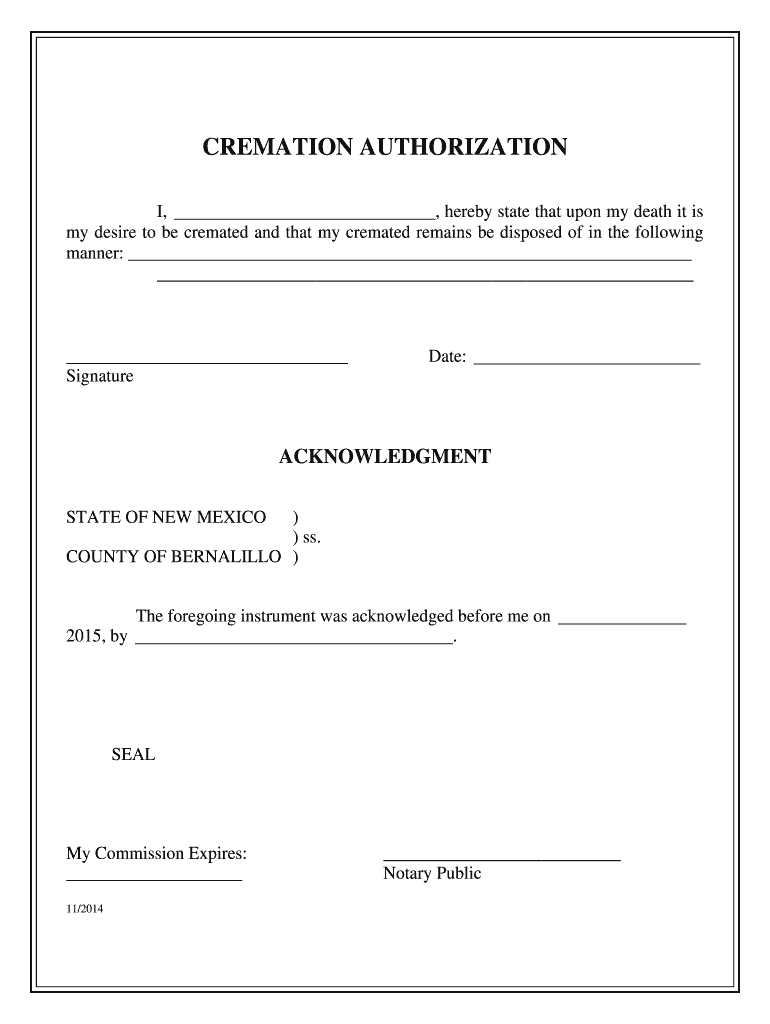







Definition and Meaning of Cremation Authorization
Cremation Authorization is a formal document used to outline an individual's explicit instructions to be cremated after their death. This document enables individuals to specify the desired method for the disposal of their cremated remains, like scattering, combined burial, or distribution among family members. The Cremation Authorization serves as a legal record recognizing the individual's preferences and must include their signature and the date. In many cases, notarization is also required, ensuring the document's authenticity and compliance with relevant legal standards.
Key Components of the Document
- Signature: Indicates the individual's consent and acknowledgment of the document.
- Date: Establishes the timeline of when the authorization was granted.
- Notary Section: Required in certain jurisdictions to verify the individual's identity and intent.
- Disposition Method: Describes how the cremated remains will be handled or distributed.
This document secures the decedent’s final wishes, providing peace of mind to both the individual and their surviving family members.
How to Obtain a Cremation Authorization Form
The process of obtaining a Cremation Authorization form can vary based on state-specific requirements and the funeral or cremation service providers involved. However, general methods include the following:
-
Contacting Funeral Homes: Many funeral homes provide Cremation Authorization forms as part of their pre-arrangement services. They can guide you through the completion process.
-
Online Resources: Various websites offer downloadable templates tailored to meet state-specific needs. These often come with instructions for proper completion and any necessary legal requirements.
-
Legal Assistance: Attorneys, particularly those specializing in wills and estates, can provide customized forms ensuring all relevant legal considerations are addressed.
-
Hospice or Medical Facilities: They may supply forms to patients who wish to finalize end-of-life plans.
Obtaining the form through a reliable source is essential to avoid potential legal complications arising from incorrect or incomplete documentation.
Steps to Complete the Cremation Authorization Form
Completing a Cremation Authorization form involves specific steps to ensure that all necessary information is accurately documented:
-
Provide Personal Information: Include the full name, date of birth, and social security number.
-
Sign and Date the Document: Your signature confirms your consent, and the date establishes when the authorization was made.
-
Specify Disposition Preferences:
- Indicate your preferred method for handling the cremated remains.
- Provide any specific instructions, such as designating family members to receive portions of the ashes.
-
Include Witness or Notary Public Details: Depending on state laws, a witness or notary acknowledgment might be required.
-
Review and Finalize: Carefully examine the form for accuracy before final submission.
Completing the form accurately ensures the fulfillment of the individual's last wishes and reduces the likelihood of legal disputes among family members.
Legal Use of Cremation Authorization
Cremation Authorization forms fulfill various legal functions, primarily ensuring that an individual’s post-death intentions are respected and protected:
-
Compliance with State Laws: Aligns with local regulations that dictate how cremation and handling of remains should occur.
-
Avoidance of Family Disputes: Serves as an official record that family members can reference to avoid disagreements.
-
Obligation Fulfillment: Legally obligates the funeral home or crematorium to act according to the outlined requests.
-
Court Evidence: In case of legal challenges, it provides clear evidence of an individual’s expressed wishes regarding cremation.
The document's legal robustness stems from meeting all statutory requirements and using precise language to articulate the individual's preferences.
Key Elements of the Cremation Authorization
A comprehensive Cremation Authorization form typically includes several critical elements:
- Personal Details: Full legal name and identification information.
- Authorization Scope: Specific directives concerning cremation procedures.
- Beneficiary Designations: Names and details of individuals entitled to receive cremated remains.
- Declaration and Waivers: Any acknowledgments related to the irreversible nature of cremation and liabilities.
These key elements ensure that the authorization form captures all necessary information, making the document complete and actionable.
State-Specific Rules for Cremation Authorization
State regulations can influence the content and use of Cremation Authorization forms. Factors include:
- Witness Requirements: Some states mandate witnesses; others require a notary public.
- Timeframes: Statutory waiting periods before cremation can proceed.
- Form Content Variations: State-specific legalities that might alter form fields or required signatures.
Awareness of these variations is crucial for ensuring legal compliance in the state where the cremation will take place.
Important Terms Related to Cremation Authorization
Several terms are essential for understanding Cremation Authorization forms:
- Decedent: The individual who is to be cremated.
- Executor: A designated person responsible for carrying out the terms of a will, which can include overseeing cremation.
- Cremains: Another term for cremated remains.
- Receptacle: Container used for storing cremated remains, such as an urn or box.
Understanding these terms aids effective communication between involved parties and ensures that the form is interpreted correctly during planning.
Examples of Using the Cremation Authorization
Practical applications showcase how Cremation Authorization forms are utilized:
-
Estate Planning: Individuals include this form in their will to clarify their cremation intentions.
-
Pre-Arranged Funerals: Incorporates the form as part of advance funeral arrangements to secure preferred rites.
-
Immediate Need: Used when death is imminent, and quick decisions are required to respect the decedent's wishes.
These examples highlight the document's flexibility in meeting various needs and circumstances associated with end-of-life planning.