






Definition and Meaning
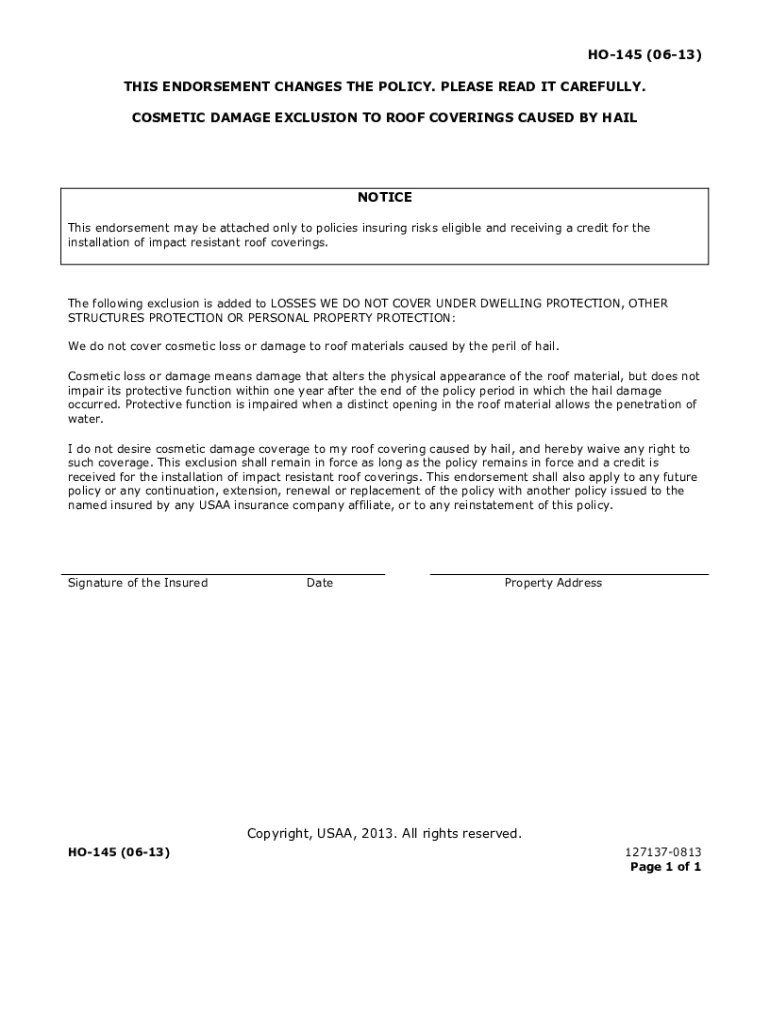
The USAA Cosmetic Damage Exclusion Form is a specialized document used in insurance policies that allows policyholders to exclude cosmetic damage from their coverage. This form typically applies to damages that do not affect the structural integrity or functioning of a property but may affect its appearance. By opting for this exclusion, homeowners can often reduce their insurance premiums while understanding that cosmetic repair costs would be their responsibility in the event of an incident.
Examples of Cosmetic Damage
- Hail Scuffs: Damage from hail that dents but does not penetrate the roof surface.
- Wind Damage: Minor superficial marks caused by debris carried by wind.
- Surface Scratches: Marks on siding or shingles that do not affect waterproofing or insulation abilities.
Key Elements of the USAA Cosmetic Damage Exclusion Form
The form details which types of damages are considered cosmetic and therefore not covered under the standard policy. It includes:
- Policyholder Information: Basic details about the homeowner and property.
- Damage Definitions: Specific terms indicating what constitutes cosmetic damage.
- Exclusion Agreement: Acknowledgment from the homeowner agreeing to exclude specific damages.
- Adjustment in Premiums: Information on premium reduction or adjustments due to the exclusion.
How to Use the USAA Cosmetic Damage Exclusion Form
To make effective use of this form, policyholders should:
- Read Thoroughly: Ensure comprehension of what is classified as cosmetic damage.
- Consult With USAA Agent: Discuss potential implications on policy coverage.
- Fill Out Signature Areas: Complete required sections to agree formally to the exclusions.
- Keep a Copy for Records: Retain a copy for personal documentation and future reference.
Common Misunderstandings
- Structural vs. Cosmetic Damage: The form excludes only non-functional damage; structural issues remain covered.
- Permanent vs. Temporary Damage: The exclusion typically pertains to permanent marks rather than those easily remedied.
Steps to Complete the USAA Cosmetic Damage Exclusion Form
- Obtain the Form from your USAA insurance representative.
- Fill in Personal Information, including name, address, and policy number.
- Review Exclusion Details to understand exactly what cosmetic damages are excluded.
- Sign and Date the Form to confirm your acceptance.
- Submit the Form through your preferred method, either by mailing, online submission, or at a local USAA office.
Tips for Accurate Completion
- Double-Check Details: Avoid errors by verifying all information is accurate before submission.
- Seek Clarification: Contact USAA if any part of the form is unclear, ensuring informed decision-making.
Importance of the USAA Cosmetic Damage Exclusion Form
This form provides a mechanism for policyholders to manage insurance costs by excluding non-critical losses. It is especially beneficial for those with high-risk properties from superficial damages, offering premium savings while maintaining necessary coverage for significant risks.
Practical Scenario
- Homeowner in Hail-Prone Area: A homeowner might choose this exclusion to lower premiums, accepting the potential for paying out-of-pocket for minor roof dents.
Legal Use of the USAA Cosmetic Damage Exclusion Form
The exclusion form is legally binding and modifies the contract between the policyholder and USAA. It’s crucial to fully understand the legal implications of excluding certain types of damage from coverage.
Legal Considerations
- Binding Agreement: Once signed, it becomes part of the insurance policy terms.
- State Regulations: Compliance with state insurance laws regarding allowed exclusions and policyholder rights.
Who Typically Uses the USAA Cosmetic Damage Exclusion Form
Homeowners in regions frequently experiencing cosmetic-only damage, such as hail, are the primary users. It benefits those willing to self-insure for minor repairs while leveraging premium discounts for more costly insurance protection.


Typical Users
- Cost-Conscious Homeowners: Looking to reduce premiums while maintaining essential risk coverage.
- Owners of Older Homes: Where superficial damage is less of a concern compared to critical structural issues.
State-Specific Rules for the USAA Cosmetic Damage Exclusion Form
Each state may have different regulations about what damages can be excluded from insurance policies. It's important to check with USAA or an insurance advisor about the specific rules applicable in your state.
State Regulations Impact
- Variable Exclusions: Some states have limitations on what can be considered cosmetic damage.
- Regulatory Compliance: Policies must adhere to state insurance department regulations, affecting form availability and usage requirements.
Form Submission Methods
You have multiple options for submitting the completed form, allowing flexibility based on convenience and preferred interaction with USAA.
Submission Options
- Online Submission: Directly upload through the USAA member portal for quick processing.
- Mail Submission: Send completed forms to the address supplied by USAA for traditional handling.
- In-Person Submission: Deliver forms directly to a USAA branch office for confirmation and assistance.
Penalties for Non-Compliance
Not adhering to the terms of the exclusion form can result in coverage denial for cosmetic damages and potential future implications for policy renewals or changes.
Possible Consequences
- Denial of Claims: Claims for cosmetic damages can be denied, aligning with exclusion terms.
- Premium Adjustments: Incorrect exclusion form use or misunderstanding can lead to future premium recalculations.
Form Variants and Alternatives
While the cosmetic damage exclusion form is the principal document, USAA might offer other forms or clauses for policy alterations.
Available Variants
- Basic Damage Coverage: Alternative for those not opting for cosmetic exclusions.
- Comprehensive Policies: Include all damage types, offering broader protection for higher premiums.
Utilizing the USAA Cosmetic Damage Exclusion Form involves careful evaluation of personal risk tolerance and financial responsibility for damage repairs. By understanding its operation and implications, policyholders can better manage insurance costs while aligning coverage with individual needs.