
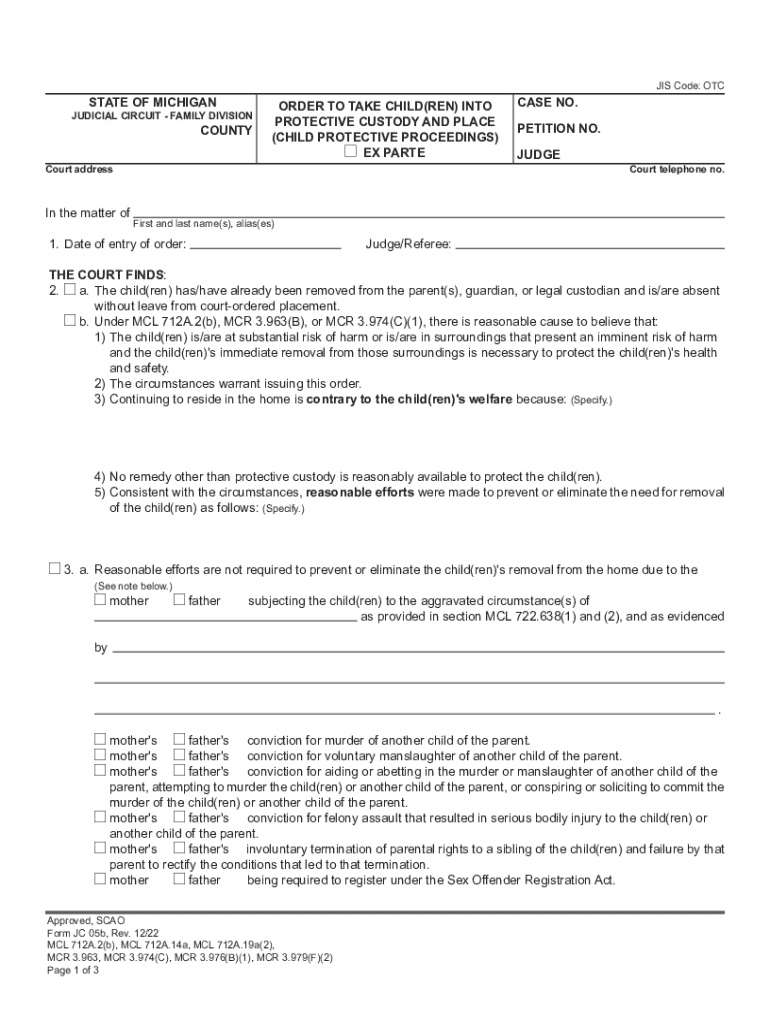







Definition and Purpose of the Order to Take Child(ren) Into Protective Custody
The "Order to Take Child(ren) Into Protective Custody" is a legally binding document utilized by the State of Michigan's Family Division of the Judicial Circuit. Its primary function is to authorize child protective services or law enforcement to remove one or more children from their current environment when they are at substantial risk of harm. This order is critical for ensuring the immediate safety and welfare of the child(ren), underscoring the state's commitment to protecting vulnerable minors from abuse, neglect, or dangerous situations.
How to Use the Order to Take Child(ren) Into Protective Custody Form
To effectively use the order form, specific protocols must be followed. The presiding judge or magistrate typically issues this form after a review of the evidence presented. Child protective services or the relevant authority must act swiftly to execute the order, ensuring the child is placed in a safe and secure environment. Key considerations include:
- Reviewing the legal provisions that justify the immediate removal of the child.
- Notifying the parents or legal guardians about the custody order and the reasons behind it.
- Ensuring all necessary documentation accompanies the removal to prevent legal disputes.
Steps to Complete the Order to Take Child(ren) Into Protective Custody
Completing this order involves several crucial steps to safeguard the rights of all parties involved. Here’s a step-by-step breakdown:
- Application Submission: Typically initiated by child protective services or a concerned party.
- Court Hearing: A hearing is held where evidence for the immediate removal is presented.
- Order Issuance: If the court is satisfied with the evidence, the order is issued.
- Notification: Parents or guardians are informed about the order and reasons for custody.
- Implementation: Child protective services execute the order, ensuring the child’s safety.
Key Elements of the Order to Take Child(ren) Into Protective Custody
Several critical components make up this legal document:
- Legal Justification: Citing relevant state laws that mandate the removal.
- Detailed Findings: Summary of the court's findings that support the decision.
- Placement Instructions: Clear directives on where the child will be placed.
- Notification Requirements: Protocols for informing parents or guardians.
Legal Use of the Order to Take Child(ren) Into Protective Custody
The legal framework around this order is stringent to ensure it serves its protective purpose without infringing on parental rights unnecessarily. The court must adhere to:
- Due Process: Providing fair opportunity for guardians to contest the order.
- Confidentiality: Protecting the privacy of the child(ren) and families involved.
- Timeliness: Ensuring the order is executed swiftly to mitigate risks.
State-Specific Rules for the Order to Take Child(ren) Into Protective Custody
Michigan has specific guidelines that govern the issuance of such orders:
- Statutory Grounds: Must align with Michigan Child Protection Law.
- Judicial Review: Orders can only be issued by an authorized family court judge.
- Documentation: Requires a thorough record of evidence and court proceedings.
Who Typically Uses the Order to Take Child(ren) Into Protective Custody
Primarily used by professionals within the Michigan justice system, including:
- Child Protective Services: As the initial point of contact when risks are identified.
- Judicial Officials: Judges or magistrates who issue and oversee these orders.
- Law Enforcement: Officers who facilitate the physical removal process.


Important Terms Related to the Order to Take Child(ren) Into Protective Custody
Understanding key terminology is crucial for those handling this form:
- Immediate Risk: The child is in serious danger that requires urgent intervention.
- Protective Custody: Temporary placement of a child to ensure their safety.
- Substantial Risk of Harm: A high probability that the child will suffer from physical or emotional harm if the situation persists.
Examples of Using the Order to Take Child(ren) Into Protective Custody
Real-world scenarios where this order might be applied include:
- Cases of Severe Neglect: Where basic necessities are not provided, jeopardizing health and safety.
- Instances of Domestic Violence: Situations where domestic environments expose children to violence.
- Abuse Cases: Where evidence of physical, emotional, or sexual abuse exists.
Required Documents for the Order to Take Child(ren) Into Protective Custody
Legal accuracy and thorough documentation are essential:
- Evidence of Risk: Medical reports, testimonies, or documented proof of danger.
- Completed Application: Specific forms filled out by child protective services.
- Court Transcripts: Records of the hearings and judicial decisions.
Penalties for Non-Compliance with the Order
Non-compliance with this order can lead to severe legal consequences:
- Contempt of Court: Parties who fail to comply may face fines or imprisonment.
- Loss of Custodial Rights: Repeated violations can result in permanent changes to custody arrangements.
Such comprehensive coverage enables relevant stakeholders to understand and effectively implement this critical protective measure.




