01. Edit your form online
Type text, add images, blackout confidential details, add comments, highlights and more.

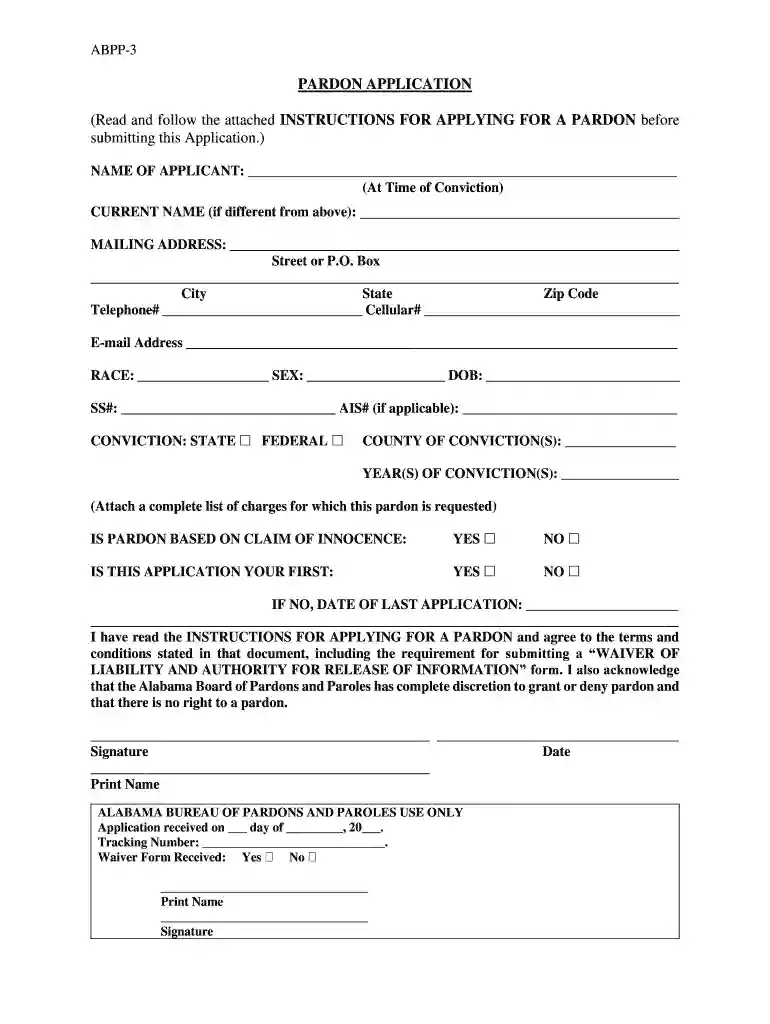
Type text, add images, blackout confidential details, add comments, highlights and more.

Draw your signature, type it, upload its image, or use your mobile device as a signature pad.

Send it via email, link, or fax. You can also download it, export it or print it out.
The "Application for Commutation of Sentence - Louisiana" is a formal request submitted to reduce a criminal sentence. It allows individuals convicted in Louisiana to seek leniency by having their sentences shortened or modified. Commutation does not expunge the conviction but offers relief by altering the remaining term. This legal tool is particularly vital for those seeking a second chance, as it acknowledges rehabilitation and post-conviction behavior while underscoring the importance of justice tempered with mercy.
Using the "Application for Commutation of Sentence - Louisiana" involves understanding the specific procedures and requirements mandated by the state. First, gather all necessary information and documents, such as the original sentencing order and personal identification details. The form requires precise information about the applicant's criminal case, the nature of the conviction, and reasons for seeking commutation. It is crucial to articulate compelling reasons, supported by evidence, that justify the request for sentence modification. Engaging with legal counsel might improve the quality of the application, ensuring all sections are appropriately completed and submitted.
To be eligible for submitting an "Application for Commutation of Sentence - Louisiana", applicants must meet specific criteria set by the state. Generally, an applicant should have already served a portion of their original sentence. Additionally, they should demonstrate exemplary behavior post-conviction, with no recent criminal activity. There are usually minimum time requirements from the conviction date or parole denial before one can apply. Furthermore, applicants must not have pending appeals when the application is filed. Consulting with a legal advisor can ensure the eligibility requirements are adequately met.


The form comprises critical sections that must be carefully addressed:
The legal use of the "Application for Commutation of Sentence - Louisiana" is situated within the state's criminal justice system, empowering convicted individuals to seek sentence reductions legally. The application must be utilized in strict conformity with legal statutes and guidelines. Its purpose is to present a case for leniency, which, if granted, results in a sentence modification. This is distinct from a pardon; commutation acknowledges the offense but adjusts the severity of the penalty. The legal process involves scrutiny by the Louisiana State Board of Pardons, who assess the merits of the application before making a recommendation or decision.
The application process involves rules particular to Louisiana, differing from those in other states. These may include specific documentation requirements, submission deadlines, and procedural steps unique to Louisiana's legal infrastructure. Applicants should be aware of any necessary state approvals, such as recommendations from state officials or the need for a hearing before the Board of Pardons. Changes in state laws often affect rules, so it is essential to refer to the most current legislative framework before submitting an application.
In Louisiana, the form can be submitted via multiple methods depending on the applicant's preference and state-provided options.
The process begins with submission of a fully completed form accompanied by supporting documents. An evaluation committee reviews the application, assessing elements like the severity of the original offense, displayed rehabilitative behavior, and public safety considerations. The approval time can vary, often taking several months due to the comprehensive review required. Applicants are typically notified of the decision through official correspondence from the board, followed by any necessary instructions for further legal processes if the commutation is approved.
At DocHub, your data security is our priority. We follow HIPAA, SOC2, GDPR, and other standards, so you can work on your documents with confidence.