Definition & Meaning
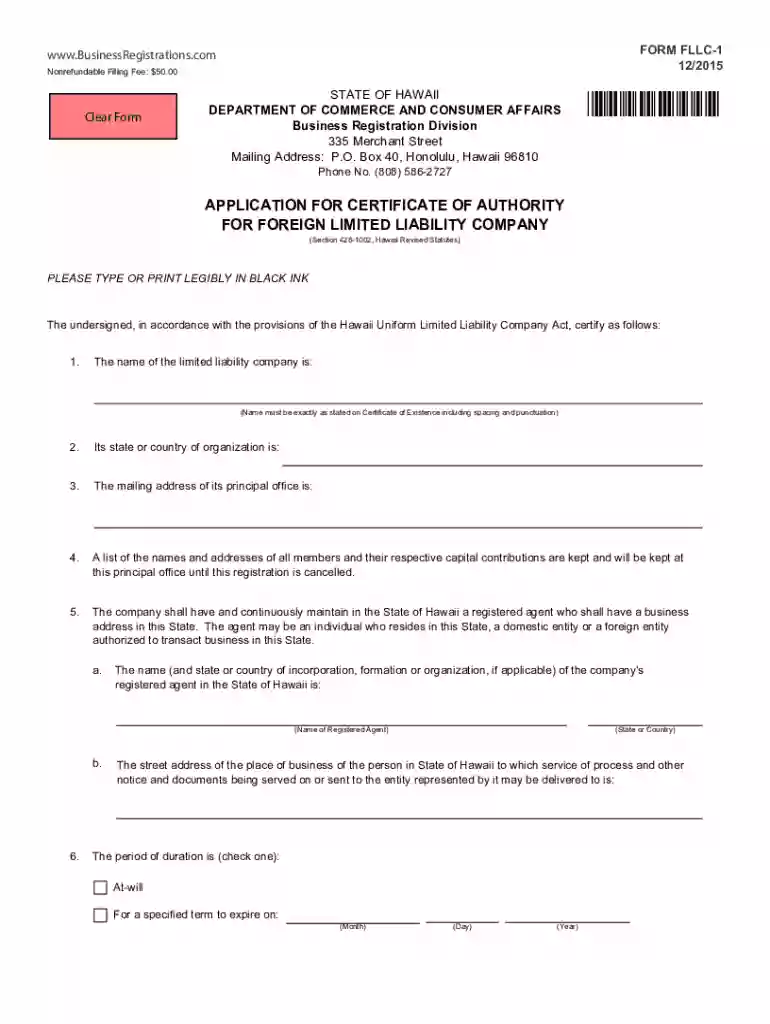
The "INSTRUCTIONS FOR FILING APPLICATION FOR CERTIFICATE OF AUTHORITY" refers to guidance provided for businesses, typically foreign limited liability companies (LLCs), seeking authorization to conduct business in a state different from where the company was originally registered. This certificate serves as official permission for a company to perform activities that generate revenue and ensures compliance with state-specific regulations.
Purpose and Importance
- Allows businesses to expand operations into new states while adhering to local laws.
- Helps maintain legal standing and protect business assets against potential penalties.
- Ensures proper taxation and accountability in the jurisdiction of expansion.
Key Terms
- Foreign LLC: A limited liability company registered in a state other than the one in which it wishes to operate.
- Registered Agent: An individual or entity designated to receive service of process and other legal documents on behalf of the business.
- Principal Office Address: The main business location as recorded in official documents.
How to Use the INSTRUCTIONS FOR FILING APPLICATION FOR CERTIFICATE OF AUTHORITY
These instructions are designed to clarify the process and ensure that businesses provide accurate and complete information.
Steps for Utilization
- Review the entire instruction document to understand requirements thoroughly.
- Gather Required Information, including business details, state of origin, and intended state for operations.
- Complete the Form as per guidelines, ensuring all sections are filled out correctly.
- Submit the Form along with applicable fees to the appropriate state office.
Important Considerations
- Double-check all entered information for accuracy.
- Ensure compliance with all state-specific requirements, which may differ significantly.
- Retain a copy of the completed application and receipt for filing fees for business records.
Steps to Complete the INSTRUCTIONS FOR FILING APPLICATION FOR CERTIFICATE OF AUTHORITY
Completing the application involves specific steps to ensure compliance and successful filing.
Detailed Process
- Obtain the Application Form: Often available online or at the Secretary of State’s office in the relevant jurisdiction.
- Fill Out Business Information:
- Company name and state of organization.
- Current registered agent and principal office details.
- Specify Management Structure: Provide information on managing members or managers.
- Disclose Liability Provisions: Describe any limitations or special conditions regarding liability.
- Review and Sign: Ensure the form is signed by an authorized representative.
Submission Options
- Online Submission: Electronically file through the state's website, ensuring quicker processing.
- Mail Submission: Send completed forms and fees to the specified address.
- In-Person Submission: Deliver at the designated state office to ensure immediate receipt confirmation.
Key Elements of the INSTRUCTIONS FOR FILING APPLICATION FOR CERTIFICATE OF AUTHORITY
Understanding the critical components of the application is essential for successful filing.
Core Components
- Name Verification: Ensure the business name complies with the state’s naming conventions.
- Registered Agent Information: Accurate details are vital since this agent will handle legal documents.
- State Requirements: Each state may impose unique documentation or additional forms.
Supporting Documents
- Articles of Organization from the initial state.
- A certificate of good standing to prove compliance in the original state.
- Filing fee payment proof.
Legal Use of the INSTRUCTIONS FOR FILING APPLICATION FOR CERTIFICATE OF AUTHORITY
This document ensures that companies conduct business legally in multiple jurisdictions.
Compliance and Benefits
- Provides a legal framework for business operations across state lines.
- Helps avoid legal disputes and potential financial penalties.
- Facilitates business legitimacy and customer trust in new markets.
Consequences of Non-Compliance
- Possible fines and penalties.
- Restrictions on conducting business activities.
- Legal actions that could jeopardize business operations.
State-Specific Rules for the INSTRUCTIONS FOR FILING APPLICATION FOR CERTIFICATE OF AUTHORITY
Different states may impose various rules and requirements for filing.
Customization and Variations
- Filing Fees: Costs can vary significantly between states, ranging from nominal to several hundred dollars.
- Documentation Needs: Some states might require extra documentation or certificates.
- Processing Times: While some states offer expedited services, others may have longer standard processing durations.
Example Scenarios
- California: Requires an initial statement of information detailing business activities.
- Texas: Mandates detailed management and financial disclosures.
Application Process & Approval Time
From submission to approval, businesses must navigate the application process carefully to acquire the certificate in a timely manner.
Step-by-Step Application Process
- Submit Form and Fees: Ensure that all information is complete and accurate before filing.
- State Review: The state office assesses the submission for compliance with local regulations.
- Approval Notification: Businesses receive an approval notice or request for further information if necessary.
Expected Timeframes
- Normal Processing: Ranges from one to six weeks depending on the state’s workload and policies.
- Expedited Services: Available in some states for an additional fee, reducing time to a few days.
Penalties for Non-Compliance
Failure to properly file the application can result in significant repercussions for businesses.
Common Penalties
- Financial Fines: States can impose daily penalties for unregistered operations.
- Legal Restrictions: In severe cases, businesses may be restricted from operating until compliance is achieved.
- Reputation Damage: Non-compliance can harm customer trust and contractual relationships.
Preventive Measures
- Adhere strictly to filing deadlines and specific state instructions.
- Regularly review state regulations for updates or changes that might affect your business.
- Utilize legal counsel or consultants to ensure compliance in complex cases.