Definition & Meaning
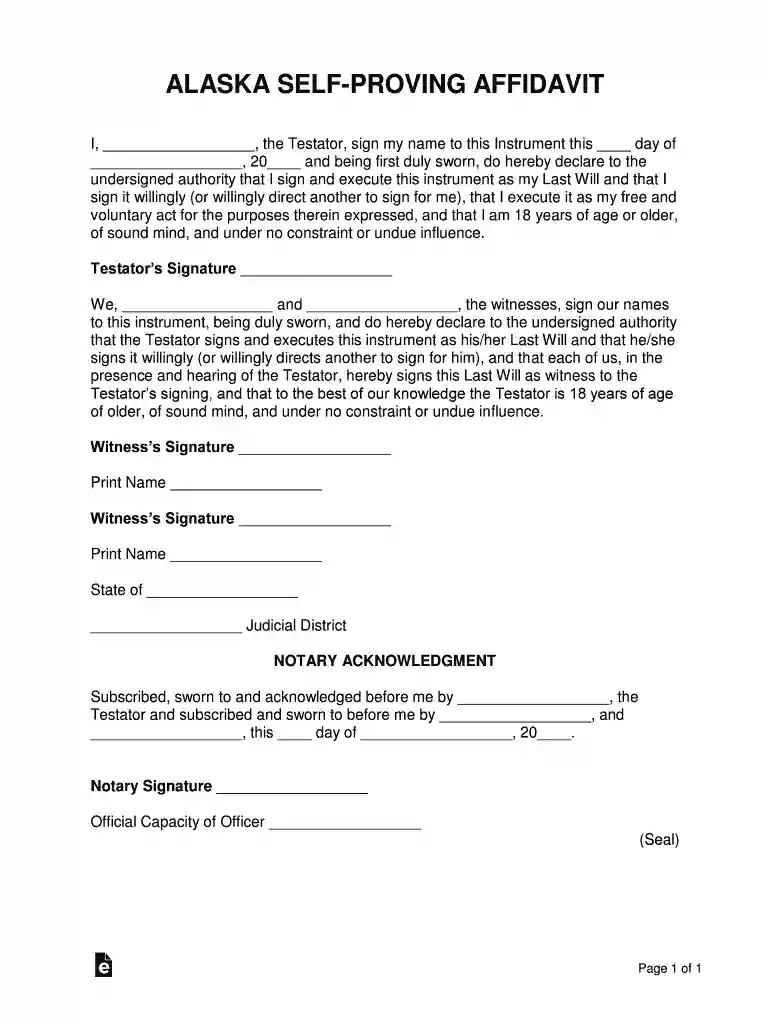
The Alaska Self-Proving Affidavit Form is a legal declaration used as part of the estate planning process for validating a Last Will and Testament. It serves as a sworn statement by the Testator, the person who has created the will, attesting to the will's authenticity. This form is typically attached to the will, containing the signatures of the Testator and witnesses, and is notarized to confirm that the Testator was of sound mind, legally capable, and acting without undue influence when preparing the will.
Purpose and Legal Standing
- Legal Reinforcement: The form acts as preliminary evidence supporting the validity of a Last Will, potentially avoiding the need for witnesses to testify in probate court.
- Streamlined Probate Process: By having a self-proving affidavit, your will can be admitted to probate more efficiently, as it presumes the will is genuine and simplifies validation.
Key Elements of the Alaska Self-Proving Affidavit Form
The Alaska Self-Proving Affidavit Form must include specific components to be considered valid in a legal context. Here are the principal elements:
Affidavit Content
- Testator's Declaration: Statement by the Testator that they are willingly making the will and understand its provisions.
- Witnesses' Attestations: Statements by at least two witnesses confirming the Testator's competency. They acknowledge observing the Testator sign the will.
- Notary Acknowledgment: A notary public must authenticate the signatures and affirm all parties willingly signed the document.
Formal Requirements
- Signatures: The form requires original signatures from the Testator, witnesses, and the notary.
- Notary Seal: To be legally binding, the document must bear the official seal of the notary.
How to Use the Alaska Self-Proving Affidavit Form
Integration with the Last Will
The Alaska Self-Proving Affidavit Form is typically attached to a completed Last Will and Testament. It should follow these steps:
- Create the Will: Ensure the will itself is properly drafted and executed in compliance with Alaska state laws.
- Prepare the Affidavit: The Testator should fill out the affidavit form in the presence of two qualifying witnesses.
- Notarization: The completed affidavit is then presented to a notary public, who will notarize the document after verifying the identities of all signatories.
Ensuring Compliance
- Legal Advice: It is advisable to consult with an estate planning attorney to confirm compliance with Alaska statutes.
- Document Retention: Keep the original will and the affidavit together in a secure location for future reference.
Steps to Complete the Alaska Self-Proving Affidavit Form
Filling out the Alaska Self-Proving Affidavit Form is a structured process that requires careful attention to detail. Follow these steps for completion:
- Preparation: Assemble necessary parties including the Testator, two witnesses, and a notary.
- Execution: The Testator and witnesses must provide their signatures on the form in the presence of each other.
- Verification by Notary: Present the document to a notary public who will then authenticate the signatures and identities of the parties.
- Document Handling: Attach the notarized affidavit to the Last Will and make copies for your records.
Practical Considerations
- Selecting Witnesses: Choose witnesses who are impartial and unrelated to prevent conflicts of interest.
- Timing: The affidavit should be completed contemporaneously with the execution of the will for consistency.
Why Use the Alaska Self-Proving Affidavit Form
Benefits in Estate Planning
Using the Alaska Self-Proving Affidavit Form confers various advantages:
- Ease of Probate: Reduces the burden on your beneficiaries by simplifying the legal process of validating the will during probate.
- Elimination of Testimonial Requirements: Potentially eliminates the necessity for witnesses to testify regarding the will's validity due to the presumptive validity of the affidavit.
Considerations for Use
- Legal Validation: Strongly supports the will's legitimacy, increasing the likelihood of its wishes being carried out as intended.
- Time and Cost Efficiency: Streamlines estate administration, reducing time and expenses associated with probate proceedings.
Legal Use of the Alaska Self-Proving Affidavit Form
Compliance with Alaska Law
The form must align with specific legal requirements in Alaska to be enforceable. Here’s how compliance works:
- Witness Eligibility: Witnesses must be at least eighteen years old and not beneficiaries named within the will.
- Notary Role: The involvement of a licensed notary ensures that the formal legal requirements are strictly adhered to, lending credibility to the form.
Ethical and Legal Implications
- Fraud Prevention: The affidavit serves as a deterrent against fraudulent claims concerning the will’s authenticity.
- Estate Security: Protects the Testator's intentions and minimizes disputes among heirs.
Beneficiary Protection
- Family Members: Ensures that descendants and other beneficiaries have less complex legal procedures to navigate following the Testator’s passing.
- Estate Executors: Simplifies the executor's role by mitigating challenges to the will's legitimacy.
State-Specific Rules for the Alaska Self-Proving Affidavit Form
Alaska-Specific Considerations
Be aware of particular Alaska state statutes governing the execution of the affidavit:
- Statutory Compliance: The affidavit must comply with the state-specific statutes, which outline who can witness a will and notarize documents.
- Unique Provisions: Alaska law includes specific provisions on the distribution of estates that might affect the affidavit.
Special Circumstances
- Remote Notarization: In specific cases, Alaska allows for remote notarization which can facilitate the affidavit process under certain conditions.
- Adaptations for Indigenous Populations: There may be adjusted protocols considering the legal systems recognized by indigenous communities within Alaska.