Category 3 or lower - gpo 2025

Get Form
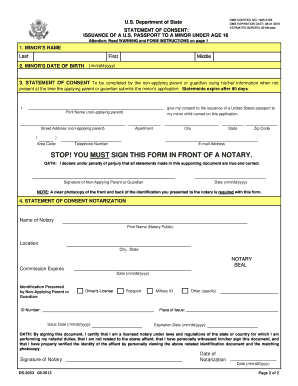
category 3 or lower - gpo Preview on Page 1

Here's how it works

01. Edit your form online
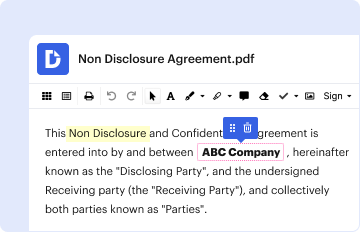
Type text, add images, blackout confidential details, add comments, highlights and more.
02. Sign it in a few clicks
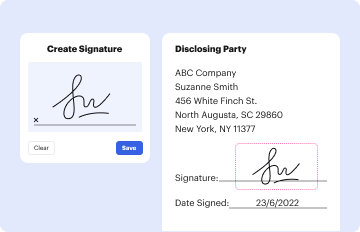
Draw your signature, type it, upload its image, or use your mobile device as a signature pad.
03. Share your form with others
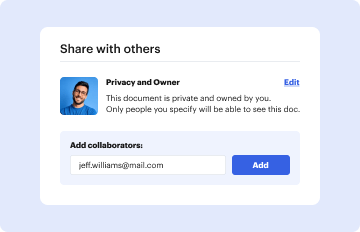
Send it via email, link, or fax. You can also download it, export it or print it out.

How to use or fill out category 3 or lower - gpo with our platform

Form edit decoration
9.5
Ease of Setup
DocHub User Ratings on G2
9.0
Ease of Use
DocHub User Ratings on G2
  1. Click ‘Get Form’ to open it in the editor.
  2. Begin by reviewing the form sections. Identify fields that require your input, such as personal information, dates, and any specific details related to the request.
  3. Fill in each field carefully. Ensure accuracy in your entries, especially for critical information like identification numbers or contact details.
  4. If there are checkboxes or multiple-choice options, select the appropriate choices that apply to your situation.
  5. Once all fields are completed, review your entries for any errors or omissions before proceeding to submit the form.
  6. Finally, save your completed form and choose to either print it or send it electronically through our platform for free.

Start using our platform today to streamline your document editing and form completion!

be ready to get more

Complete this form in 5 minutes or less

Get form

Got questions?

We have answers to the most popular questions from our customers. If you can't find an answer to your question, please contact us.
Contact us
The Group Policy precedence in Windows Server follows a specific order, known as the LSDOU model, which stands for Local, Site, Domain, and Organizational Unit. This model represents the hierarchy of Active Directory objects and determines the order in which GPOs are applied.
Group Policy Objects (GPO) are processed in the following order: The local GPO is applied. GPOs linked to sites are applied. GPOs linked to domains are applied. GPOs linked to organizational units (OUs) are applied.
0:21 4:36 Level will override any other settings. The next level is site settings applied at the OU. AndMoreLevel will override any other settings. The next level is site settings applied at the OU. And domain level will override settings applied at the site.
Group policy objects (GPOs) are processed in the following order: Local group policy. GPOs linked to a site. GPOs linked to the domain. GPOs linked to an OU. Child-OUs.
Levels of GPO processing The four unique levels of hierarchy for Group Policy processing are called Local, Site, Domain, and OU.
be ready to get more

Complete this form in 5 minutes or less

Get form

People also ask

GPOs that Windows processes last have the highest precedence. GPOs follow the Local, Site, Domain, or Organizational Units (OUs) rule for processing: first, the local GPO, then site, then the domain, and lastly the OU, including nested OUs, which are OUs that have another OU as their parent.
To enforce a GPO, select the GPO linked to a container. Right-click the GPO and select Enforced. GPOs that are enforced will be applied to a lower-level container even when the Block Inheritance option is enabled for that container.
GPOs linked to organizational units have the highest precedence, followed by those linked to domains. GPOs linked to sites always take the least precedence. To understand which GPOs are linked to a domain or OU, click the domain or OU in GPMC and select the Linked Group Policy Objects tab.
GPO Structure Each GPO has two main sections: Computer Configuration: Settings that apply to computer objects, regardless of who logs in. User Configuration: Settings that apply to user objects, regardless of which computer they use.

Related links